Ahoi Ashtami is a deeply revered festival observed primarily by mothers in North India. Dedicated to Maa Ahoi (a form of Goddess Parvati) and Ahoi Bhagwati, this fast is kept for the health, prosperity, longevity, and well-being of children. Similar to Karwa Chauth, Ahoi Ashtami involves a strict, day-long Nirjala (without water) fast, which is traditionally broken in the evening after sighting the stars or the moon.
If you are preparing for Ahoi Ashtami 2026, here is your complete guide covering the exact dates, shubh muhurat, step-by-step puja vidhi, the sacred vrat katha, and key rules to ensure a smooth and blessed fast.
Ahoi Ashtami 2026 Date and Shubh Muhurat
Ahoi Ashtami falls on the Ashtami Tithi (eighth day) of the Krishna Paksha during the auspicious month of Kartik.
- Date: Sunday, November 1, 2026
- Ahoi Ashtami Puja Muhurat: 05:36 PM to 06:53 PM
- Sighting Time for Stars (Taare Dekhne Ka Samay): Around 06:16 PM
- Moonrise Time (Chandrashtami): Around 11:42 PM (Note: Most women break their fast after seeing the stars, though some traditions follow moon sighting).
Essential Puja Samagri (Ingredients List)
Before starting your rituals, make sure you have the following sacred items assembled:
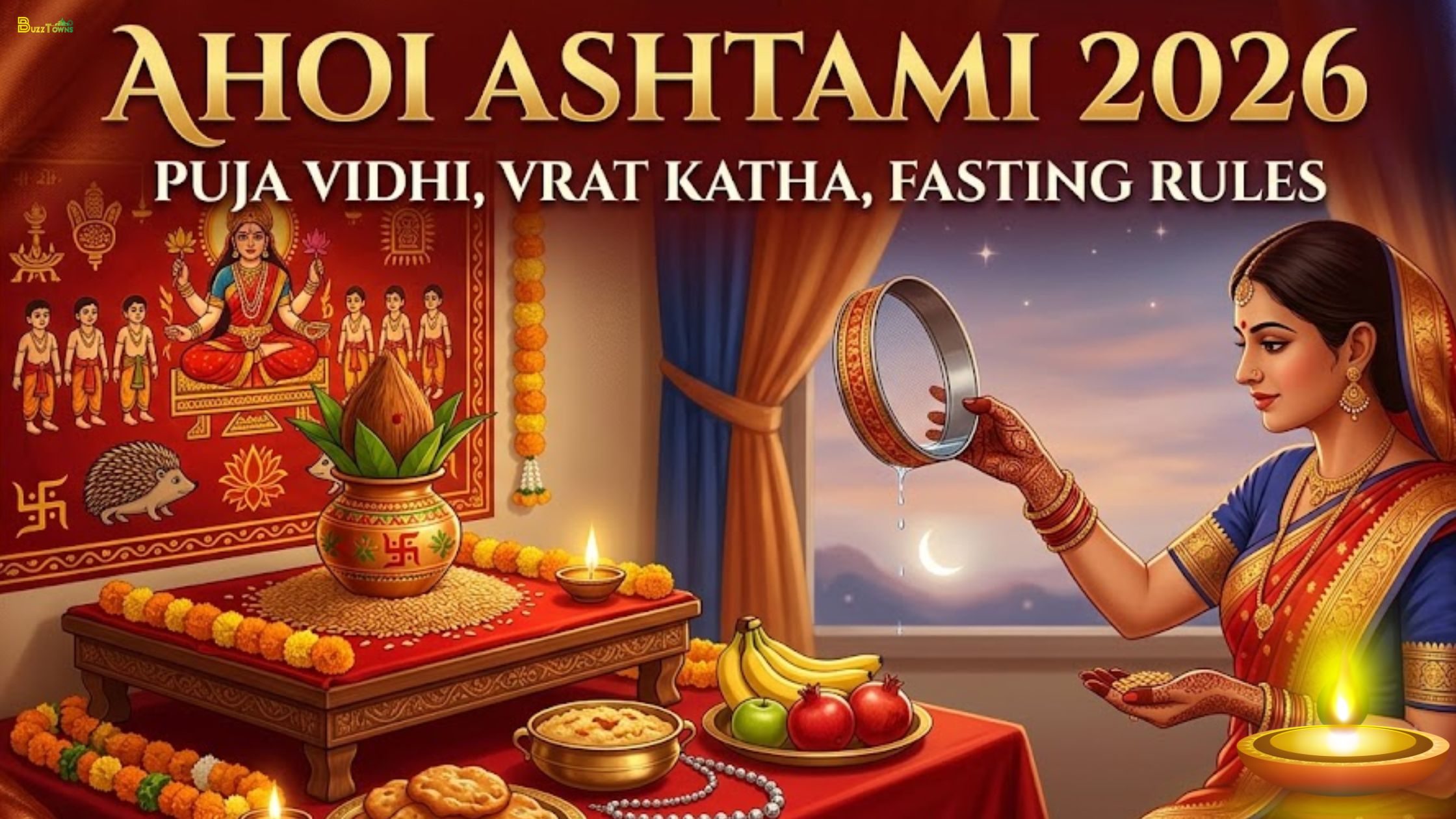
- An image or wall painting (Alpana) of Maa Ahoi and her seven sons
- A small earthen pot (Kalash) filled with clean water
- Raw milk, sugar, and unboiled cow milk
- Fresh flowers, kumkum (vermilion), chawal (unbroken rice grains), and durva grass
- A small bowl filled with wheat grains (Gehun)
- Traditional offerings (Bhog): Homemade pua (sweet fritters), halwa, roasted chana, and sweets
- A silver string or necklace (Ahoi Syau) with silver beads
- Fruits and seasonal dry fruits
- Cash/Dakshina for elderly women in the family or the priest
Step-by-Step Ahoi Ashtami Puja Vidhi
1. Morning Sankalp (Vow)
- Wake up before sunrise during Brahma Muhurat. Take a holy bath and wear clean, vibrant ethnic clothes (avoid wearing black or dark blue).
- Stand near your home temple and take a Sankalp (vow) in front of the Almighty, promising to observe a dedicated Nirjala Vrat for the protection and well-being of your children.
2. Setting Up the Puja Space
- Clean the northern or eastern wall of your puja room.
- Draw the traditional image of Maa Ahoi, her eight children, and a hedgehog (Sei) using wheat flour or geru (red soil). Alternatively, you can use a ready-made framed photo or sticker of Ahoi Mata.
- Place a wooden stool (Chowki) in front of the image and cover it with a red cloth.
3. Evening Puja Ceremony
- Perform the puja during the evening Shubh Muhurat before sunset.
- Place the water-filled Kalash on a small heap of wheat grains on the stool. Put a few mango leaves on top of the kalash and place a small bowl containing sugar or rice over it.
- Apply a tilak of kumkum and akshat to Maa Ahoi’s image and the Kalash. Offer fresh flowers.
- Place the prepared bhog—specifically sweet pua, halwa, and fruits—in front of the deity.
4. Wearing the Syau (Silver Bead Necklace)
- Mothers wear a special silver chain known as Ahoi Syau or Ahoi Mala. Every year, two new silver beads are added to this chain for each child.
- Keep the Syau on the puja platter and worship it along with Maa Ahoi using akshat, kumkum, and milk.
5. Reciting the Vrat Katha
- Hold 7 or 11 unbroken grains of wheat or raw chana in your right hand.
- Listen to or recite the traditional Ahoi Ashtami Vrat Katha with devotion.
- After completing the katha, drop the wheat grains into the Kalash or offer them at the feet of Maa Ahoi.
Ahoi Ashtami Vrat Katha (The Legend)
Once upon a time, a wealthy woman lived in a village with her seven sons. Just a few days before Diwali, while renovating her house, she went to the nearby forest to dig soil (geru). While digging with her spade, she accidentally struck and killed a small hedgehog cub (Sei ka bachha) resting inside a burrow. Deeply grieved, she returned home empty-handed.
Within a year, through an unfortunate series of events, all seven of her sons passed away one by one. Devastated, the woman confided in the village elders, weeping over her terrible plight. A wise old woman explained that her grief was the result of the accidental sin (Pap) of killing the innocent cub in the forest.
The elders advised her to observe a strict fast on the Ashtami tithi of Kartik month, draw the image of Maa Ahoi along with the hedgehog and her cubs, seek forgiveness sincerely, and pray for the long life of her future offspring.
The woman followed the advice with deep devotion, observed a rigorous Nirjala fast, and served Maa Ahoi wholeheartedly. Pleased with her sincere repentance and prayers, Goddess Ahoi blessed her, and by divine grace, all seven of her sons were restored to life. Since that day, the tradition of observing the Ahoi Ashtami fast has been passed down through generations.
Important Fasting Rules and Precautions
To ensure your fast is observed with complete piety, keep these important rules in mind:
- Strict Fasting: The fast is traditionally observed as a Nirjala Vrat (without food or water) from sunrise until the stars or moon are sighted in the evening.
- Avoid Sharp Objects: Do not use knives, scissors, or needles on this day. Avoid cutting vegetables or sewing during your fast.
- Arghya to the Stars/Moon: In the evening, look at the stars (or moon) through a sieve or directly, offer water (Arghya) from your Puja Kalash, and perform a brief aarti.
- Respect Elders: Seek the blessings of your mother-in-law, mother, or elder women in the house by offering them homemade sweets, dry fruits, and Saree/Dakshina (known as Bayna).
- Avoid Soil/Earth Work: Refrain from digging soil, planting, or doing heavy gardening work on this day as a sign of respect to the legend.
How to Complete the Fast (Parana)
Once you have offered Arghya to the stars using the water from your Kalash and worshipped Maa Ahoi:
- Take a sip of water and a small piece of sweet pua or halwa offered to Maa Ahoi from your child’s hands.
- Consume a simple, satvik meal cooked without onion or garlic.
- Wear the sacred Syau necklace until the festival of Gowardhan Puja or Tulsi Vivah, after which it can be safely stored until next year’s fasting.
May Maa Ahoi shower her divine blessings on your family and protect your children with health, happiness, and long life! Shubh Ahoi Ashtami 2026!