

Millennials — the generation that came of age during the rise of social media, the Great Recession, and a global mental health reckoning — have completely rewritten the parenting playbook. Rejecting the more authoritarian, “because I said so” style of his childhood, he has endorsed a philosophy focused on empathy, communication, and emotional intelligence. This new approach, often summarized and popularized as “gentle parenting” (or in its extreme form, “helicopter parenting”), aimed to raise emotionally flexible, self-aware children.
However, a growing chorus of critics – from teachers and child development experts to parents themselves – suggest that in practice, this well-intentioned style often falls into a trap: permissive parenting. The result is a generation of kids, Gen Alpha, who are struggling with resilience, self-control, and respect for boundaries, in the view of some observers. This detailed exploration will uncover the fundamentals of millennial parenting, examine where the style is succeeding, and critically analyse the traps that critics argue are causing it to fail.
1. The Core Tenets of the Millennial Parent
Millennials (born approximately 1981–1996) have specific values that shape their family life:
- Emotional Intelligence is King: The paramount goal is to raise an emotionally intelligent (EQ) child. This translates into open conversations about emotions, validating emotions (for example, “I see you’re angry about a toy breaking”), and teaching regulation rather than suppressing resentment.
- Rejection of authoritarianism: The belief that punishment and fear harm the child-parent relationship. Instead, the focus is on connection before correction – using discipline as a teaching opportunity rather than a punishment.
- Conscious and values-driven parenting: Millennial parents are deeply reflective and turn to research, books, and social media for guidance. They often prioritize values such as inclusivity, sustainability, and breaking generational cycles of trauma.
- The Digital Native Paradox: This generation is uniquely positioned as the first parents with ubiquitous technology. They use it as an educational tool, but also constantly grapple with the challenge of setting screen time limits and managing their children’s digital footprint and safety.
The most widely adopted framework that embodies these principles is gentle parenting, which is characterized by empathy, understanding, respect, and boundaries.
2. The Successes: A Shift Towards Emotional Health
It is important to acknowledge the profound and positive changes catalyzed by millennial parenting:
- Poor mental health: Discussing anxiety, stress, and emotions openly with children has now become the norm. This marks a radical change from previous generations, potentially leading to adults who are better equipped to seek help and practice self-awareness.
- Stronger parent-child bond: By prioritizing emotional validation and open communication, many Millennial parents report having deeper, more trusting, and less conflictual relationships with their children.
- Focus on the whole child: More emphasis is placed on promoting the child’s unique interests and personality (child-led learning) rather than fitting the child into a pre-determined mold. This holistic approach to development gives importance to creativity and emotional well-being, along with academic performance.
3. The Trap: When “Gentle” Slips into “Permissive.”
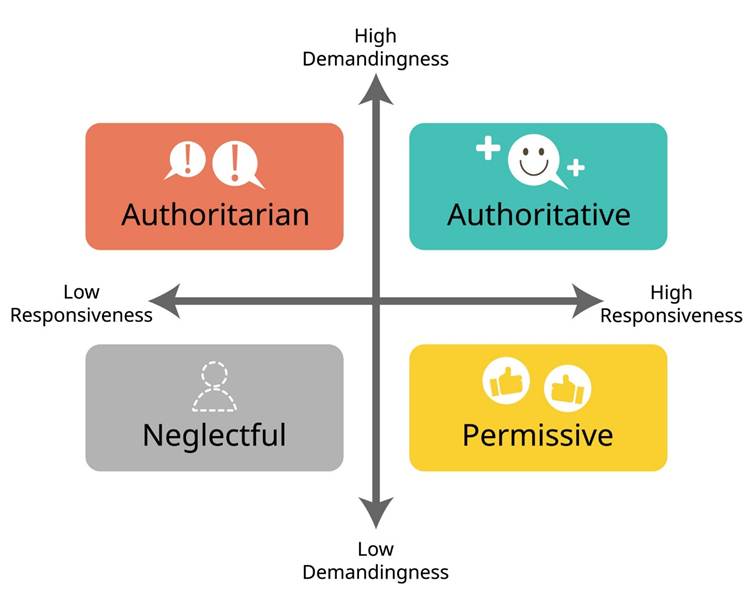
The criticism that Millennial parenting styles are “failing” often stems from a major implementation failure: the line between Gentle Parenting (high warmth, high expectations/limits) and Permissive Parenting (high warmth, low expectations/limits) has become dangerously blurred.
🛑 The Boundaries Vanish
In an effort to avoid saying “no” and rejecting “because I said so” ultimatums, parents may fall into endless conversations.
- Endless conversations: Instead of firm, clear boundaries, every rule becomes a lengthy discussion. A two-hour tantrum over leaving the park may be met with endless affirmation of the child’s feeling of “not wanting to leave” instead of a calm, firm outcome and exit. Critics argue that it teaches children that boundaries can be compromised and that constant emotional intensity is an effective tool for getting one’s way.
- Discipline and Punishment Conflict: The desire to eliminate “punishment” often leads parents to eliminate consequences. Discipline, which means “to teach,” is essential to growth. When a child is constantly shielded from the natural or logical consequences of their actions, they fail to learn cause and effect – a fundamental life skill.
😩 The Exhausting Mental Load
The pressure to be a fully responsible parent can lead to parent burnout and an unhealthy self-criticism cycle.
- The Social Media Perfection Trap: Millennial parents are surrounded by curated, picture-perfect snapshots and endless expert advice on social media. This creates an unrealistic standard where every interaction should be an “emotionally intelligent teaching moment.” This pressure causes parents to feel extreme guilt and feelings of inadequacy when they inevitably lose their patience or revert to less “gentle” tactics.
- Emotional overload: Focusing on their child’s every emotion can cause parents to neglect their own emotional health. The constant focus on co-regulating the child’s emotions is exhausting and can lead to resentment when parents feel they are the only adults in this dynamic.
📉 The Resilience Deficit
Perhaps the most significant criticism is the perceived impact on flexibility and independence in General Alpha.
- Fear of failure: A subset of this style, sometimes turning to helicopter parenting (constant over-involvement), attempts to overcome all obstacles and block out any negative emotions. When children are protected from disappointment, struggle, or failure, they do not develop the coping mechanisms and self-confidence needed for adulthood. They may grow up feeling unable to deal with challenges without parental intervention.
- External Validation Dependence: By constantly praising effort and providing constant affirmation, the child may become dependent on external validation instead of developing an internal compass of self-efficacy and intrinsic motivation.
4. The Path Forward: Finding the “Authoritative” Balance
The solution is not to return to the harsh, emotionally distant authoritarian styles of the past, but to recognize that the most effective parenting model is the authoritative style.
Authoritative parenting blends the best of Millennial values (high warmth, high communication) with essential structure (high expectations, clear boundaries).
- Connection and consequence: It’s possible to validate a child’s feeling (“I know you’re angry that screen time is over”) while still enforcing limits (“The rule is, when the timer goes off, the tablet is put away, and the consequence of not doing that will be no screen time tomorrow”). This teaches children that feelings are accepted, but not all behaviors.
- Modeling Resilience: Parents need to model the ability to make mistakes, apologize, and accept disappointments. By showing children that one moment of anger or imperfection does not define the entire relationship, they teach their children how to handle their own emotional mistakes in the future.
- The village is essential: Millennial parents, who often live far from extended family, need to actively build a community – a true “village.” Outsourcing and accepting help is not a sign of failure; It is an essential tool for dealing with the stress that leaves parents vulnerable to permissive traps.
Millennials’ desire to raise children who are better, happier, and more emotionally aware than they are is a noble and powerful mission. The “trap” is not in the mission itself, but in mistaking empathy for complete permission. The generation that prides itself on being self-aware must now apply that awareness to its own methods, ensuring that love and validation are balanced with a firm, consistent structure that prepares children for the complexities of the real world.