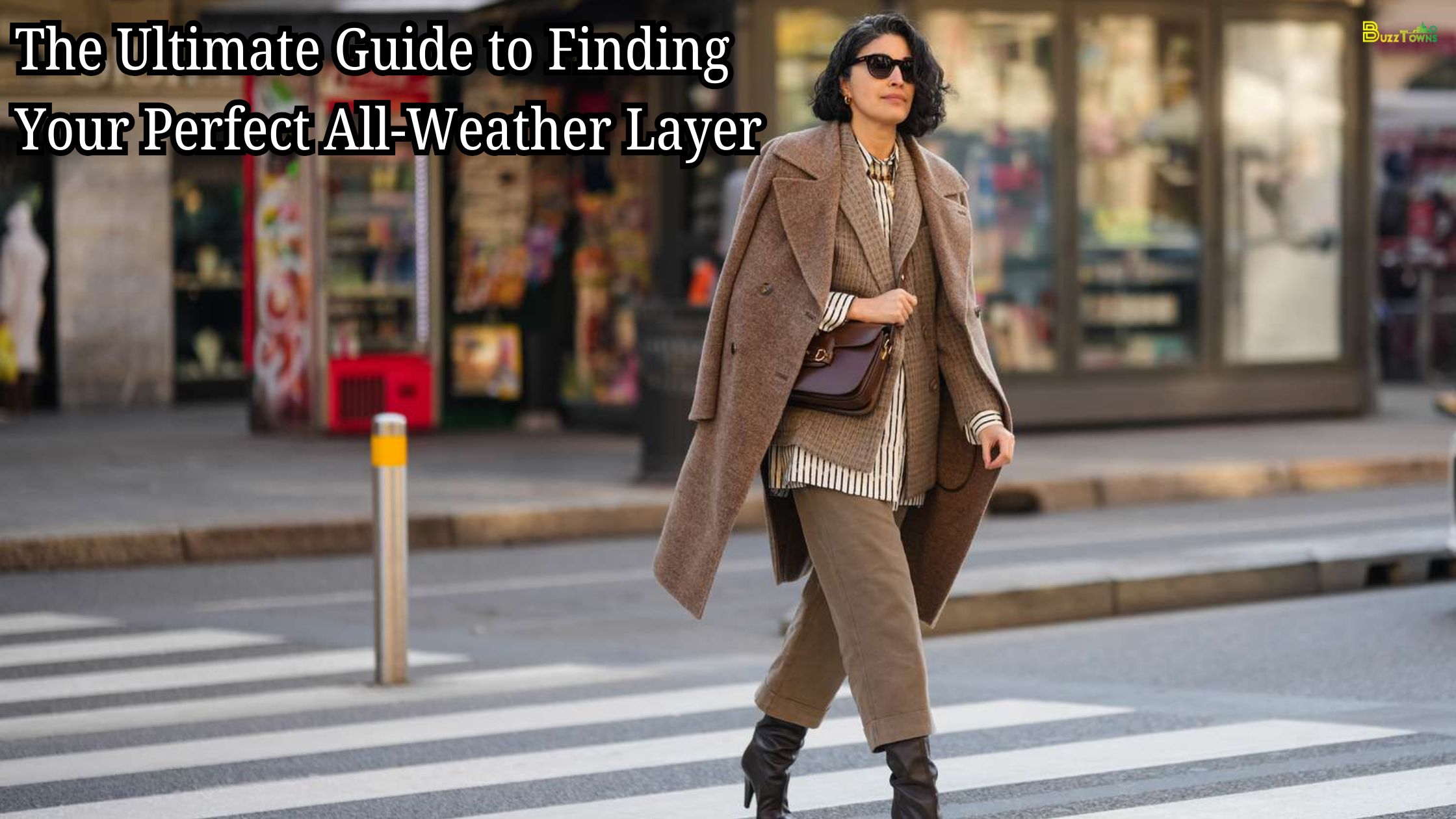
Choosing a coat or jacket that works in all weather, rain, wind, cold, and even the occasional warm stretch, can feel like trying to please everyone at once. With the right know-how, you can find an all-weather outer layer that keeps you comfy, confident, and stylish through every season. Here’s how to get it right.
What “All-Weather” Really Means
An “all-weather layer” should offer a balance of warmth, protection from wind and rain, breathability, and versatility. You want something that handles:
- sudden showers, drizzle, or snow
- windy days that cut through thin fabrics
- both cold spells and milder conditions
- layering under or over, depending on the day
To deliver on all that, there are several key features and trade-offs to understand.
Key Features to Look For
| Feature | Why It Matters |
| Outer Shell Material / Waterproofing | Keeps you dry. Look for coated fabrics (DWR = durable water repellent), waterproof membranes, and taped seams. For heavy rain, waterproof + seam sealing is best. For light showers, water-resistant finishes work. |
| Insulation | Determines how warm you’ll be when the temperature drops. Down is very warm for its weight but struggles when wet. Synthetic insulation performs more reliably in damp or humid weather. |
| Fit & Cut | The right cut balances comfort and style. If you’re searching for designs that flatter a fuller figure while offering weather protection, plus size womens clothing UK provides jackets and coats crafted to combine fit, function, and contemporary style. |
| Lining and Breathability | You don’t want to feel clammy. Breathable linings or moisture-wicking layers help when you move or when the weather shifts. Ventilation features (zips, underarms) help too. |
| Wind Resistance | Wind steals heat. Features like storm flaps, sealed zips, high collars, adjustable hems, and cuffs help block out the wind. |
| Weight & Packability | If you’re commuting, travelling, or layering, a bulky coat isn’t always practical. Something compressible or lightweight is much easier to carry or store. |
| Versatility of Design | Removable hoods or liners, 2-in-1 or 3-in-1 designs, or styles that transition from casual to smart help you get more use. |
Materials: Pros & Cons
- Down: Excellent warmth-to-weight ratio; great under very cold, dry conditions, but loses insulating power when wet.
- Synthetic Insulation: Works even when damp; dries faster; more forgiving in mixed weather, though sometimes bulkier.
- Hybrid Insulation: Combines down in the core with synthetic elsewhere to balance warmth and wet performance.
- Shell Fabrics: Polyester, nylon, and blends with waterproof or water-repellent treatment are common. Stretch panels or softshells improve comfort and mobility.
How to Choose Based on Your Weather & Lifestyle
- Daily Urban Commute in Rain/Wind: Waterproof shell, hood, sealed seams, and a removable liner for variable temperatures.
- Mild Winters + Variable Weather: Medium insulation, water-resistant outer, and breathable fabric for easy layering.
- Very Cold or Snowy Conditions: Heavy insulation, down or high-grade synthetic, and a long cut for extra coverage.
- Active Outdoors (Hiking, Travel): Lightweight, packable fabrics with good breathability and some water protection.
Care & Maintenance
- Reapply DWR or waterproof treatments when water stops beading.
- Wash according to care instructions to preserve performance.
- Dry completely before storing to prevent mildew.
- Store without compressing insulation to maintain loft.
Final Take
Finding your perfect all-weather layer is about striking the right balance: protection versus comfort, warmth versus breathability, coverage versus mobility. Focus on the features that matter most to your climate and lifestyle, and you’ll discover a jacket or coat that looks good, feels great, and performs year-round.