
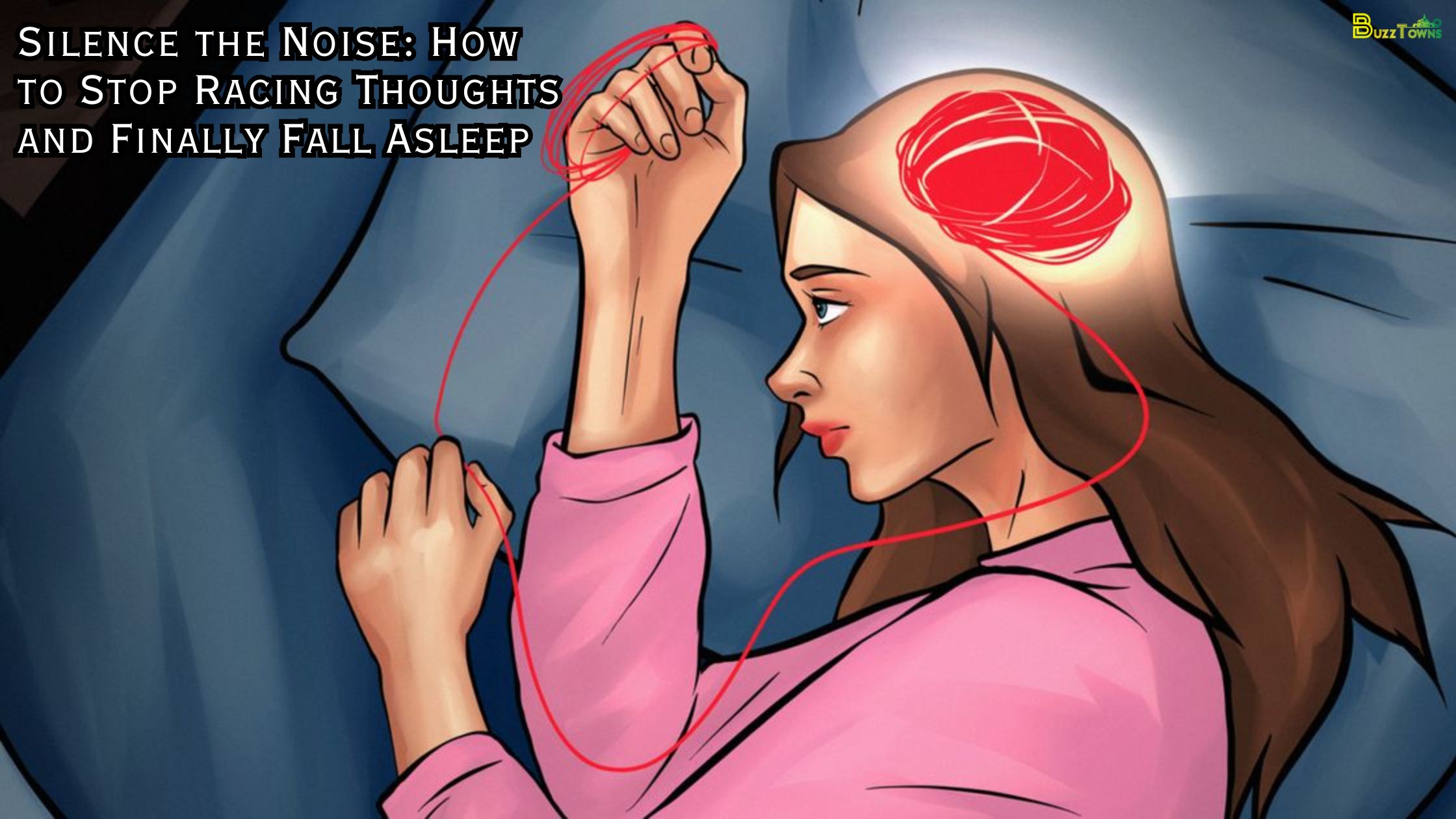
It’s the universal, frustrating paradox: You’re tired, your body is ready for rest, but the moment your head hits the pillow, your brain decides to hold an emergency meeting. Thoughts come in a constant, overwhelming flood – replaying conversations, repeating concerns, compiling to-do lists, and devising imaginary scenarios. It is a very common reality of racing thoughts, and they are one of the primary culprits behind insomnia and poor sleep quality.
When your brain won’t shut off, your bed can turn from a sanctuary of rest into a battlefield of anxiety. This comprehensive guide will explore the mechanisms behind the mind racing at night and provide you with a comprehensive, multi-faceted strategy for silencing the noise, restoring peace, and ultimately getting into the deep, restful sleep you deserve.
The Vicious Cycle: Why Your Mind Races at Night
To effectively calm the racing mind, we first need to understand why it speeds up in the stillness of the night. During the day, distractions abound – work, conversations, screens, and activities. These things take over the conscious mind, effectively “bottling up” unprocessed thoughts and worries.
When you go into a dark, quiet room, external stimuli disappear, and the contents of the bottle – stress, worries, things you’d rather stop to think about – come to the surface. Your brain, which is designed to solve problems and ensure survival, takes the opportunity of silence to run updates.
1. The Worry-Sleep Feedback Loop
Sleep anxiety is a major factor. The more you wake up and think, “I should go to sleep,” the more anxious you become. This anxiety triggers the body’s “fight or flight” response, releasing stress hormones such as cortisol and adrenaline. These hormones are the exact opposite of what is needed for sleep; They make your heart rate speed up and your thoughts go even faster, creating a debilitating cycle:
$$\text{Racing Thoughts} \rightarrow \text{Increased Anxiety} \rightarrow \text{Cortisol Release} \rightarrow \text{Insomnia} \rightarrow \text{More Worry about Insomnia}$$
2. Lack of a Mental “Off-Ramp”
Many people go straight to bed after mentally stimulating activities like working on a laptop or scrolling through social media. This does not give the brain time to slow down. It’s like applying the brakes after driving at 100 mph; The inertia of your mental activity continues into the night, resulting in racing thoughts that keep you awake.
🛠️ Phase 1: The Evening Mental Declutter—Processing Before Bed
Quieting the noise at 2:00 a.m. requires preparation in the hours before bed. These strategies are all about giving your brain a safe, dedicated space for processing and “dumping” its burden before trying to do so in the dark.
1. The Scheduled “Worry Time” (or Brain Dump)
Don’t bring your to-do list or emotional baggage to bed. Schedule a specific 15–20-minute window earlier in the evening (for example, 6:00 pm or 7:00 pm) to get it all out.
- Process: Sit down with a notebook and pen. Write down absolutely everything that is causing you stress, anxiety, or that you need to remember for tomorrow. Don’t censor yourself; This is a pure brain dump.
- Action Plan: For each item, immediately identify a small, actionable step you can take tomorrow. If there is no immediate solution to the worry (“What if I fail?”), Write down a positive thought, such as “I’ll focus on this when I worry tomorrow,” and remind yourself that worrying now won’t solve the problem.
- Response at bedtime: If a worry comes up while you’re trying to sleep, gently remind yourself, “It’s written down, and I have a plan to deal with it tomorrow.” This is a powerful form of cognitive restructuring.
2. The Digital Sunset and Wind-Down Routine
Blue light from screens (phones, tablets, TV, computers) suppresses the production of melatonin, the hormone that regulates your sleep-wake cycle.
- Implement a disconnect zone: Designate the last 30 to 60 minutes before bed as a disconnect zone. Remove all blue light-emitting devices. It serves as a necessary mental “off-ramp”.
- Create a calming ritual: Use this time for low-effort, relaxing activities that will lull your brain to sleep. This may include:
- Reading a physical, non-stimulating book (avoiding thrillers or work-related material).
- Listening to calming music or a sleep story.
- Taking a warm bath or shower.
- Gentle, restorative stretching or yin yoga.
🧘 Phase 2: Calming the Nervous System—In-the-Moment Techniques
When you’re lying in bed and thoughts start racing, you need tools to shift your focus from the mental chaos back to your body.
1. The Power of Controlled Breathing
Deep, controlled breathing is your quickest way to interrupt the stress response. This signals to your nervous system that you are safe and can come out of “fight or flight” mode.
- 4-7-8 Technique:
- Exhale completely through your mouth, making a whoosh sound.
- Close your mouth and breathe quietly through your nose for a count of 4.
- Hold your breath for a count of 7.
- To the count of 8, exhale completely through your mouth, making a whoosh sound.
- Repeat this cycle 3-4 times. Focusing on counting is a great way to distract yourself from racing thoughts.
2. Progressive Muscle Relaxation (PMR)
A stressed body and a racing mind often go hand in hand. PMR is a technique that teaches you to notice and release physical tension, which in turn helps calm your mind.
- Exercise: Lie comfortably on the bed. Starting with your toes, tense the muscle group intensely for 5-7 seconds, then completely and suddenly relax for 10-15 seconds, noticing a warm, heavy feeling of release. Work your way up the body: legs, lower legs, upper legs, buttocks, abdomen, chest, hands/arms, upper arms, shoulders, neck, and finally your face (crinkle eyes, clench jaw). By the time you reach your forehead, your entire body should sink into the mattress.
3. Grounding and Sensory Focus
Racing thoughts are often abstract, about the past or future. Grounding exercises draw your attention back to the present moment and your physical surroundings.
- Body Scan: Quietly move your awareness through your body, paying attention to every sensation without judgment: the feel of the sheets on your skin, the weight of your head on the pillow, the warmth or coolness of the air. It redirects the brain’s energy from abstract thinking to concrete, physical awareness.
- Focused Imagery: Instead of letting your mind create worries, direct it toward a peaceful, pre-selected image or memory. Imagine a quiet beach, a favorite hiking path, or a cozy room, taking in all your senses and taking in the view. What are you listening to? What do you smell? What do you feel?
🧠 Phase 3: Cognitive Reset—Breaking the Insomnia Loop
Even with the best preparation, there will be nights when you still wake up or can’t sleep. Your response at this time is important to prevent the formation of long-term insomnia.
1. The 20-Minute Rule (Stimulus Control)
This is the most essential rule of sleep hygiene. If you find yourself staying awake for more than 15 to 20 minutes (or if you start feeling depressed and groggy), get out of bed.
- Why it works: Lying down awake and frustrated trains your brain to associate your bed with wakefulness and anxiety, not sleep. Getting up breaks that negative association.
- Action: Go into another room and engage in a boring, low-effort activity in very dim light. Don’t check your phone, turn on the TV, or do work. Read a boring book, listen to quiet instrumental music, or do laundry.
- Withdrawal: Go back to bed only when you feel really sleepy and your eyes are heavy. This teaches your brain that the bed is for sleeping.
2. Don’t Argue With Your Thoughts—Observe Them
The more you try to stop a thought, the stronger it becomes. This is known as the “white bear problem”.
- Acceptance: When a thought comes to mind, accept it without judgment. Say to yourself, “I feel like I may have messed up the presentation.” Do not get involved in a debate after thinking.
- The Mindful Observer: Imagine that your thoughts are clouds passing in the sky or cars passing by. You can see them without sitting in the driver’s seat. Meditation training, even for five minutes a day, can help you develop this mindful observer perspective.
3. The Gratitude Shift
If your racing thoughts are focused on negativity or things that went wrong, intentionally focus your attention on the positive.
- Gratitude Journaling: As part of your brain dump before the evening, dedicate a small section to listing 3-5 things that day that you are truly grateful for. Focusing on gratitude before bed promotes a calmer, more positive mindset that is conducive to sleep.
🌟 Phase 4: Lifestyle Adjustments—A Foundation for Rest
Good sleep is built on a foundation of healthy daytime habits. These factors affect your body’s natural ability to produce sleep-inducing chemicals.
- Watch out for stimulants: Set a strict cut-off time for caffeine, usually 8 to 10 hours before bedtime. Be careful with alcohol; Although it may initially cause drowsiness, it later breaks up sleep at night and provides restless, refreshing rest.
- Power of daytime activity: Regular physical activity (aerobic exercise, resistance training) reduces overall anxiety and stress levels, making it easier to wind down at night. However, avoid intense workouts too close to bedtime, as it can be too stimulating.
- Optimize your sleep environment: Your bedroom should be like a cave: cool, dark, and quiet. Make sure your mattress and pillows are comfortable. If your environment is noisy, use blackout curtains and consider earplugs or a white noise machine. The temperature should be slightly cooler (about $65^\circ \text{F}$ or $18^\circ \text{C}$) as this aids the natural drop in core body temperature required for sleep.
- Maintain a consistent schedule: Getting up and going to bed at roughly the same time every day — even on weekends — strengthens your body’s circadian rhythm (internal clock), which is the main regulator of your sleep cycle.
Seeking Professional Guidance
While the above techniques are highly effective for most people, persistent and severely disruptive thoughts may be a symptom of an underlying condition such as generalized anxiety disorder (GAD), depression, or chronic stress.
If you’ve tried self-help strategies for several weeks and your sleep has not improved, consider contacting a health care professional.
- Cognitive Behavioral Therapy for Insomnia (CBT-I): This is the gold standard, non-pharmacological treatment for chronic insomnia. CBT-I is a short-term, structured program that helps you identify and change the thoughts and behaviors that cause poor sleep. It is highly effective and often provides longer-lasting results than medication.
- Consultation with a physician/therapist: They can help rule out other medical causes and, if necessary, guide managing anxiety or prescribing a temporary sleep aid.
Conclusion
When your mind is racing, the silence of the night can seem deafening. However, you are not a passive victim of your thoughts. By implementing a systematic approach that combines mental decluttering (worry time, brain dump), calming the nervous system (breathing, PMR, grounding), and cognitive reset (20-minute rule, acceptance), you can break the cycle of anxiety and reclaim your peace. Remember, calming a racing mind doesn’t mean silencing it immediately; It’s about gently redirecting your attention and continually training your brain to associate your bed with peace. Be patient and kind with yourself, stick to your new routine, and the noise will begin to subside, allowing you to eventually fall into a peaceful, restful sleep.








, and the 20-minute rule to calm anxiety and achieve deep rest.)