
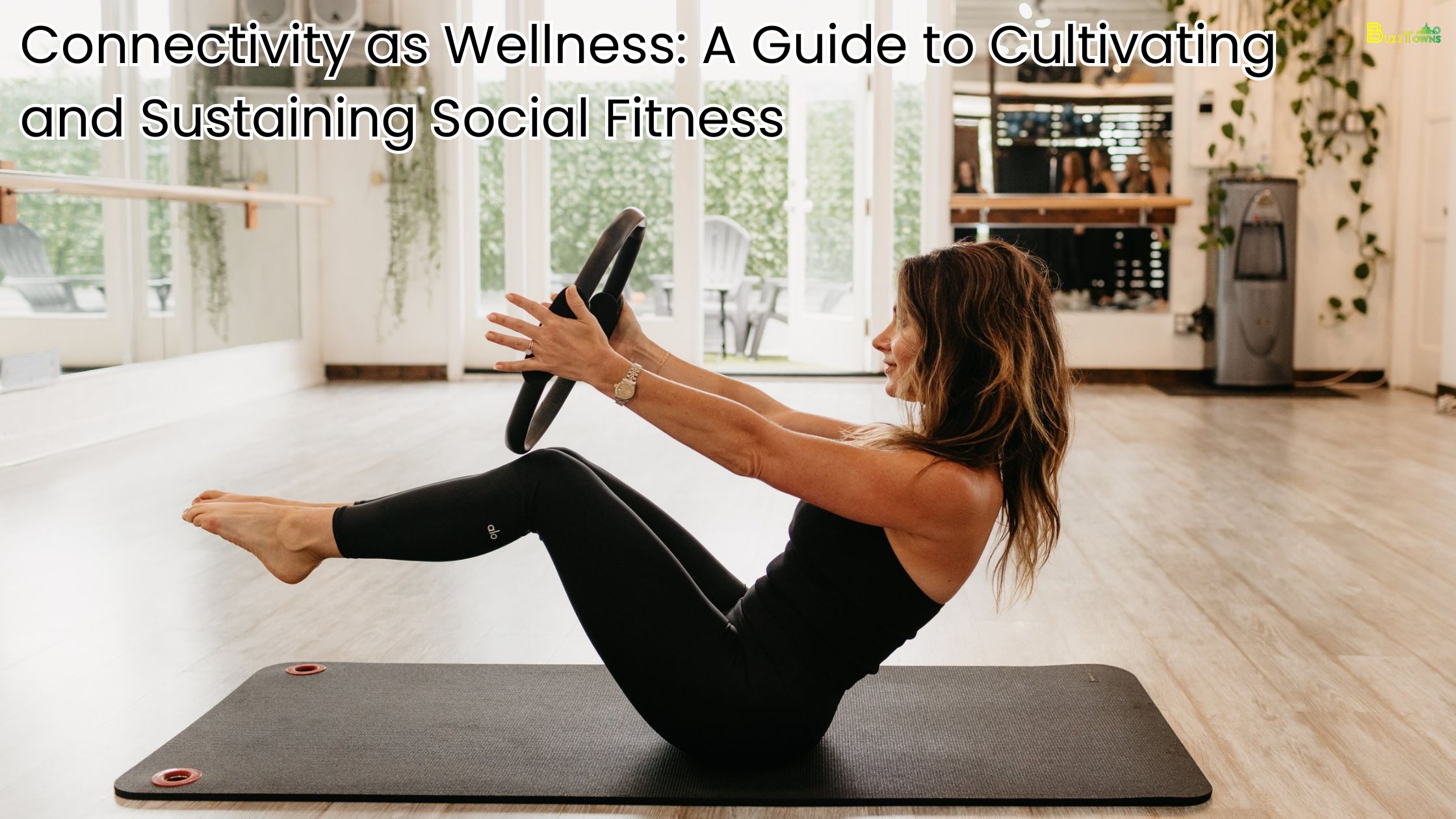
We live in an era obsessed with optimization. We track our sleep cycles with digital rings, calculate our macronutrient ratios to the gram, and measure our cardiovascular performance down to the exact heart rate zone. Yet, in our pursuit of physical and mental longevity, we routinely ignore one of the most critical variables in the human wellness equation: our relationships.
We treat socializing as a leisure activity—something we fit into the gaps left by our careers and gym routines. But true wellness isn’t a solo sport. Just as physical health requires consistent cardiovascular and strength training, your relational life demands structured, deliberate conditioning. Welcome to the concept of Social Fitness.
Redefining the Workout: What is Social Fitness?
The term “Social Fitness” shifts our understanding of relationships from a passive state of “having friends” to an active state of ongoing conditioning. Coined by researchers and popularized by the Harvard Study of Adult Development—the longest-running study on human happiness—social fitness is the practice of leaning into relationships, assessing their health, and actively keeping them vibrant over time.
Think of it this way: you don’t expect to stay physically fit after hitting the gym once in six months. Similarly, you cannot expect your relational life to thrive on sporadic, surface-level interactions.
The Baseline Reality: Loneliness is not just a sad emotion; it is a physiological threat. Chronic isolation triggers a low-grade inflammatory response and alters immune cell gene expression, carrying a health risk equivalent to smoking 15 cigarettes a day. Social fitness is the antidote.
Assessing Your Baseline: The Three Relational States
Before you can build a training program, you need to know your current physical condition. In the realm of social fitness, most people fall into one of three distinct categories:
1. The Socially Sedentary
These individuals have allowed their relational circles to atrophy due to work commitments, screen addiction, or sheer exhaustion. Interactions are purely transactional (cashiers, work colleagues, delivery drivers), and deep, vulnerable connections are virtually non-existent.
2. The Over-Trained (Social Burnout)
On the opposite end of the spectrum, the over-trained individual says “yes” to every happy hour, networking event, and family gathering. Their schedule is packed, but their connections are shallow. They are exhausted, running on the social equivalent of junk food—high in calories (quantity) but entirely devoid of real nutrients (quality).
3. The Socially Fit
These individuals maintain a balanced, intentional ecosystem of connections. They possess a mix of deep confidants and casual acquaintances, actively manage their relational boundaries, and regularly invest energy into sustaining their core circle.
The Four Pillars of Relational Conditioning
To build and sustain true social fitness, you must design a routine around four foundational pillars. These pillars mirror physical exercise principles but apply directly to your social infrastructure.
Pillar 1: Relational Interval Training (Depth vs. Breadth)
A well-rounded physical program combines steady-state cardio with high-intensity intervals. Your social life requires a similar mix of weak ties and strong ties.
- Strong Ties (The Core): These are your 3 to 5 “ride-or-die” relationships. These are the people you can call at 3:00 AM in a crisis. Sustaining them requires high-intensity emotional investment, deep vulnerability, and uninterrupted time.
- Weak Ties (The Peripheral): These are your baristas, gym acquaintances, neighbors, and casual work friends. While they don’t know your deepest secrets, research shows that a high density of casual, positive interactions significantly boosts daily mood and creates a profound sense of community belonging.
Pillar 2: Emotional Flexibility (The Art of Rupture and Repair)
No relationship is perfectly smooth. Just as muscles must be stretched to maintain their range of motion, relationships must navigate disagreements without snapping.
Social fitness involves mastering the “rupture and repair” cycle. When a misunderstanding occurs, a socially fit individual does not immediately ghost, withdraw, or launch a passive-aggressive counterattack. Instead, they lean into the discomfort, communicate their perspective clearly, listen to the feedback, and repair the bond. This process builds emotional resilience, making the relationship stronger than it was before the friction.
Pillar 3: Active Listening Core Strength
Most people do not listen to understand; they listen to reply. They use the time the other person is speaking to formulate their next point, waiting for a pause to jump in.
Active listening is the ultimate core workout for social fitness. It requires your entire focus:
- Mirroring: Repeating back the essence of what you heard to ensure alignment (“It sounds like you felt completely unsupported during that meeting…”).
- Validating: Acknowledging their emotional reality before offering advice or counter-arguments.
- Curiosity over Judgment: Asking open-ended questions (“How did that impact you?”) instead of pivoting the conversation back to yourself.
Pillar 4: Radical Boundary Architecture
You cannot have healthy connections without clear boundaries. If you cannot say “no,” your “yes” becomes entirely meaningless. Boundaries prevent the resentment that inevitably builds when you over-extend yourself to please others.
The Social Fitness Matrix
To visualize how your relational habits map directly to physical wellness models, review the comparison matrix below:
| Physical Fitness Dimension | Social Fitness Counterpart | Tactical Implementation |
| Cardiovascular Endurance | Casual Network (Weak Ties) | Regular micro-interactions with neighbors, colleagues, and community members. |
| Strength & Power | Deep Confidants (Strong Ties) | Deep, vulnerable, focused deep-dives with your inner circle. |
| Flexibility & Mobility | Conflict Resolution | Mastering the rupture-and-repair cycle; leaning into hard conversations. |
| Recovery & Sleep | Solitude & Boundaries | Deliberate alone time to recharge your social battery and protect your peace. |
Daily Tactical Drills: Building the Habit
Knowing the theory of social fitness is useless without execution. Here are three simple, low-friction micro-habits you can integrate into your daily schedule immediately to condition your relational health:
1. The “One-Text” Morning Rule
Before you open email, look at the news, or check your social media feeds, send one appreciative text to a friend, family member, or former colleague. It can be as simple as: “Hey, was just thinking about that time we did [X]. Hope you have an incredible week!” This simple shift moves you from a reactive state into an active state of relational connection first thing in the morning.
2. The 10-Minute Walk-and-Talk
Instead of listening to a podcast or music during your daily walk or commute, call one person from your inner or middle circle just to check in. Set expectations upfront to keep it low-pressure: “Hey, I only have 10 minutes before my next meeting, but I wanted to hear how your week is going.”
3. Anchor a Shared Ritual
The easiest way to sustain a relationship is to remove the friction of scheduling. Establish a recurring, unmovable ritual. Whether it’s a first-Tuesday-of-the-month dinner, a Friday morning coffee walk, or a quarterly weekend trip, anchoring the event on the calendar permanently ensures that life’s busywork never crowds out your human connection.
Reclaiming the Connected Self
We have built a world that is hyper-connected digitally but deeply isolated biologically. We collect followers, likes, and professional connections, yet we go days without a single moment of genuine, unfiltered human vulnerability.
Reversing this trend requires a conscious paradigm shift. Stop viewing your social life as an afterthought or a byproduct of your spare time. Recognize it for what it truly is: a foundational vertical of your systemic health and wellness. By applying the principles of social fitness—consistently training your core connections, maintaining sharp relational boundaries, stretching through conflict, and showing up with radical presence—you do more than just protect yourself from loneliness. You build an emotional infrastructure that sustains you through adversity, fuels your daily performance, and breathes profound meaning into your life. It’s time to step away from the solitary metrics of wellness and step back into the circle of community.