Every year, as the rhythmic beat of the dhol-tasha begins echoing through our neighborhoods, homes transform into vibrant sanctums of devotion. Welcoming Ganpati Bappa home brings an unmistakable energy—the aroma of steamed cardamom-infused rice flour, the bright glow of marigolds, and the quiet comfort of family gathering around the altar.
In our eagerness to make the welcome as grand and heartfelt as possible, we often arrange sprawling thalis filled with fresh blossoms, fragrant sweets, and puja samagri. Yet, according to traditional Vedic texts and centuries-old sthapana customs, devotion also involves respecting specific ritual nuances.
Ganesh puja follows distinct guidelines rooted in ancient scripture and mythology. While Bappa is revered as Vighnaharta (the remover of obstacles) and is infinitely compassionate, certain offerings are traditionally considered inauspicious or outright forbidden on his altar.
If you are setting up your home mandir this Ganeshotsav, take a moment to look over your puja tray. Here are seven common ritual mistakes to avoid, along with the fascinating traditions behind each.
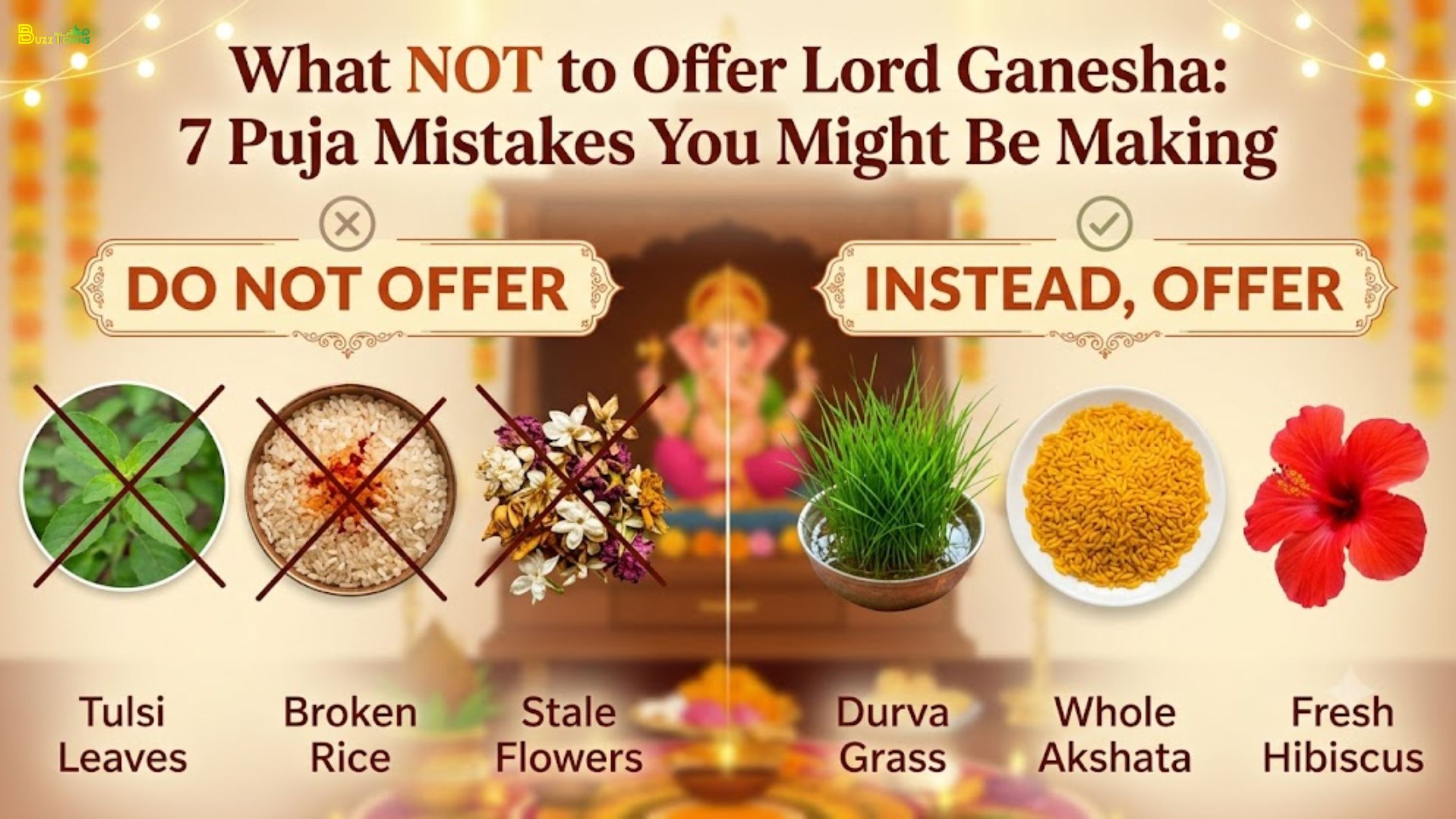
1. Never Offer Tulsi (Holy Basil)
In almost every Hindu ritual, Tulsi leaves are regarded as the ultimate purifying element. From Satyanarayan pujas to daily Vishnu aartis, placing a Tulsi dal (leaf cluster) on the bhog or prasad is standard practice.
However, Ganesh Chaturthi is the notable exception. Tulsi is strictly prohibited from Lord Ganesha’s puja throughout the year, with only one rare scriptural exception during the Bhadrapada Shukla Chaturthi twenty-one-leaf offering (Ekavimshati Patra Puja), where it is included strictly under guided priest mantras. For general daily offerings and prasad, it should never touch his idol.
The Mythological Reason Behind It
The Ganesh Purana recounts an ancient legend: Goddess Tulsi, walking by the banks of the Ganges, encountered a young Ganesha deep in serene meditation. Charmed by his aura, she expressed a desire to marry him. Ganesha gently declined, explaining his commitment to celibacy and ascetic discipline (Brahmacharya). Stung by the rejection, Tulsi placed a curse upon him, declaring he would one day be compelled to marry. Ganesha in return, uttered a counter-curse, prophesying that Tulsi would be bound in marriage to a demon (Sankhachuda) before transforming into a plant. Realizing her mistake, Tulsi sought his forgiveness. Ganesha softened the curse, blessing her with supreme reverence across the universe, but decreed that she would forever remain absent from his personal worship.
- What to offer instead: Fresh Durva grass (Cynodon dactylon). Offer it in clusters of 3, 5, or 21 paired blades dipped in pure water or milk.
2. Avoid Khandit Akshata (Broken Rice Grains)
Akshata—uncooked white rice blended with turmeric or kumkum—is an indispensable part of tilak and welcome rites. Yet, the literal Sanskrit meaning of the word Akshat is “unbroken” or “undivided” (A-Kshata).
In traditional Indian symbology, offering broken rice grains denotes lack of wholeness, disruption, or incomplete energy. Broken grains can inadvertently attract disharmony or dilute the solemnity of the ritual.
How to Prepare Your Akshata Correctly
Take a handful of good-quality raw rice (preferably Basmati or whole grains) and gently sort out cracked or fragmented pieces before mixing in a drop of water, a pinch of pure turmeric (haldi), or auspicious kumkum. Whole, luminous yellow or red rice represents wholeness, prosperity, and an unblemished heart surrendered to the deity.
3. Keep White Flowers and Ketaki Away
Vibrant colors define Ganesha’s aesthetic. The deity is universally associated with the root chakra (Muladhara), symbolized by rich red and deep vermilion. While white flowers like jasmine, mogra, or tagar are beloved in Devi and Shiva worship, pure white flowers are conventionally avoided during Ganesha’s core invocations.
In particular, the Ketaki (screwpine) flower is considered taboo on Lord Ganesha’s altar, much like it is in the worship of Lord Shiva. According to the Shiva Purana, the flower bore false witness during a cosmic dispute between Brahma and Vishnu, resulting in an eternal ban from divine worship.
- What to offer instead: Bright red hibiscus (Jaswand), crimson carnations, marigolds (Genda), and rose petals. Red hibiscus, in particular, is believed to be Bappa’s favorite flower, representing vitality, warmth, and the dissipation of grief.
4. Say No to Stale or Fallen Flowers
A flower offered to God must be Nirmalya before it is discarded, but it should never be picked up from the ground to begin with.
- Never wash plucked flowers directly under heavy running water, as rough handling bruises petals and removes natural essential fragrances. A gentle sprinkling of clean water is sufficient.
- Never offer flowers that have fallen to the floor, even if your home floor is clean. Once a blossom touches the ground, tradition dictates it has absorbed earthly dust and cannot be dedicated to the sanctum.
- Remove old garlands promptly: Ensure that the withered floral decorations from the previous evening are respectfully removed before beginning the morning Abhishekam and Aarti.
5. Avoid Onion and Garlic in the Festive Bhog
Festive cooking in an Indian household is a labor of love, but the food prepared for Bappa’s Naivedya follows strict Sattvic principles.
While onions, garlic, and heavy spices are staples of daily Indian curries, they fall under the Tamasic and Rajasic categories in Ayurveda. These ingredients are believed to stimulate restlessness, dull spiritual clarity, and distract the mind from contemplative peace.
When preparing Bappa’s meal—be it Puran Poli, Karanji, vegetable stews, lentils, or sweet rice:
- Cook in a spotless, sanitized kitchen space.
- Refrain from tasting the food directly with spoons or fingers while cooking. The first portion must always be kept pure and untouched for the deity.
- Rely on aromatic substitutes like freshly grated ginger, whole cumin, green chilies, pure asafoetida (hing), and fresh coconut.
6. Never Use Iron or Steel Vessels for Puja Offerings
The vessels you choose for the Panchamrit, holy water (Ganga jal), lighting the lamp, or offering prasad carry distinct ritual significance.
Traditional Vedic ritual texts (Shastras) recommend non-reactive, sacred metals like copper, brass, silver, and gold.
- Iron and steel are modern industrial alloys and are considered ritually inert or Tamasic. They are generally avoided for the inner sanctum offerings and aarti lamps.
- Plastics and single-use thermocol containers should also be strictly excluded. Not only are they environmentally harmful, but they also contradict the organic, earth-centric ethos of welcoming a clay Ganesha.
Opt for clean brass diyas, copper achamani cups, and natural leaf platters like banana or sal leaves for serving modaks.
7. Steer Clear of Plaster of Paris (PoP) and Chemical Paints
While this is technically an item chosen before the rituals begin, the idol itself is the foundation of the entire celebration.
Choosing an idol made of Plaster of Paris (PoP) and adorned with heavy-metal paints is one of the most consequential missteps in modern Ganeshotsav. PoP takes months to dissolve, leaves behind toxic residues that choke local rivers, lakes, and oceans, and often results in fragmented idols washing back onto the shore after Visarjan—a distressing and disrespectful sight for any devotee.
Traditional scriptures prescribe Mitti (natural clay/shadu mati) for a reason:
- It connects us to the earth element (Prithvi tattva).
- It dissolves smoothly into water within hours, symbolizing the cyclical truth of life—that what originates from nature must return gracefully to nature.
The Essence Behind the Rules
Ritual guidelines in Indian traditions are never meant to evoke fear or anxiety. At its core, bhakti is an emotion—Bhavana—and Bappa is known to appreciate pure love above all elaborate displays.
However, paying heed to these simple don’ts connects us more deeply to our cultural roots. By avoiding these common missteps, choosing organic clay, offering pure Durva grass instead of Tulsi, and serving a heartfelt Sattvic meal, you ensure your home resonates with authentic peace, positivity, and divine blessings this festival season.
Ganpati Bappa Morya!