
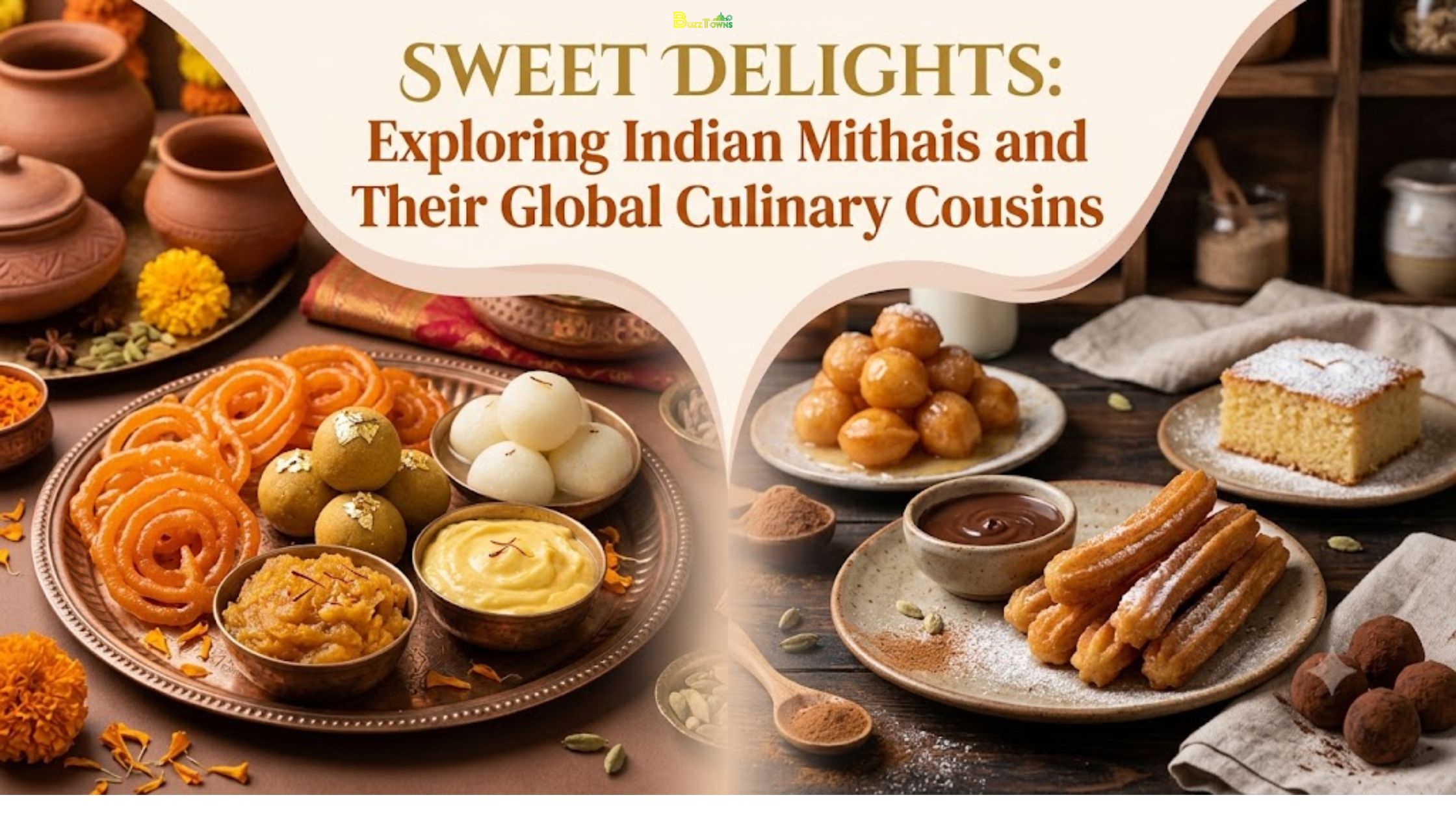
When we think of Indian cuisine, the first things that often come to mind are vibrant spices and savory curries. However, the true conclusion of any authentic Indian meal is incomplete without a selection of Mithais—sweet, intricate desserts that form an integral part of the country’s culture and heritage.
Indian Mithais are characterized by their rich textures, aromatic ingredients like cardamom and saffron, and centuries-old recipes. Yet, what is fascinating is how many of these beloved sweets have distinct culinary relatives across the globe.
In this deep dive into the world of sweet delights, we will explore some of India’s most famous Mithais and discover their equivalents in international cuisine, highlighting how the universal language of flavor connects diverse cultures.
The Universal Appeal of Fried Dough: Jalebi vs. Churros & Funnel Cakes
One of the most recognizable Indian sweets is the Jalebi. These are spirals of fermented batter, deep-fried until crisp and then submerged in a saffron-infused sugar syrup. The result is a hot, crunchy exterior that yields to a burst of sweet syrup in the center.
The culinary concept of piping batter directly into hot oil is universally loved. Spain’s famous Churros follow a similar preparation, though they are usually dusted with cinnamon sugar and dipped in hot chocolate rather than being soaked in syrup. Similarly, the North American Funnel Cake features batter fried into chaotic webs, usually topped with powdered sugar and fruit.
The Versatility of Semolina: Suji Ka Halwa vs. Greek Ravani
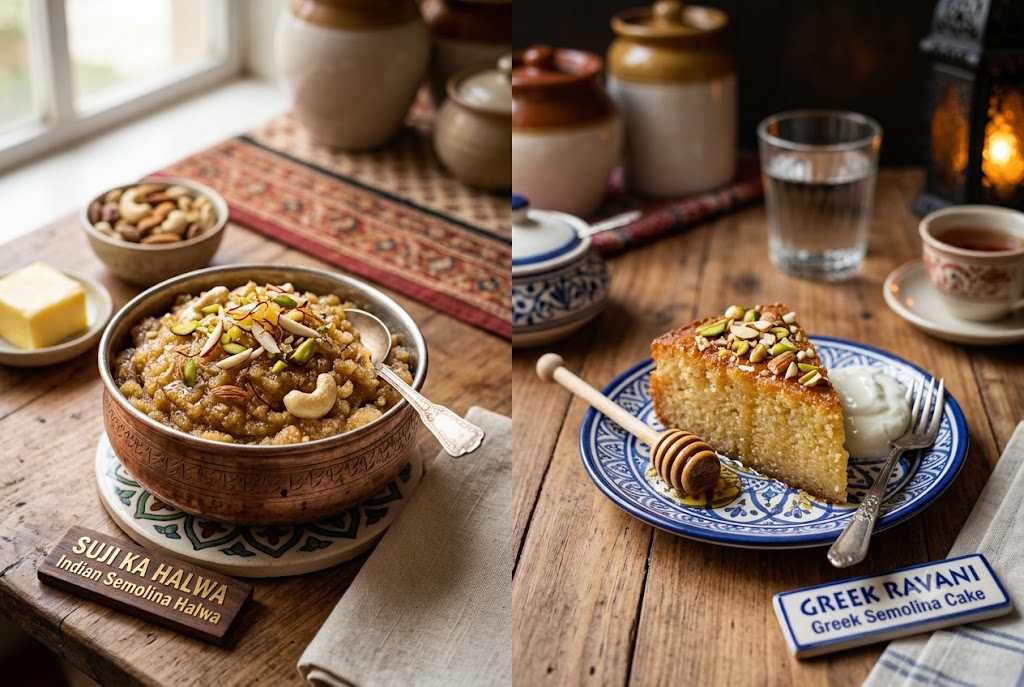
In Indian households, Halwa—specifically Suji Ka Halwa (Semolina Halwa)—is the quintessential comfort food. It is a quick-to-prepare dessert where semolina is roasted in ghee, sweetened, and flavored with cardamom and dried fruits.
Semolina is a global staple. Over in Greece and Turkey, Ravani (sometimes called Revani or Basbousa in other regions) is the equivalent. It is a semolina sponge cake soaked in citrusy syrup. Both desserts share that distinct, grainy texture of semolina that absorbs sweetness beautifully.
The Soft and Luminous: Rasgulla vs. Turkish Lokma & Greek Loukoumades
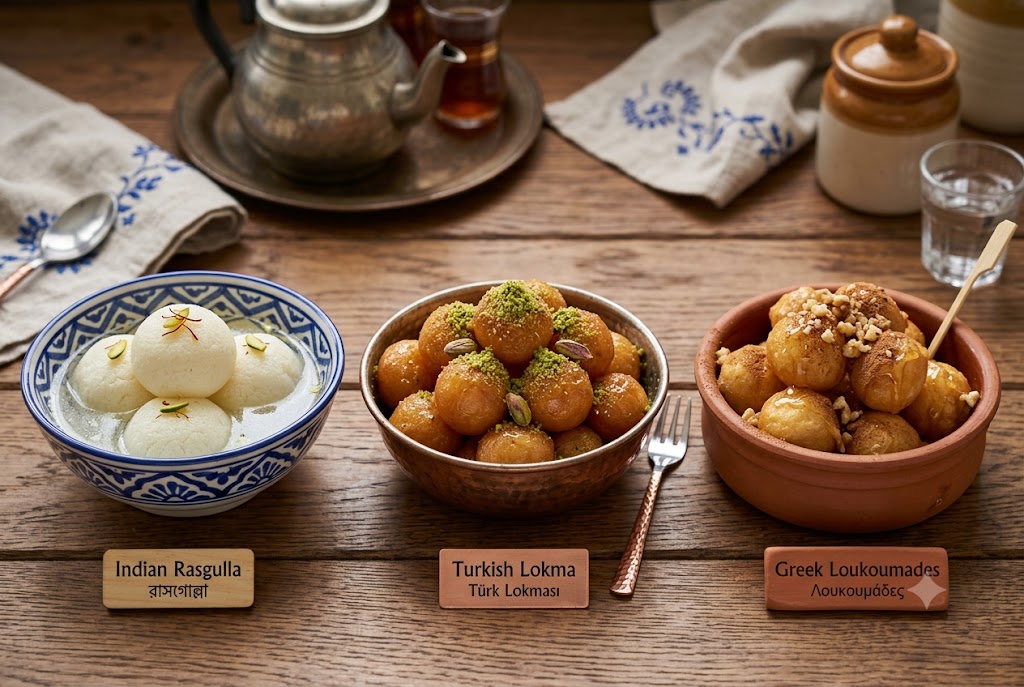
A point of pride for East India, particularly Bengal, the Rasgulla is a soft, spongy ball of chhena (cottage cheese) cooked in light sugar syrup. It is valued for its delicate texture and subtle sweetness.
While the ingredients differ, the experience of a small, soft, syrup-soaked dumpling is echoed in Mediterranean desserts. Turkey’s Lokma and Greece’s Loukoumades are small balls of yeast-leavened dough that are deep-fried and heavily coated in honey or syrup, offering that same satisfying, saturated sweetness.
The Nutritious and Rich: Ladoo vs. Energy Balls & Truffles
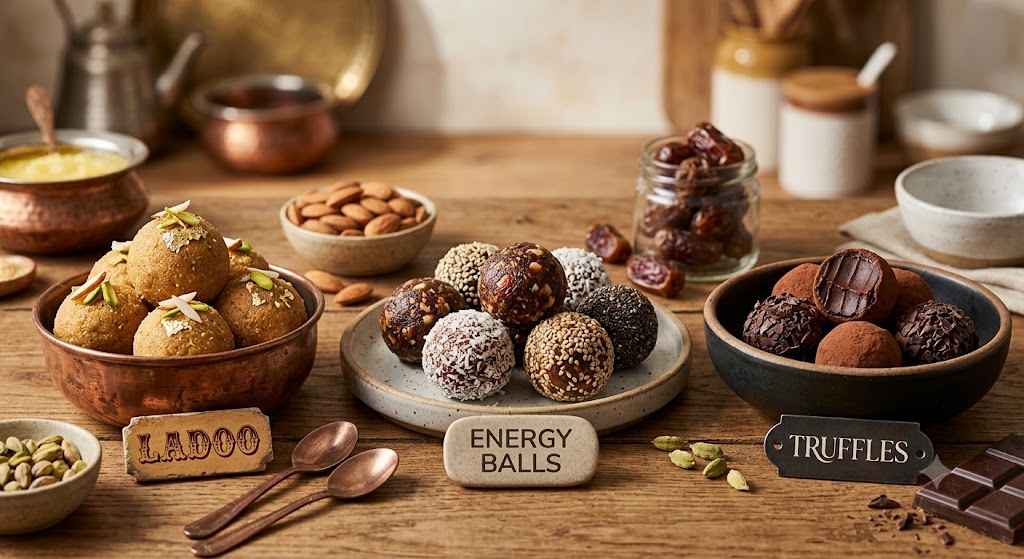
Ladoos are a broad category of Indian sweets, often made by combining flour (like chickpea flour in Besan Ladoo), fat (ghee), and sugar, rolled into round balls. They are sometimes nutritious energy boosters, often given to children or offered as prasad (offerings) in temples.
The global cousin of the Ladoo is the Energy Ball or Truffle. While often prepared for health benefits now—using dates, nuts, and oats—the structural concept of a dense, rolled sweet remains identical. In upscale confectionery, a simple chocolate truffle relies on a dense center (ganache) rolled into a similar shape.
The Regal Indulgence: Shrikhand vs. Greek Yogurt & Parfaits
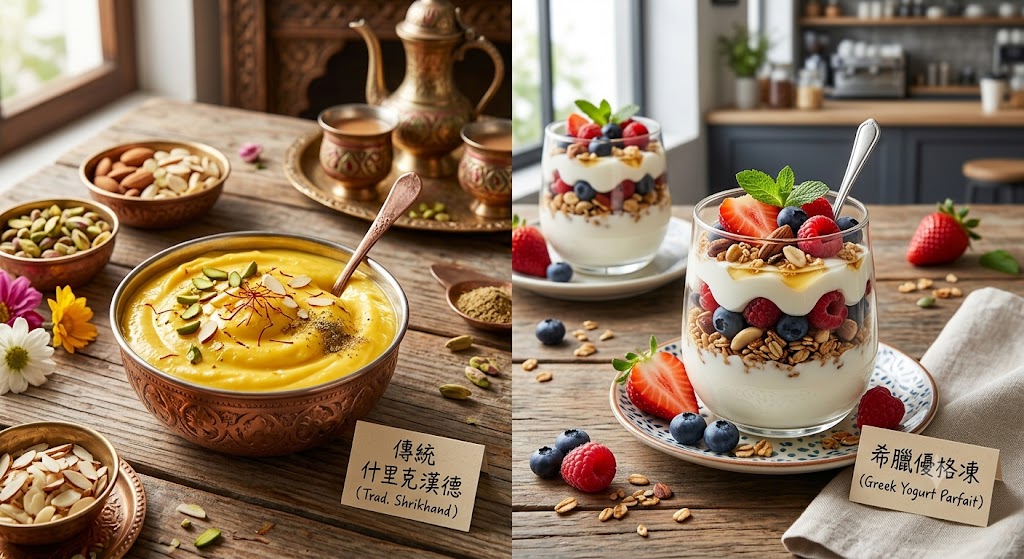
A staple of Maharashtrian and Gujarati cuisine, Shrikhand is a velvety dessert made from strained yogurt (hung curd), sweetened, and flavored with cardamom, saffron, and nuts.
Its global counterpart is obvious in name but subtly different in preparation: Greek Yogurt. While the West consumes Greek yogurt primarily as a health food or component, Shrikhand treats the strained yogurt as a luxurious, high-calorie dessert. Adding fruits to a parfait is a common Western application that creates a layered dessert similar in concept.
In Conclusion
Indian Mithais are a celebration of artistry and tradition, yet exploring their culinary connections globally shows us how connected we are. It proves that the human desire for a sweet end to a meal is a shared instinct, interpreted uniquely through regional ingredients. If you are a lover of global sweets and are particularly fond of the texture and warmth that comes from dough-based, syrupy desserts, exploring the nuances between a traditional Jalebi and its cousins across the world is a must. If your sweet tooth craves international variants or is looking for creative dough inspirations, we recommend checking out these creative dough and global sweet options to inspire your next culinary experiment.