
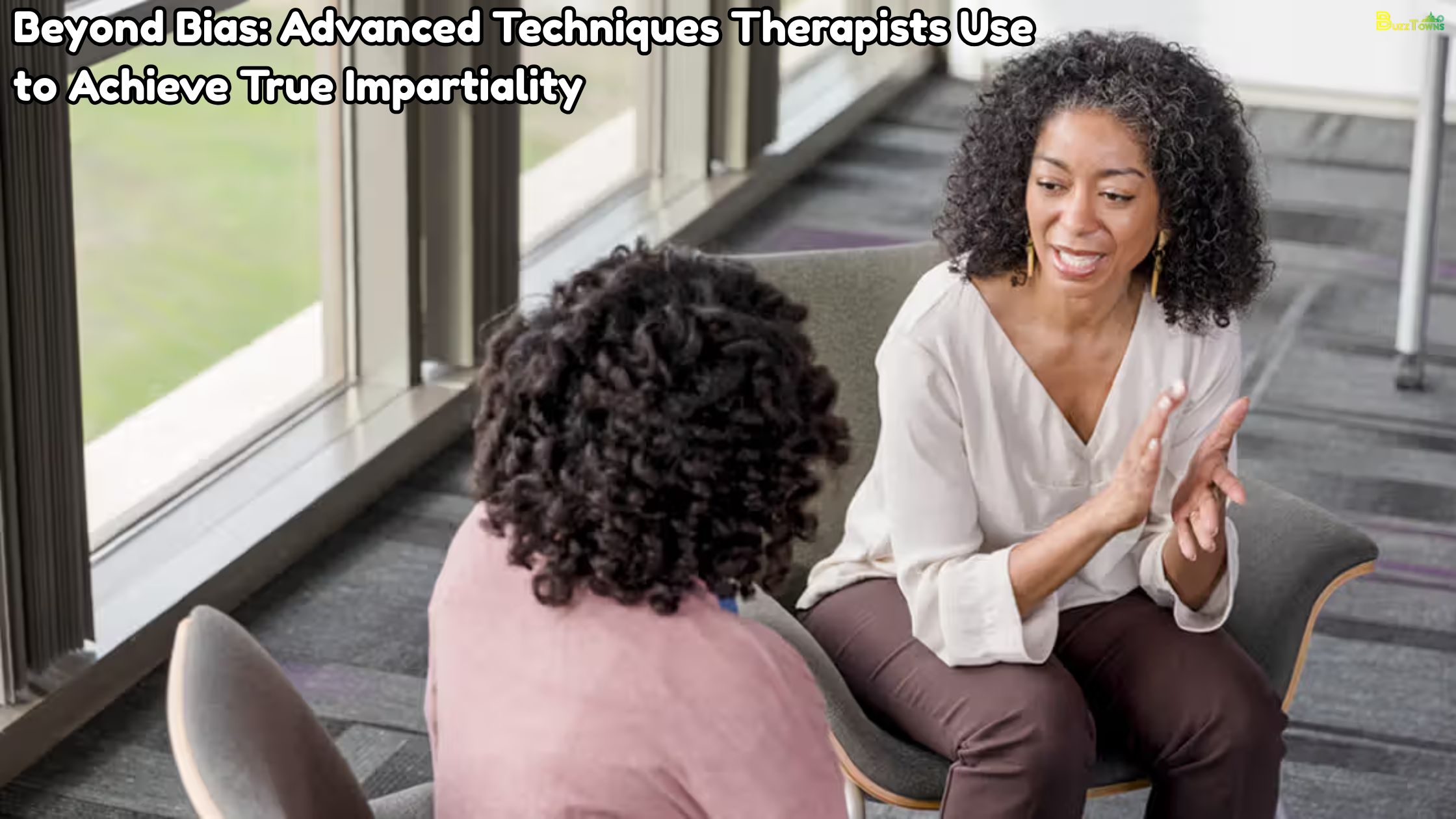
The therapeutic relationship is unique, a deeply human exchange based on the strict ethical requirement of objectivity or therapeutic neutrality. For many people, this brings to mind the cliché of the silent, stone-faced doctor. Yet, true neutrality is a far cry from cold detachment; It is a dynamic, proactive approach – an ongoing, sophisticated process of self-monitoring and technique application that is critical to effective treatment. While basic bias training (such as recognizing microaggressions or implicit biases) is important, experienced practitioners go beyond bias by employing a set of advanced techniques therapists in-the-moment techniques.
These methods are designed not only to conceal bias but also to root out its influence, ensuring that the patient’s experience, not the physician’s judgment, remains the sole guide to the work. This detailed exploration explores the advanced strategies therapists use to maintain a state of non-judgmental, compassionate objectivity, ensuring that the therapeutic space is truly safe and fertile ground for growth.
The Conceptual Foundation: True Therapeutic Neutrality
The concept of therapeutic neutrality has evolved significantly since its introduction in psychoanalysis. Originally misinterpreted as “emotional indifference”, contemporary practice defines it as indifference towards the patient’s internal conflicts and external relationships.
- This is not emotional isolation, silence, or withholding of empathy.
- It is a balanced posture that combines objective observation with genuine compassion and interest.
The goal is to create a blank canvas onto which the patient can project his or her entire inner world (a process known as transference) without fear of being corrected, embarrassed, or led to the therapist’s preferred outcome. It requires sophisticated, disciplined self-awareness.
Core Techniques for Advanced Impartiality
The shift from simply knowing one has biases to actively mitigating their impact requires specific, intentional techniques.
1. The “Curious-but-Empty” Stance (Radical Openness)
This is a mindset that a therapist develops in order to enter a session with maximum capacity for new information and minimum preconceptions. This is the opposite of confirmation bias.
- Technique: Before a session, the therapist intentionally sets aside any tentative diagnoses, personal feelings, or even memories of the previous session that might create an expectation. Their goal is to hear the story as if hearing it for the first time.
- In practice: If a patient is discussing a conflict with a partner, the therapist actively probes the desire to make comparisons with past patients or personal relationships. They may prompt internally: “What is unique about this person, at this moment in this struggle?” This fundamental openness prevents the therapist from prematurely closing the case or pushing the story toward a familiar, but possibly wrong, conclusion.
2. Bracketing (The Conscious Setting Aside)
Bracketing is a phenomenological technique where the therapist consciously identifies their own emotional, cultural or personal reactions and “brackets” them.
- Technique: When a client shares something that triggers a strong personal reaction (for example, judgment, fear, relief, or even extreme empathy), the therapist immediately identifies that feeling as their own and mentally dissociates it. They do not act on emotion, nor suppress it, but rather accept it as information about themselves and focus solely on the customer’s experience.
- Self-monitoring question: “Where is this feeling coming from? Is it a reaction to the client’s content, or is it provoking my own history?” This immediate self-check breaks the chain between stimulus and biased response.
3. Multiple Working Hypotheses (The “Alternative Scenario”)
This is a cognitive strategy borrowed from forensics and critical thinking, which combats a pervasive cognitive bias known as “anchoring”. Anchoring occurs when the first piece of information received disproportionately influences all subsequent decisions.
- Technique: Instead of deciding on a single clinical assumption or understanding (Hypothesis A), the therapist consciously formulates at least two, and often three, specific and plausible alternative hypotheses (Hypotheses B and C). For example:
- Hypothesis A (initial anchor): The patient is resistant to change.
- Hypothesis B (alternative): The patient is afraid of success and the change it brings.
- Hypothesis C (alternative): The patient’s symptoms are serving a protective function in their family system.
- Benefit: By keeping multiple competing narratives active, the therapist avoids making one interpretation prematurely, ensuring that they remain open to data that contradicts their initial inclinations. This makes the therapeutic work more robust and less sensitive to the therapist’s initial, potentially biased, gut feeling.
4. Use of the “We” and “Us” Language (Cultivating a Shared In-Group Identity)
Research on implicit bias shows that people display less prejudice toward those they perceive to be their “in-group.” Therapists strategically leverage this principle to create a sense of shared journey.
- Technique: Therapists subtly shift language from adversarial or transactional “I” and “you” to collaborative “we” and “we.”
- Instead of: “I think you should try X.”
- Use: “We should look at X as a possible next step,” or “Our most important goal right now seems to be Y.”
- The result: This language fosters a sense of being a team working toward shared goals, which naturally lowers the defensive wall of implicit bias and fosters more patient rapport and trust.
5. Process Commentary as an Intervention
When a therapist feels that their objectivity is wavering, or if a dynamic feels stuck due to an unspoken decision (either on their part or on the client’s part), they can intervene by focusing on the process of the session, not the content.
- Technique: The therapist observes the interaction as dynamic and brings it into the room to examine it without judgment.
- Example: “I notice a slight shift in my focus when you talk about your family – I feel like I’m becoming too focused. I wonder what that moment feels like for you?”
- Benefit: By sharing a small, managed fragment of their internal process – without sharing the content of their potential biases – they model metacognition and invite the client to explore the dynamics of the relationship, which is often a microcosm of the client’s external life. It is a subtle but powerful self-correction mechanism.
Systemic and Ongoing Impartiality Maintenance
The work of staying impartial is not confined to the session—it is a continuous professional duty anchored by external checks and ongoing development.
1. Clinical Supervision and Consultation
Regular, high-quality clinical supervision is arguably the most important external mechanism for combating bias.
- Role of the Supervisor: A supervisor serves as an external monitor, a second pair of expert eyes who are specially trained to spot the therapist’s “blind spots.”
- Focus: The therapist presents cases, and the observer listens for subtle language cues, emotional tone, or pattern-matching that suggest the therapist is projecting his or her own values or experiences onto the client. This external challenge is often the only way to uncover deeply rooted implicit bias.
2. Personal Therapy and Self-Reflection
A commitment to personalized medicine is the hallmark of an ethical, high-functioning physician.
- Concept: A therapist who has actively worked on his or her own emotional wounds, biases, and personal history is better equipped to recognize when those issues are being triggered by the client.
- Practice: Frequent self-reflection, often documented through journaling or daily check-ins, is essential. The therapist should continually ask: “What am I bringing to this conversation that is unrelated to the client?”
3. Cultural Humility and Lifelong Learning
Moving beyond initial cultural competency training requires adopting a stance of cultural humility. Competence shows that a person can master a culture; Humility suggests a posture of continuous, respectful learning.
- Technique: The therapist works from the assumption that they do not know anything definite about the client’s cultural or lived experience. He is committed to being a student in every intercultural encounter.
- Question: Instead of relying on facts learned about a group, the therapist asks the client: “How has your unique experience shaped your view of this problem?” and “In your experience, what are the common assumptions people make about you, and how do those assumptions affect our work?”
The Ultimate Goal: Deep Empathy, Not Sympathy
The ultimate goal of all these techniques is to achieve deep empathy – the ability to understand another person’s feelings and experiences from their perspective – without slipping into empathy, which involves feeling pity or concern for them.
Empathy, despite good intentions, is an act of getting involved in the client’s feeling state, which destroys neutrality and can lead to biased advice. Deep empathy, maintained through the techniques discussed, allows the therapist to sit with the client in their experience, remaining fully present but objectively positioned to help them navigate their path.
By rigorously applying these advanced techniques – from bracketing individual responses to maintaining multiple working hypotheses and using outside observation – practitioners go beyond simple bias mitigation. They uphold the ethical and clinical standard of objectivity, turning the consulting room into a sanctuary where the client can be truly seen, understood and, ultimately, freed to choose his own direction.