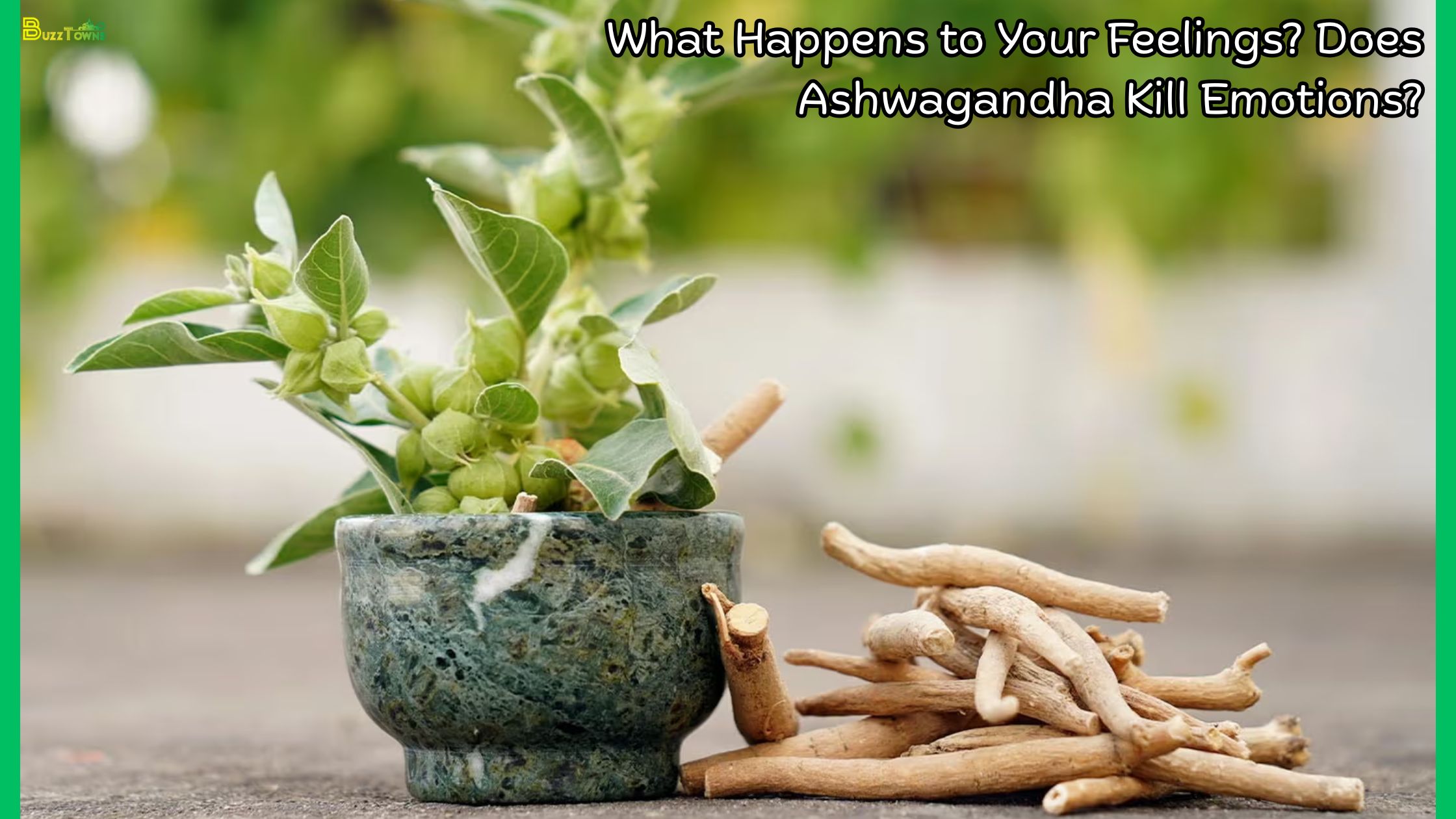
In an age defined by relentless stress, supplements that provide peace and tranquility are growing in popularity. Chief among them is ashwagandha (Withania somnifera), an ancient Ayurvedic herb praised as a powerful adaptogen – a substance that helps the body resist the effects of stress. However, as its use is becoming mainstream, a worrying question frequently arises in online forums and search engines: “Does ashwagandha kill emotions?”
Skeptics and new users sometimes report a feeling of emotional lethargy, a blunting of the spectrum of emotions – lower levels of anxiety and stress, and higher levels of euphoria and happiness. This fear of trading emotional liveliness for calmness has given rise to the myth that ashwagandha turns users into emotionless robots.
This detailed, informative guide will separate the medical reality of ashwagandha from the emotional numbing fiction. We’ll explore the science behind how this herb interacts with the brain, why some people feel “low”, and how to use ashwagandha responsibly to manage stress without sacrificing your full emotional life.
The Science of Calm: How Ashwagandha Works on Your Brain
To understand whether ashwagandha “kills” emotions, we must first examine how it interacts with the biological systems responsible for stress and mood.
Ashwagandha is an adaptogen, meaning that its primary function is to help the body maintain homeostasis (balance) during periods of physical or psychological stress. It achieves this primarily through its effects on the hypothalamic-pituitary-adrenal (HPA) axis.
1. Targeting the Stress Hormone: Cortisol
The HPA axis is the body’s central stress response system. When you face a perceived threat (a deadline, a difficult conversation, or chronic anxiety), your hypothalamus signals the pituitary gland, which in turn signals the adrenal glands to release cortisol, the primary stress hormone.
- Mechanism: Ashwagandha’s active compounds, called withanolides, appear to directly regulate the HPA axis. Clinical studies have shown that ashwagandha root extract can significantly reduce elevated cortisol levels.
- Effects: By reducing chronic, high cortisol, which is responsible for a constant, low-level feeling of anxiety, hyper-vigilance, and irritability, Ashwagandha takes the “edge” off the stress response.
2. Enhancing Neurotransmitter Balance: GABA
In addition to cortisol modulation, ashwagandha interacts with key neurotransmitters. Specifically, it is believed to mimic the activity of gamma-aminobutyric acid (GABA).
- Role of GABA: GABA is the main inhibitory neurotransmitter in the central nervous system. It works like the brain’s “brakes,” slowing nerve activity and promoting relaxation.
- Effects: By increasing GABA activity or binding to GABA receptors, ashwagandha promotes calmness and reduces neuronal excitation, the root cause of racing thoughts and intense anxiety.
3. The Takeaway on Mechanism
Ashwagandha does not “kill” emotions; It reduces the biological intensity of the stress and anxiety response. When you’re less stressed and anxious, the extreme emotional signals that dominate your inner life – like fear, anxiety, and panic – are reduced. This therapeutic effect is often confused with emotional numbness.
The Myth of Emotional Numbness: Why Users Report Feeling “Less”
If the herb is simply balancing the body, why do some users feel that ashwagandha is “killing” their emotions, even positive emotions? This phenomenon is complex and probably arises from a few key factors:
1. Reduction of Anxiety is Not Loss of Feeling
For individuals living with chronic anxiety, the hyper-vigilant, high-alert state becomes the baseline for their emotional experience. They mistake the constant presence of stress hormones and fast, nervous energy for their normal feeling state.
- Variation: When ashwagandha successfully reduces anxiety, the sudden absence of this constant internal “noise” can feel strange, calming, or even empty. The lack of anxiety is perceived as a lack of overall feeling, when in reality, it is a return to a calmer, more neutral baseline.
2. The Link Between Stress and Excitement
High-arousal emotions, whether negative (fear, panic) or positive (intense excitement, euphoria), often share similar physiological pathways, including an elevated heart rate, adrenaline release, and rapid breathing.
- The Experience: If ashwagandha is consistently modulating the HPA axis and GABA activity to promote calm, it may slightly temper the most extreme, high-arousal emotional peaks, both good and bad. The joy you feel may be deep and satisfying, but perhaps less frantic or outwardly explosive. This is a subtle difference, but one that can be interpreted as a dulling of “the highs.”
3. Dosage and Bio-individuality
No two people react exactly the same way to any supplement. Reported “blunt” effects are often associated with excessive dosage or individual sensitivity.
- Higher doses: Taking more than the recommended dose (usually 300-600 mg of a high-concentration extract like KSM-66 or Sensoril) may throw the balance too far, resulting in noticeable sedative or neutralizing effects.
- Existing conditions: People who are highly sensitive to substances, or who are already taking anti-anxiety or antidepressant medications, may experience more pronounced emotional contractions when combining treatments.
Responsible Use: Finding Emotional Balance
The goal of using adaptogens like ashwagandha should not be to eliminate your emotions, but rather to control them so that you can respond effectively to stressors rather than reacting impulsively.
Here are practical steps to use Ashwagandha to improve mood without becoming emotionally depressed:
1. Start Low and Go Slow
Start with the lowest effective dose recommended on the product label. Keep a close eye on your emotional state for 4-6 weeks. Do you feel calm? Or don’t you feel anything? If you feel excessively drowsy, reduce the dose immediately.
2. Cycle the Supplement
Many physicians recommend cycling adaptogens to prevent the body from becoming too accustomed to their effects.
- Example cycle: Take ashwagandha daily for 8-12 weeks, then take a 2-4 week break before starting again. This ensures that your body’s HPA axis maintains its natural response.
3. Pair it with Emotional Expression
Ashwagandha is a means of mental peace, not a cure for emotional health. It is most effective when paired with practices that encourage healthy emotional expression:
- Mindfulness and Journaling: Use the new emotional “space” provided by anxiety reduction to identify, label, and process your emotions through writing or meditation.
- Therapy or counseling: Adaptogens can reduce the intensity of stress, making it easier to engage in cognitive behavioral therapy (CBT) or talk therapy to address the root cause of anxiety.
4. Examine Your Expectations
If you expect Ashwagandha to make your problems go away, you will be disappointed. This is not an emotional shield. If you expect it to reduce your daily, pervasive anxiety, you’ll probably be satisfied. Understand that peace is also an emotion, and it is the essential foundation from which deeper, more authentic positive emotions can grow.
Conclusion: A Tool for Regulation, Not Elimination
To definitively answer the original question: Does Ashwagandha kill emotions? No, scientific evidence shows that this is not the case.
Ashwagandha is a powerful, well-researched adaptogen that acts by buffering the body against the harmful effects of chronic stress hormones (cortisol) and promoting a state of relaxation (GABA).
The feeling of emotional numbness reported by some users is almost always a misinterpretation:
- A return to baseline, where the old anxiety is absent.
- Overdosage or individual sensitivity.
- Alleviation of high-arousal states, both negative and positive.
Ashwagandha offers the precious gift of emotional regulation, giving you space between the stimulus and your response. It can calm the nervous system, allowing you to feel the full spectrum of emotions – happiness, love, frustration and sadness – without being overwhelmed or hijacked by them. When used responsibly, it is an important tool not for eliminating sensitivity, but for building resilience. If you are concerned about your emotional state while taking supplements, always consult a health care professional or qualified herbalist to review your dosage and determine the best approach for your personal wellness goals.