In the heart of every Punjabi family, there is a jar that holds more than just food; it holds the secrets of memories, warmth, and ancestral vitality. There is a register in that jar.
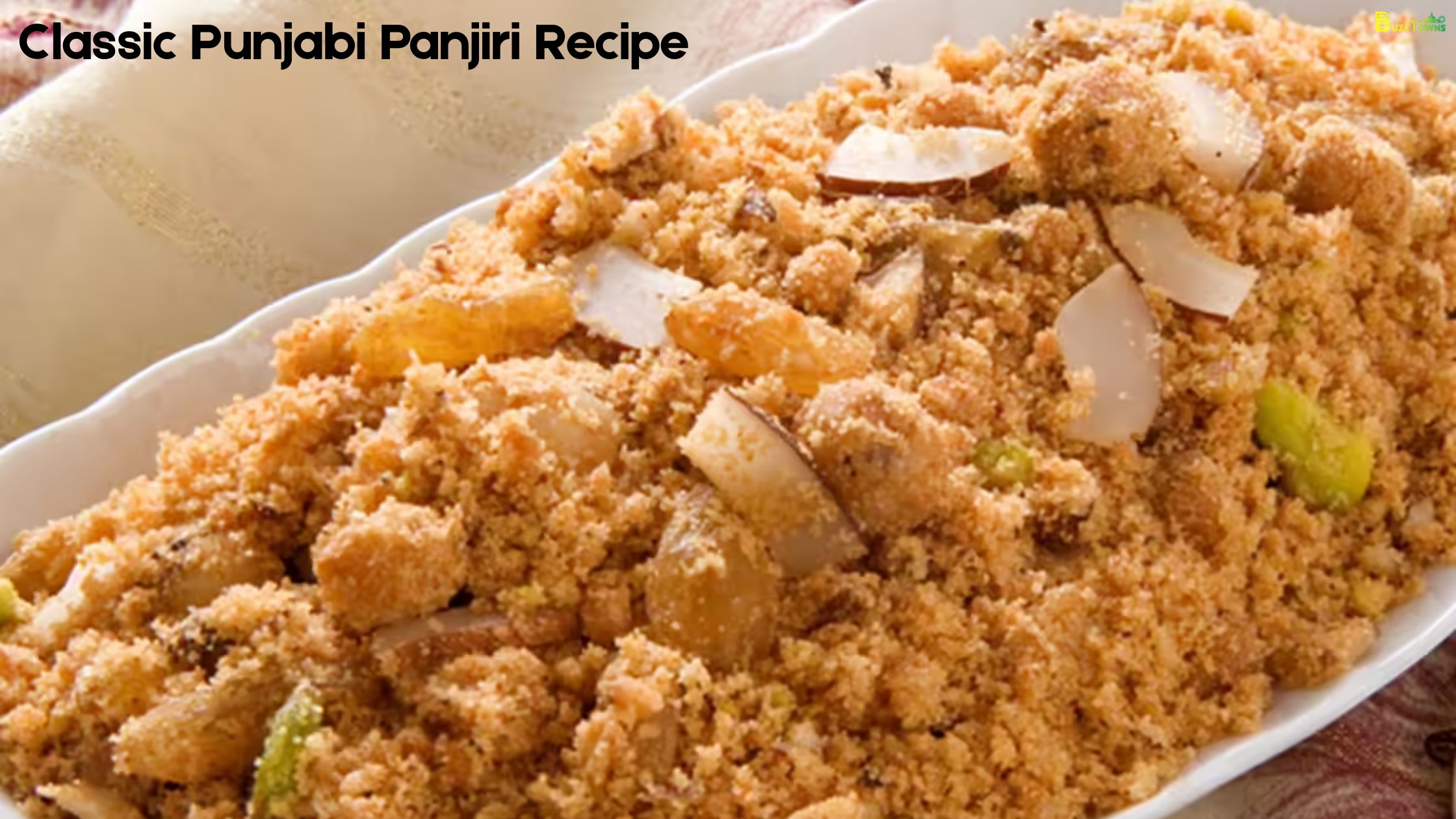
If you grew up in a North Indian household, the smell of whole wheat flour frying in desi ghee is probably the scent of winter. Panjiri is the ultimate Indian “superfood” – a dense, delicious, and highly nutritious supplement that has been used for centuries to heal the body, boost immunity, and provide a concentrated burst of energy.
While it is famous as a post-natal remedial food for new mothers, the classic Punjabi Panjiri is actually a seasonal food for everyone. Let’s dive into the history, science, and step-by-step process of creating this golden piece.
The Philosophy of Panjiri: Why It Works
Before we head to the stovetop, it’s important to understand what makes the classic Punjabi Panjiri recipe so special. Unlike modern protein bars, which are filled with preservatives and synthetic sweeteners, Panjiri relies on “primal nutrition.”
- Desi Ghee (clarified butter): Carrier. It lubricates joints and aids in the absorption of fat-soluble vitamins.
- Flour (whole wheat flour): Base. It provides complex carbohydrates for sustained energy.
- Gum (Edible Gum): The Secret Weapon. Derived from tree sap, it is incredible for bone health and back pain.
- Makhana (Fox Nuts): Rich in calcium and antioxidants.
- Dried Fruits and Seeds: A powerhouse of omega-3s, protein, and minerals.
Ingredients You Will Need
To make a truly authentic batch (approx. 1 kg), gather these high-quality ingredients. The quality of your ghee and nuts will directly dictate the taste of the final product.
| Ingredient | Quantity | Purpose |
| Whole Wheat Flour (Atta) | 500g | The fiber-rich base |
| Desi Ghee | 400g – 500g | The healthy fat and binding agent |
| Bura Sugar or Jaggery Powder | 300g | Natural sweetener |
| Gond (Edible Gum) | 50g | Joint health and crunch |
| Phool Makhana (Fox Nuts) | 50g | Calcium and lightness |
| Almonds (Badam) | 100g | Brain health |
| Cashews (Kaju) | 50g | Healthy fats |
| Melon Seeds (Magaz) | 25g | Cooling properties and texture |
| Carom Seeds (Ajwain) | 1 tbsp | Digestion |
| Dry Ginger Powder (Saunth) | 1 tbsp | Internal warmth |
Step-by-Step Instructions
Phase 1: The Prep Work (The Crunch Factor)
The secret to non-sticky, crispy panjiri is to fry the ingredients separately.
- Fry the gum: Heat 2 tablespoons of ghee in a heavy-bottomed pan. Add the glue in small batches. It will pop like popcorn. Make sure it is fried completely; If the middle part is raw, it will stick to your teeth. Remove and set aside to cool, then crush coarsely with a rolling pin.
- Fry the makhana: Fry the makhana in the same ghee until they become brittle and break easily when pressed. Grind them in a blender for 2 seconds – you want a coarse powder, not a fine flour.
- Nut Mixture: Toast your almonds and cashews until golden. Chop them coarsely or grind them quickly in a blender. Finally, roast the melon seeds as they tend to burst quickly!
Phase 2: Roasting the Atta (The Soul of Panjiri)
This is the most important step. It requires patience and a strong hand.
- Put the remaining ghee in the pan. Once melted, add all the wheat flour into it.
- Low flame rule: You have to fry the flour on low to medium flame only. If the flame is too high, then the dough will burn on the outside but will remain raw in the middle.
- Keep stirring continuously. You’re looking for two things: a deep golden-brown color (like roasted almonds) and a heavenly, nutty aroma that fills your entire home. This usually takes 25-35 minutes.
Phase 3: The Final Assembly
- When the flour is roasted well, turn off the flame. IMPORTANT: Never add sugar while the dough is on high flame, otherwise it will melt, and your Panji will turn into a hard brick.
- While the flour is still very hot, add the celery and dry ginger. The residual heat will “cook” these spices and release their oils.
- Add all your fried nuts, crushed gum, and makhana. Mix well.
- Sweetener: Let the mixture cool for about 10-15 minutes (it should be hot to the touch, but not scalding). Add brown sugar or jaggery powder to it. Mix until well mixed.
The Benefits: More Than Just a Treat
A classic Punjabi Panjiri recipe is not just a sweet; This is medicine.
- For new mothers: It helps to contract the uterus, replenishes lost nutrients, and stimulates breast milk production.
- For the elderly: The inclusion of gum and ghee is important to lubricate aging joints and prevent “winter aches”.
- For Students/Kids: This is an incredible brain food. A few spoons with a glass of warm milk in the morning provides better focus than any sugary cereal.
- For winter health: Warm spices (ginger and oregano) help prevent the common cold and regulate the body’s internal temperature.
Storage and Serving
The shelf life of Panjiri is incredible. Because it contains very little moisture, it can stay fresh for up to 3 months in an airtight container at room temperature.
- How to eat: The traditional way is to drink 2-3 tablespoons in the morning on an empty stomach, followed by a glass of warm milk.
- A modern twist: You can also sprinkle it over Greek yogurt or use it as a topping for oatmeal if you want to mix tradition with modern breakfast habits.
Common Mistakes to Avoid
- Skimping on the ghee: If the panjiri feels too dry or “dusty” in your throat, you haven’t used enough ghee. It should feel rich and slightly moist.
- Haste in frying: Raw flour causes indigestion and has a “pasty” taste. Take your time until the color becomes deep golden.
- Adding sugar too quickly: If the sugar granules melt, you lose the typical “crumbly” texture of Panjiri.
Closing Thoughts
Making the classic Punjabi Panjiri recipe is a meditative process. It is an act of love for your body and your family. In a world of “fast food,” Panjiri reminds us that some things — the best things — take time, a heavy iron pot, and a lot of stirring. Whether you’re making this for a friend who recently had a baby, or simply to keep your family warm during the cold, you’re participating in a beautiful, age-old tradition of healing through food.