
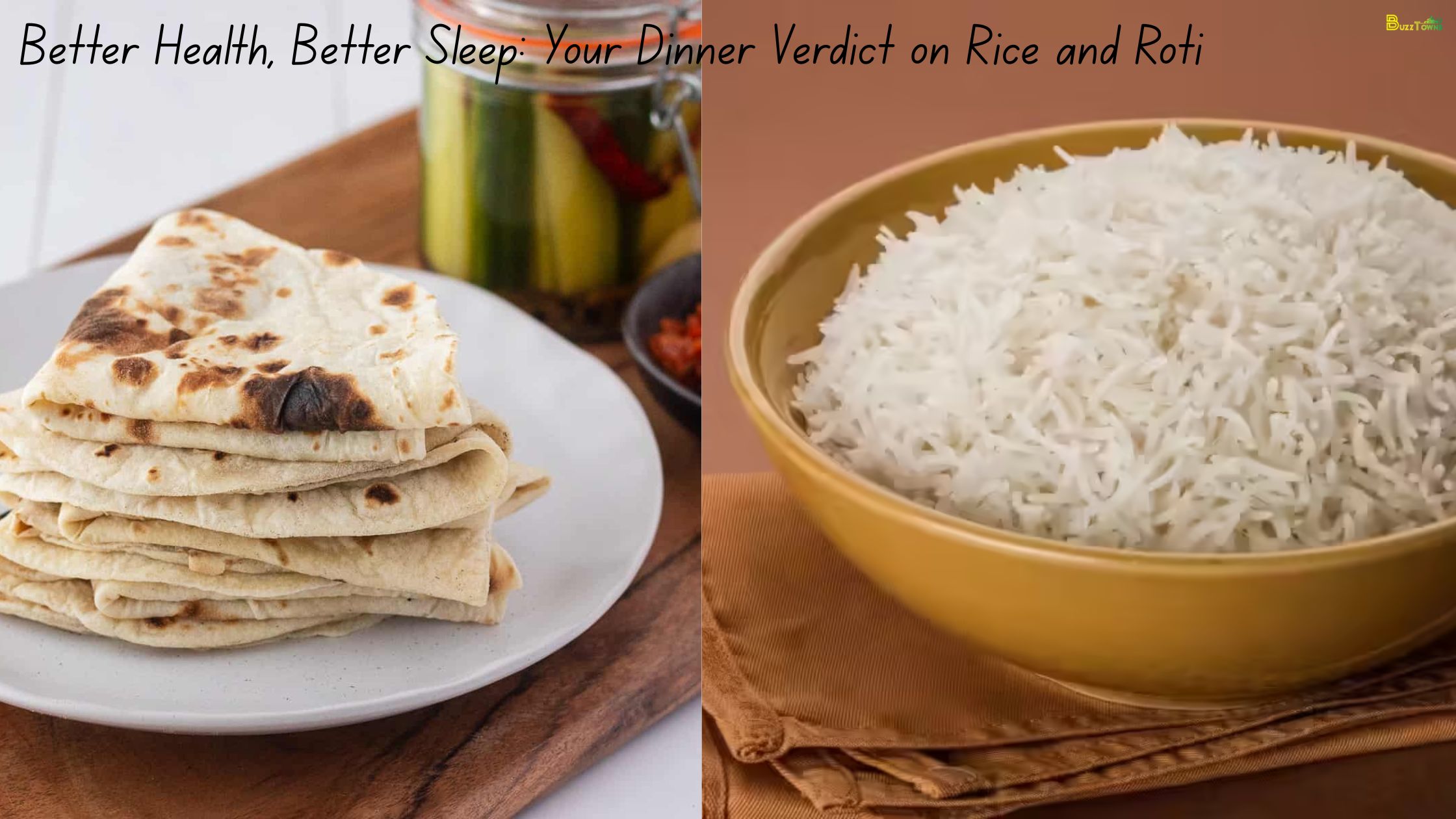
The age-old Indian dinner dilemma—rice or roti?—isn’t just a matter of taste; This is an important decision affecting your overall health, energy levels, and, perhaps most importantly, the quality of your sleep. In the quest for “better health, better sleep,” it is essential to understand the nutritional nuances of these two main carbohydrates. While both serve as primary energy sources, their different composition, glycemic responses, and preparation methods have different effects on the body, especially when consumed in the evening.
This detailed analysis takes an in-depth look at the nutritional profile, digestive effects, and the ultimate decision of choosing between rice and roti for your dinner to ensure a healthy tomorrow and a restful night.
🌾 The Nutritional Showdown: Deconstructing Rice and Roti
Before we can give a verdict, we need to check out the competitors first. Rice and roti (usually made from whole wheat flour or atta) are both basically sources of carbohydrates, but that’s where their similarities largely end.
Rice (Specifically White Rice): A Rapid Fuel Source
The most commonly consumed rice in India is polished white rice, which has the husk, bran, and germ removed. This process destroys vital nutrients.
- Carbohydrate: This is almost pure starch. Starch is primarily amylopectin, which is rapidly digested.
- Fiber: Minimal to almost nonexistent (about $0.1 gram per $100 gram).
- Protein and micronutrients: Low. Most of the B vitamins (especially B1, thiamine) and minerals are destroyed.
- Glycemic Index (GI): High (often $70$ or higher). This is its most important characteristic, which indicates a rapid and drastic increase in blood sugar.
- Calorie density: The cooked form has a higher calorie content per unit volume due to lower water and fiber content.
Roti (Whole Wheat): The Fiber Advantage
Roti or chapati is an unleavened flatbread made of whole wheat flour (atta), water, and sometimes a pinch of salt, cooked on a griddle. The main difference is the “whole” aspect.
- Carbohydrates: They contain complex carbohydrates, which take longer to break down.
- Fiber: Remarkably high (about $1.5-2g$ per medium loaf). It comes from the bran part of the whole wheat grain.
- Protein and micronutrients: Higher. Whole wheat retains more protein (gluten), B vitamins (such as folate and niacin), and minerals (magnesium, phosphorus, zinc) than white rice.
- Glycemic Index (GI): Moderate (typically $45-65$). The high fiber content slows down the absorption of glucose.
- Calorie density: A medium-sized roti has fewer calories (about 70–100 kcal) than cooked rice, assuming a controlled portion size.
⏳ The Digestive and Glycemic Impact on Evening Health
The primary concern for nighttime eating is how quickly and how easily the body processes food, especially as metabolic activity naturally slows in the evening.
The Rice Rush: Blood Sugar Spikes and Insulin Overload
When you eat white rice for dinner, the high glycemic index triggers the rapid conversion of carbohydrates into glucose, causing a rapid rise in blood sugar.
- Insulin response: The pancreas must quickly release large amounts of insulin to move the increased glucose from the bloodstream into the cells for storage or energy.
- Fat storage: If this rapid energy is not used immediately (which is not possible right before bed), the body is highly efficient at converting excess glucose into triglycerides for fat storage. This is a major concern for weight management.
- Energy crash: After a blood sugar peak, the subsequent rapid drop can lead to a feeling of lethargy, post-meal fatigue (the dreaded food coma), and even increased late-night hunger.
The Roti Rhythm: Sustained Energy and Satiety
The fiber present in whole wheat bread acts as a natural speed bump in the digestive system.
- Controlled glucose release: Soluble and insoluble fiber slow down the enzymatic breakdown of starch. Glucose is released into the bloodstream at a gradual, steady rate.
- Satiety and portion control: Fiber also adds bulk, promoting a greater feeling of satiety (fullness) for longer periods. This is important to prevent overeating at dinner and curb midnight snacking.
- Gut Health: Whole wheat fiber acts as a prebiotic, nourishing beneficial gut bacteria. A healthy gut biome is linked to better metabolism and a stronger immune system.
😴 The Sleep Equation: Carbohydrates and Rest
The relationship between dinner and sleep is biochemical. Carbohydrate consumption initiates processes that directly affect the hormones that regulate sleep.
- Tryptophan and serotonin transport: Insulin released after a carbohydrate meal helps clear competing amino acids from the blood, allowing tryptophan (an amino acid) to reach the blood-brain barrier more easily. Tryptophan is a precursor to serotonin, which is then converted into the sleep-inducing hormone, melatonin.
- The problem with high GI: While the carbohydrate source is beneficial, a high GI food like white rice causes this process to happen too quickly and aggressively. This may lead to initial drowsiness, followed by potential rebound effects or subsequent metabolic disruption of the sleep cycle, potentially leading to mid-sleep awakenings or poor sleep quality.
- Benefit of medium GI: Bread, with its medium GI, provides a more sustained and gradual rise in insulin. This facilitates tryptophan-to-melatonin conversion at a better pace, setting the stage for a smoother transition to sleep and maintaining stable blood sugar levels throughout the night, reducing the chance of being awakened by a hypoglycemic dip.
🩺 The Health Verdict: Considering Specific Conditions
The option becomes even more important for individuals with specific health conditions:
- For diabetics or pre-diabetics: Roti is the clear winner. The low GI and high fiber content is essential for managing postprandial (post-meal) blood sugar excursions. Bread helps keep $A1c$ levels more stable over time.
- For weight loss, Roti is generally preferred. The increased satiety and controlled insulin response from fiber help prevent excess fat storage and manage overall calorie intake better than white rice.
- For athletes (immediate recovery): If dinner is eaten immediately after an intense, exhausting workout, rapid glycogen replenishment from white rice can sometimes be beneficial, although this is a highly specific, conditional use case. For most individuals, this scenario is irrelevant.
⭐ Final Verdict: The Superior Choice for Dinner and Sleep
While personal preference and cultural traditions play a role, from a purely health-optimization and sleep-quality standpoint, the decision is definitive:
Roti (Whole Wheat) is the superior choice for dinner.
The benefits are tremendous:
- Lower and more stable glycemic index: Prevents blood sugar drops and excessive fat storage.
- High fiber content: Promotes sustained satiety, better digestive health and controlled calorie intake.
- Rich micronutrient profile: Provides more essential vitamins and minerals.
- Improved sleep structure: Facilitates a smooth, continuous mechanism for melatonin production, leading to greater rest.
A Note on Customization (The “Rice Exception”)
If rice is really preferred, it should be added strategically to minimize its impact:
- Switch to brown/parboiled rice: These varieties retain more fiber and have a lower GI than white rice.
- Employ a high-fat/high-protein barrier: Always eat your protein (dal, chicken, paneer) and healthy fats (ghee, vegetables) first. When you finally consume the rice, the fiber and fat will accumulate in the stomach and slow down the absorption of glucose from the rice.
- Portion control: Keep a minimal serving of rice to manage the carbohydrate load – about the size of your fist.
In the pursuit of better health and sleep, make your evening plate work for you. By choosing the whole-grain goodness of bread over the refined starches of white rice, you are making a conscious decision to promote a stable metabolism, sustained energy and, ultimately, a more peaceful and refreshing night’s sleep.








—is superior for managing blood sugar, enhancing sleep quality, and promoting weight management.)