
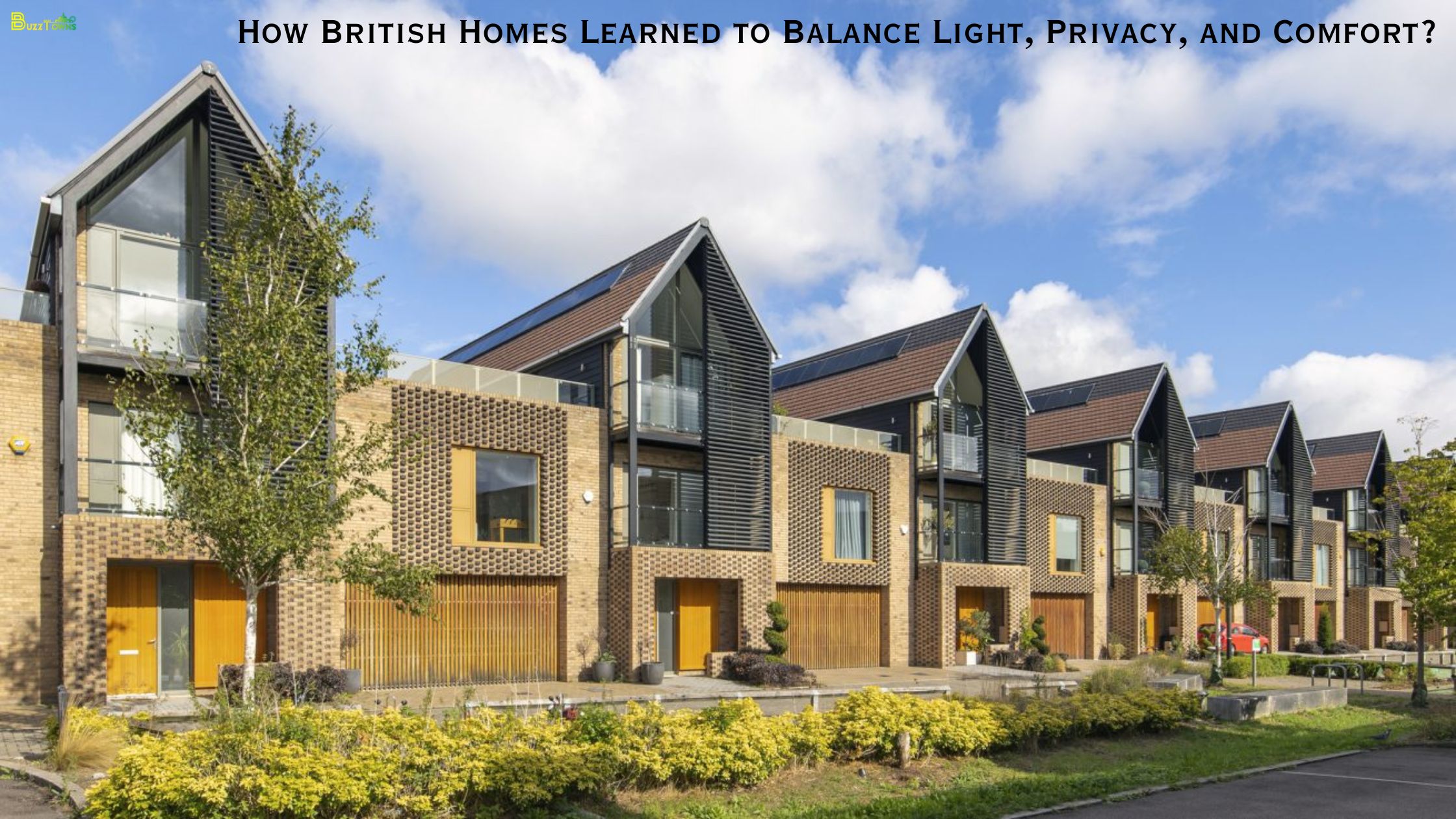
British housing has always reflected a careful negotiation between openness and restraint. Light is valued, privacy is guarded, and comfort is expected to adapt to both climate and social habits. Over time, homes across the UK have developed practical design solutions that respond to these needs without sacrificing character. This balance did not happen by accident. It emerged through changing lifestyles, urban density, and evolving building standards.
A Climate That Demands Control
The British climate has long influenced the design of homes. Limited daylight during winter months encouraged larger window openings, while cooler summers reduced the need for full shading systems seen elsewhere in Europe. At the same time, unpredictable weather required buildings to retain warmth and manage draughts.
As towns expanded and homes were built closer together, windows became more than sources of light. They were also points of exposure. Design choices increasingly had to consider sightlines from neighbouring properties and busy streets. This tension between brightness and seclusion led to solutions that filtered light rather than simply letting it flood in.
Architectural Responses to Urban Living
Terraced housing and narrow streets defined much of Britain’s urban growth during the 18th and 19th centuries. In these settings, full-length curtains or shutters often blocked too much daylight. Instead, layered approaches developed. Frosted lower panes, adjustable window sections, and carefully proportioned frames allowed light to enter while limiting direct views.
Traditional vertical sliding windows became particularly effective in this regard. Their ability to open at the top or bottom improved airflow without compromising privacy. In historic towns, examples such as sash windows Colchester demonstrate how local architecture adapted these features to suit conservation requirements while still meeting modern expectations for comfort and efficiency.
Privacy Without Isolation
British homes have rarely embraced complete openness. Even today, privacy remains a priority, particularly in ground-floor living spaces. Rather than closing off rooms entirely, design has leaned toward soft separation. Net curtains, textured glass, and carefully positioned windows create boundaries that do not cut off natural light.
This approach aligns with long-standing cultural preferences. Homes are places of retreat, but not isolation. Rooms are designed to feel protected while still connected to the outside environment. This balance is increasingly relevant as remote work blurs the line between private and public life within the home.
Comfort as a Technical Standard
Comfort is no longer defined solely by warmth. Acoustic control, ventilation, and thermal efficiency are now central to housing design. Older homes, once criticised for draughts and heat loss, are being upgraded with discreet improvements that respect original features.
Recent updates to UK building guidance emphasise energy performance alongside occupant wellbeing. Organisations such as Historic England have published updated advice on improving efficiency in traditional buildings without damaging their material. Similarly, guidance from the UK Green Building Council highlights how natural light and ventilation contribute to healthier indoor environments, not just lower energy bills.
Modern Expectations, Traditional Frameworks
Today’s homeowners expect more from their living spaces. Large glazing, better insulation, and noise reduction are often non-negotiable. Yet there is also a growing appreciation for heritage details and local identity. The challenge lies in integrating new materials and technologies into established architectural forms.
Manufacturers and installers now work within stricter regulations while responding to conservation rules, particularly in older towns and cities. The result is a hybrid approach: traditional appearances supported by modern engineering. This ensures homes remain comfortable year-round without losing the visual language that defines British streetscapes.
A Continuing Design Conversation
The way British homes manage light, privacy, and comfort continues to evolve. Rising energy costs, denser cities, and changing work patterns are pushing design decisions in new directions. Yet the underlying principles remain familiar. Natural light is maximised but controlled. Privacy is protected without complete separation. Comfort is treated as both a technical and emotional requirement. These priorities explain why many historic design solutions remain relevant today. Rather than being replaced, they are refined. British housing demonstrates that good design does not chase extremes. Instead, it quietly balances competing needs, creating spaces that feel practical, calm, and enduring.