
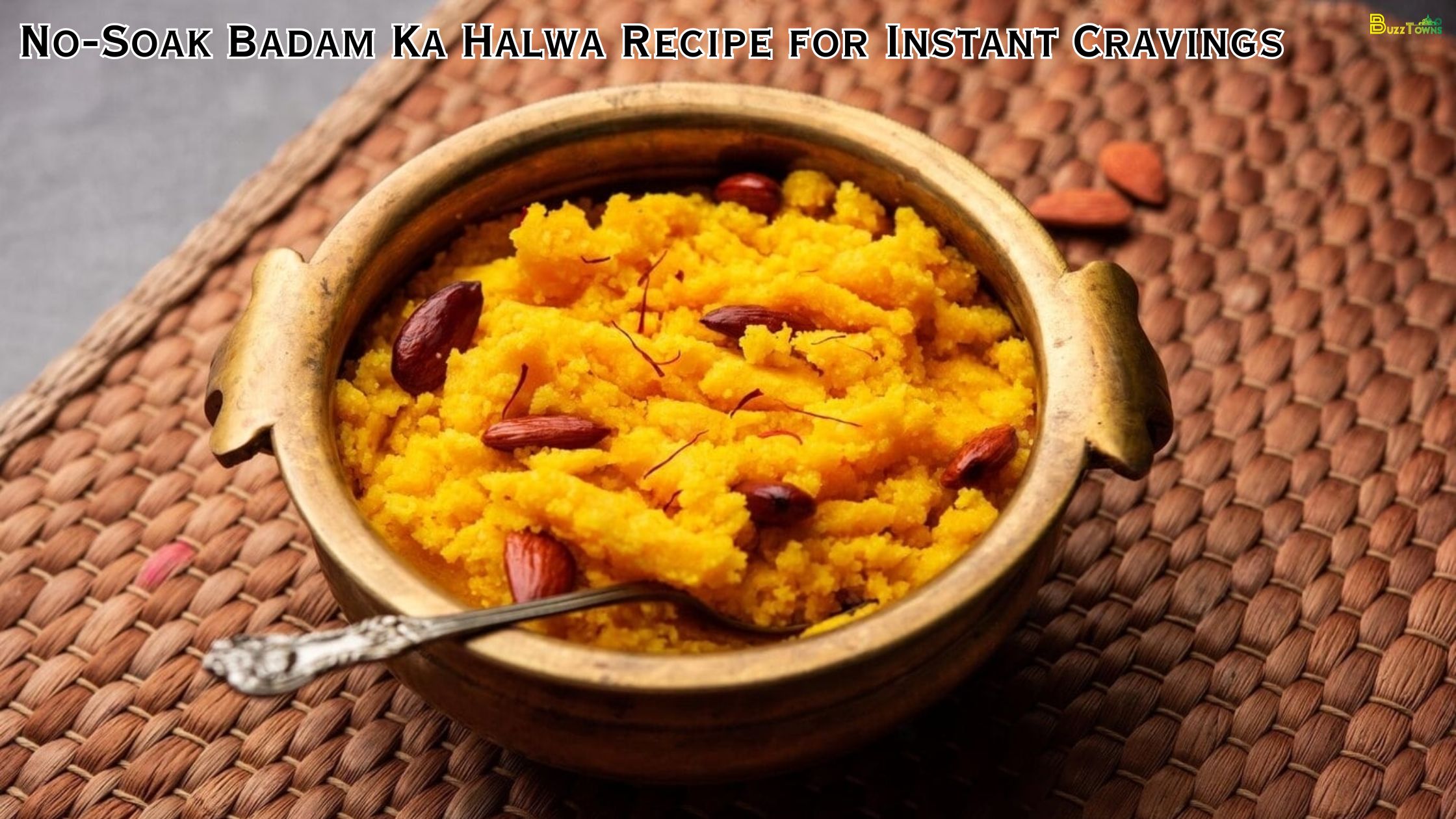
We have all been there. It’s a cool evening, or perhaps you have just completed a long day, and suddenly, a strong craving to eat something sweet, warm, and nutritious overcomes you. In the world of Indian sweets, badam ka halwa (almond pudding) is the pinnacle of luxury. But usually, that luxury comes at a price: time.
The traditional recipe requires soaking the almonds for at least 6 to 8 hours, peeling them one by one, and then grinding them into a paste. It’s a labor of love that most of us don’t have the patience for on a Wednesday night.
Add no-soak almond pudding. This recipe is a game-changer. By using almond flour or the quick-blanching technique, we bypass the overnight wait without sacrificing that rich, grainy, and buttery texture that makes this halwa a royal delicacy.
What is Badam Ka Halwa?
Badam Halwa is a classic North Indian sweet made primarily from almonds, ghee, sugar, and milk. Historically, it was served to royals as almonds were a rare and expensive commodity. Even today, it is considered a “power food” – often given to students during exams for “brain power” or to new mothers for health benefits and strength.
Unlike carrot halwa, which is juicy and stringy, almond halwa is thick, smooth, and incredibly rich. A small bowl is usually enough to satisfy even the most demanding sweet tooth.
The “Instant” Secret: Why No-Soak Works
The traditional reason for soaking almonds is twofold: to soften them for grinding and to easily remove the skin (which contains tannins that can be slightly bitter and prevent absorption of nutrients).
In this no-soak recipe, we have two paths to instant gratification:
- Almond Flour Path: Using store-bought or home-ground almonds.
- Boiling Water Path: A 5-minute “flash soak” that mimics an 8-hour wait.
For this blog, we’ll focus on the boiling water path, as it preserves the fresh, nutty flavor of almonds better than pre-packaged flour.
Ingredients You’ll Need
To make this instant version, you only need five pantry staples.
| Ingredient | Quantity | Why it’s essential |
| Raw Almonds | 1.5 Cups | The star of the show. |
| Desi Ghee | 1/2 Cup | Provides the signature aroma and smooth texture. |
| Full-Fat Milk | 1 Cup | For richness (can use water for a lighter version). |
| Sugar | 3/4 Cup | Adjust based on your preference. |
| Saffron (Kesar) | 8-10 Strands | For that golden hue and royal scent. |
| Cardamom Powder | 1/2 tsp | The “soul” of Indian sweets. |
Step-by-Step Instructions: No-Soak Badam Ka Halwa
1. The 5-Minute Blanch (The Shortcut)
Instead of soaking overnight, boil a pot of water. Add your raw almonds to boiling water and let them sit for exactly 3 to 5 minutes. Drain the hot water and immediately wash them with cold water.
- Magic trick: Squeeze an almond between your thumb and forefinger. The skin will “pop” instantly! You can peel 1.5 cups of almonds in less than 10 minutes using this method.
2. Texture grinding
Pat the peeled almonds dry with a kitchen towel. Put them in a blender or food processor.
- Important Tip: Do not grind them into a smooth, liquid paste. Pulse the blender so that you get a slightly coarse, grainy food (similar to semolina or couscous). This texture defines a professional-grade pudding.
3. Infusing the Milk
While you prepare the almonds, heat 1 cup milk and add saffron to it. Let it sit; The milk will turn beautiful light yellow.
4. The Roasting (The Most Important Step)
Heat ghee in a heavy-bottomed pan (non-stick works best for beginners). Add ground almonds. Keep the flame low to medium. Keep stirring continuously. You’ll want to toast the almond meal until it’s light golden brown and has a nutty aroma.
- Warning: Almonds have a high oil content and can burn within seconds. Never move away from the pan during this stage.
5. Adding the Liquids
When the almonds become fragrant and golden, slowly add the saffron milk. The mixture will curdle a bit, so be careful. Stir vigorously to ensure that no lumps form.
6. Sweetening the Deal
When the milk is completely absorbed by the almonds, add sugar and cardamom powder. As the sugar melts, the pudding will become loose and shiny.
7. The “Ghee Release” Stage
Continue cooking on low flame for the next 5-8 minutes. You will know that the halwa is ready when it starts leaving the sides of the pan, and a little ghee starts oozing from the sides. This is a sign of well-cooked halwa.
Why This Recipe is a Nutritional Powerhouse
Even though we call it a dessert, almond pudding is surprisingly useful.
- Vitamin E: Almonds are one of the best sources of vitamin E, which is essential for skin health and protecting cells from oxidative stress.
- Healthy Fats: The monounsaturated fats in almonds, combined with the butyric acid in ghee, make it an excellent source of sustained energy.
- Mental clarity: Almonds are considered medhya (intelligence enhancer) in Ayurveda.
- Gluten-Free: Since there is no flour or semolina involved, it is a naturally gluten-free dessert.
Pro-Tips for the Perfect Texture
- Heavy-bottomed pan: Use a heavy-duty pan or cast-iron pan. Almonds are delicate; Thinner pans will create “hot spots” that will burn the sugar before the almonds are cooked.
- Don’t skimp on the ghee: If you use too little ghee, the halwa will turn out to be sticky and sticky instead of melting in the mouth. Ghee acts as a lubricant for the almond particles.
- Milk substitute: If you want an even faster version, you can use hot water instead of milk. The taste will be a little less “creamy,” but the almond flavor will be more intense.
- Color: If you want the deep orange-yellow color seen in sweet shops without using artificial colors, mix a pinch of turmeric with saffron. You won’t taste the turmeric, but the color will be wonderful.
Serving Suggestions
Almond pudding is served hot.
- As a dessert: Serve it in small bowls garnished with silver leaves and a few pieces of unsalted pistachios.
- Breakfast power-up: In many Indian homes, a tablespoon of warm almond halwa is served with breakfast during the peak of winter to keep the body warm.
- With ice cream: For a modern fusion twist, serve a scoop of warm almond pudding next to a scoop of cold vanilla bean ice cream. The temperature contrast is incredible.
Storage and Longevity
Since almonds and ghee have a long shelf life, this halwa stores exceptionally well.
- Refrigeration: It remains fresh for 15 days in the refrigerator.
- On reheating: The halwa will harden in the refrigerator due to the ghee. To serve, take the desired quantity and heat it with a spoonful of milk in a pan to loosen it. Avoid over-microwaving, as this can cause the almonds to become chewy.
Conclusion: Instant Luxury at Your Fingertips
No-Soak Almond Pudding proves you don’t have to plan a day to enjoy royalty-level food. Using the blanching method or almond flour, you can turn a sudden craving into a steaming bowl of golden goodness in less than 30 minutes.
It’s rich, it’s comforting, and it’s the best way to cheer yourself or your family up on a cool evening. The next time you open your pantry and see a bag of almonds, remember—you’re only 20 minutes away from the best dessert of your life.