
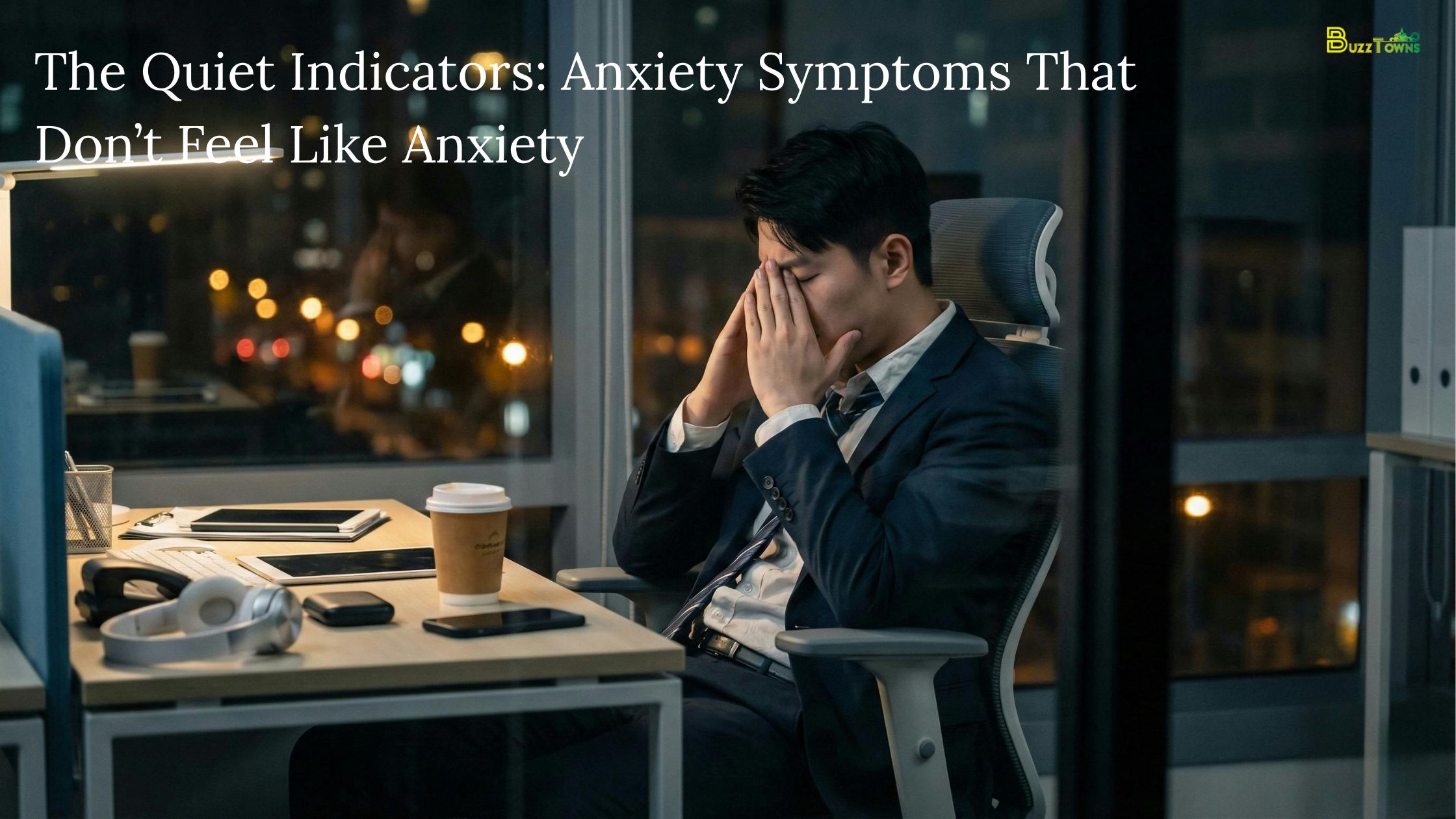
When we talk about anxiety symptoms, most people immediately picture a racing heart, trembling hands, or a full-blown panic attack. While those are certainly part of the experience for many, anxiety is often much stealthier. It doesn’t always scream; sometimes, it whispers through physical habits and mental fog that we mistake for “just being tired” or “having a busy week.”
Understanding the full spectrum of how anxiety manifests is the first step toward managing it. If you’ve been feeling “off” but can’t point to a specific cause, you might be experiencing some of these quieter indicators.
1. The “Physical” Mimics
Anxiety is a systemic response. When your nervous system is stuck in “fight or flight” mode, it redirects energy away from non-essential functions like digestion. This leads to physical anxiety symptoms that many people dismiss as unrelated health issues.
- Chronic Muscle Tension: Do you constantly find your shoulders hunched up toward your ears? Or perhaps you wake up with a sore jaw from clenching it in your sleep? Persistent muscle tightness is a classic sign of a body that doesn’t feel safe.
- Digestive Issues: The “gut-brain axis” is real. Nausea, indigestion, or frequent “butterflies” are often the stomach’s way of processing emotional stress.
- Skin Flare-ups: For some, anxiety shows up as itchy hives, sudden breakouts, or even a nervous habit of picking at cuticles and skin.
2. Decision Fatigue and Procrastination
We often label procrastination as laziness, but in many cases, it’s actually an emotional regulation problem. When a task feels overwhelming, your brain perceives it as a threat, triggering a “freeze” response.
- The “Freeze” State: You have a long list of things to do, but instead of starting, you sit on the couch staring at a wall for an hour. This paralysis is one of the more frustrating **anxiety symptoms** because it creates a cycle of more stress.
- Overthinking Small Choices: Spending twenty minutes deciding which brand of cereal to buy isn’t just indecision; it’s often a sign that your “worry filter” is working overtime, making every choice feel like a high-stakes life event.
Common Symptoms Comparison
| Category | Typical Sign | “Quiet” Indicator |
| Physical | Racing Heart | Shallow breathing / Frequent sighing |
| Mental | Constant Worry | Brain fog / Difficulty concentrating |
| Behavioral | Avoidance | Irritability / Being “snappy” with loved ones |
| Sleep | Insomnia | Waking up at 3 AM with a “busy” mind |
3. Irritability and the “Short Fuse.”
Anxiety isn’t always “nervous” energy; sometimes it’s “prickly” energy. When your internal resources are entirely consumed by managing an underlying sense of dread, you have very little patience left for the world around you.
If you find yourself snapping at your partner over a minor mess or feeling irrationally angry at a slow internet connection, it might not be an anger issue. It’s often a sign that your “anxiety cup” is full, and even a single drop more causes it to overflow.
4. Memory Gaps and Brain Fog
Have you ever walked into a room and completely forgotten why? Or struggled to find basic words mid-sentence? Anxiety pulls your focus toward potential threats (even imaginary ones), which leaves very little “RAM” available for short-term memory and cognitive processing. This “brain fog” is one of the most common **anxiety symptoms** in high-achievers who are used to being mentally sharp.
Final Thoughts: Listening to Your Body
Anxiety is more than just a feeling in your head; it’s a full-body experience. By recognizing these subtle **anxiety symptoms**, you can stop judging yourself for being “unproductive” or “irritable” and start practicing the self-care your nervous system is clearly asking for.
Whether it’s through deep breathing, movement, or speaking with a professional, acknowledging the “quiet indicators” is the best way to start turning down the volume on the noise in your mind.