
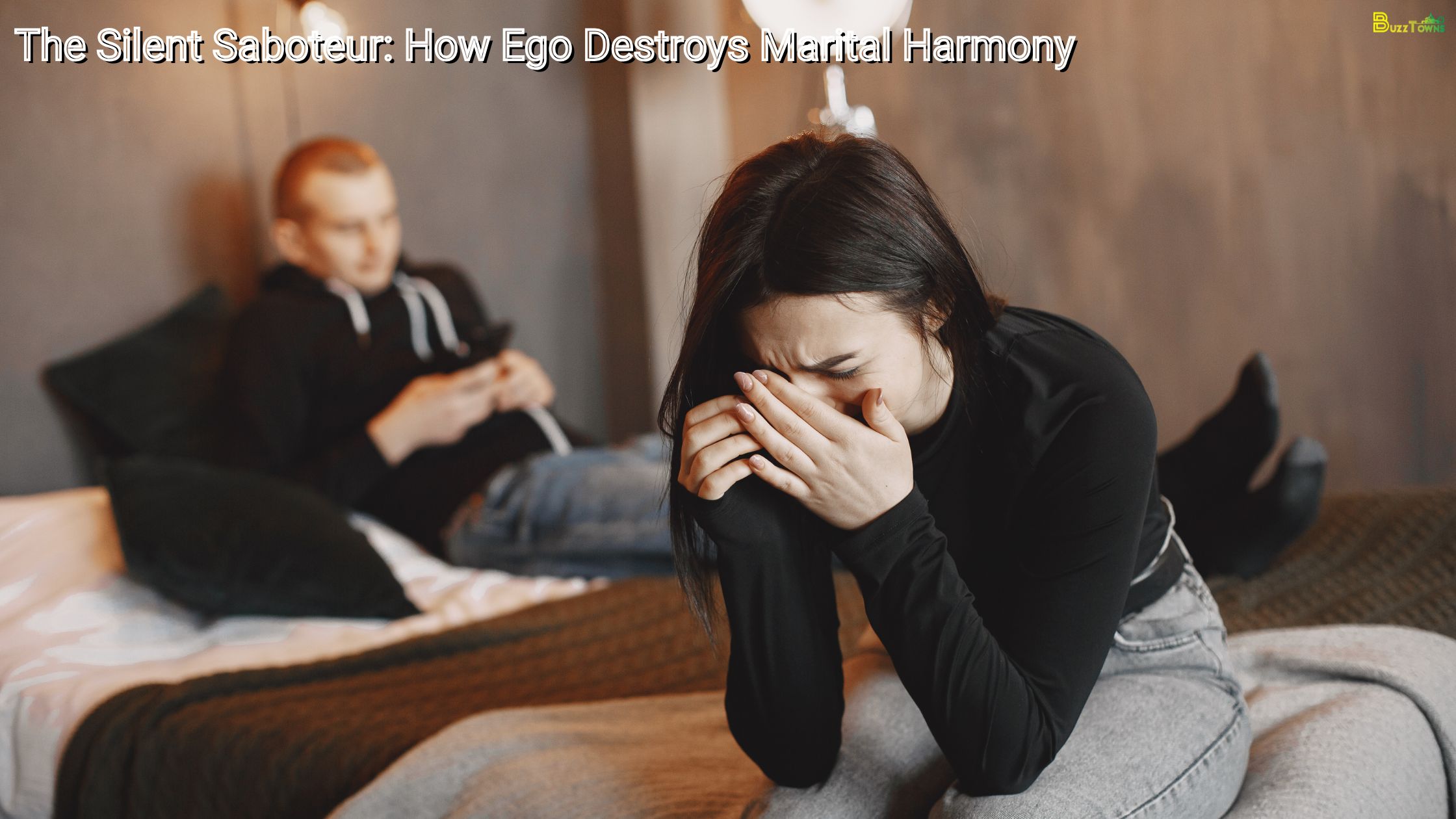
In the early days of a relationship, love feels like an unbreakable shield. We believe that as long as the “feeling” of love exists, the marriage will thrive. However, as the honeymoon phase fades into the reality of shared bills, parenting stress, and domestic chores, a new character often enters the stage. It doesn’t arrive with a bang; it creeps in through the back door of our daily interactions.
It is the Ego.
In psychology, the ego is simply our sense of self-importance. In a marriage, however, the ego often transforms into a “silent saboteur.” It is the part of us that would rather be right than be happy. It is the voice that whispers, “Why should I apologize first?” or “They don’t appreciate how much I do.” If left unchecked, the ego can dismantle even the strongest foundations of marital harmony.
The Anatomy of Ego in a Relationship
To defeat the ego, we must first recognize its disguises. In a marriage, the ego rarely announces itself. Instead, it manifests in these four destructive patterns:
1. The Need to “Win” Every Argument
When a disagreement arises—whether it’s about finances or whose turn it is to do the dishes—the ego views the spouse as an adversary. The goal shifts from solving the problem to winning the debate. When you “win” an argument against your spouse, your spouse “loses.” And when your spouse loses, the marriage loses. There is no victory in a partnership where one person feels defeated.
2. The Shield of Defensiveness
Ego is incredibly fragile. It views any feedback or request for change as a personal attack. If a husband says, “I feel lonely when you spend all evening on your phone,” an ego-driven response is: “Well, I wouldn’t be on my phone if you weren’t so boring!” This defensiveness is the ego’s way of protecting itself from the discomfort of accountability.
3. The Keeping of “Score”
The ego loves a ledger. It meticulously tracks every favor done, every diaper changed, and every sacrifice made. It uses this “scorecard” to justify resentment. “I did the grocery shopping three times this month, and they only did it once.” This transactional mindset kills the spirit of selfless love, turning a sanctuary of support into a cold business arrangement.
4. The “Better Than” Complex
Subtle superiority is perhaps the most dangerous form of ego. It’s the belief that your way of parenting, your career, or your logic is inherently superior to your partner’s. This creates an imbalance of power, leading to condescension and a lack of genuine respect—the two primary ingredients for divorce.
How Ego Erodes Harmony
The destruction caused by the ego is cumulative. It’s like a slow leak in a tire; you don’t notice it until you’re stranded on the side of the road.
First, the communication stops. When every conversation feels like a potential minefield for the ego, partners begin to “walk on eggshells.” They stop sharing their true feelings to avoid conflict, leading to emotional detachment.
Next, intimacy withers. It is impossible to be truly intimate—physically or emotionally—with someone you are competing against. Intimacy requires vulnerability, and the ego is the sworn enemy of vulnerability. The ego wants armor; intimacy requires nakedness.
Finally, resentment settles in. Resentment is the poison we drink while hoping the other person dies. It is the end result of months or years of the ego refusing to bend, apologize, or see the other person’s perspective.
3 Exercises to Silence the Ego
If you recognize these patterns in your marriage, do not despair. The ego is a habit, and habits can be broken. Here are three practical exercises to help restore harmony.
Exercise 1: The “We vs. The Problem” Pivot
The next time an argument starts, physically move. If you are sitting across from each other like debaters, move so you are sitting on the same side of the table or couch.
- The Goal: Remind your brain that your spouse is your teammate.
- The Mantra: “It is not Me vs. You; it is Us vs. The Problem.”
By shifting the focus to a shared goal, you take the “win/loss” power away from the ego.
Exercise 2: The 24-Hour “No-Defense” Rule
Commit to a 24-hour period where you are not allowed to defend yourself. If your partner brings up a grievance, your only allowed responses are:
- “Tell me more about why you feel that way.”
- “I hear you. What can I do to help?”
- “I’m sorry my actions made you feel that way.”
- The Result: You will realize that the world doesn’t end when you don’t defend your “honor.” In fact, your partner will likely soften their stance because they no longer feel they have to fight to be heard.
Exercise 3: The Gratitude Audit
Every night for one week, write down three things your partner did that day that you are grateful for—and share them.
- The Goal: This forces the ego to stop looking at its “ledger of grievances” and start looking at the “ledger of blessings.” It shifts your perspective from what you are owed to what you are given.
The Power of “I Am Sorry”
The ultimate “ego-killer” is a sincere apology. To the ego, an apology is a sign of weakness. To a healthy marriage, an apology is a sign of immense strength and character. It says, “I value our connection more than my need to be right.”
Apologizing doesn’t always mean you were 100% wrong. It means you acknowledge that your words or actions caused pain, and you care more about healing that pain than defending your intent.
Final Thoughts: Choosing Harmony over Self
In 2026, the world is louder and more self-centered than ever. We are constantly told to “stand our ground” and “know our worth.” While self-respect is vital, it should never be confused with ego. True self-respect allows you to be humble, to listen, and to grow.
A marriage without ego is a place of rest. It is a space where you can fail and be forgiven, where you can be weak and be supported. By identifying the “silent saboteur” and choosing to lead with your heart rather than your pride, you can transform a battlefield into a sanctuary.