
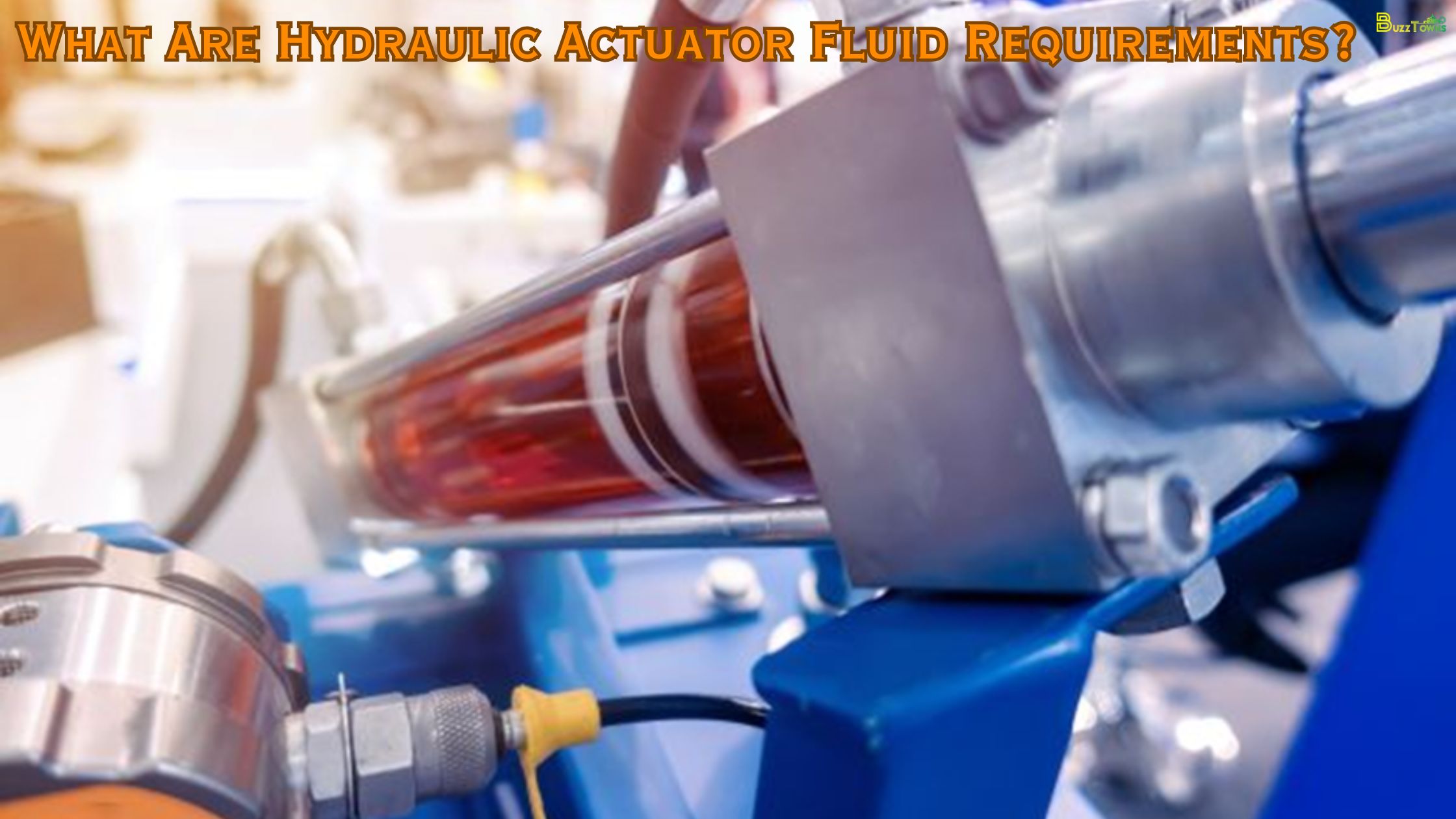
Hydraulic actuators are a ubiquitous feature in dozens of different industries. They’re critical in fields as diverse as manufacturing, construction, drilling, transportation, agriculture, and many more. While the basic principles underpinning their operation are the same, each of these industries has slightly different requirements with regard to the actuators they use.
For example, some are designed to move heavier weights, while for others, fast motion is more crucial. Some actuators must be built to withstand high heat levels or corrosive chemicals, and some must be able to achieve extremely precise control to perform their tasks safely and effectively.
The fluid used is key to the success of each of these different actuator technologies. Different machines have different hydraulic actuator fluid requirements, and operators must ensure they make the correct selection for the task at hand. In the following post, we’ll discuss the key factors in selecting the right hydraulic fluid for optimizing performance and preventing system failures. We’ll also explain the importance of actuator fluids in ensuring the efficiency and longevity of your industry’s actuator systems.
How Do Hydraulic Actuators Work?
The term “actuator” refers to a mechanical system that creates motion, which, depending on the design of the device, can be linear, rotary, or oscillatory. This is how thousands of different types of machinery, from automated production arms in factories to the wheels in airplanes, achieve the movement necessary to perform their work. There are several different sources of energy that actuators need to generate motion. The most common of these are electric actuators, pneumatic actuators, which use compressed air, and hydraulic actuators, which use a pressurized fluid to create force.
Hydraulic actuators create movement by using a pump to pressurize fluids and then transmit force into pistons, forcing them to move with an incredible level of power. Because the fluids they use are incompressible, hydraulic systems can generate a great deal more force than their electric and pneumatic competitors. For this reason, hydraulic technologies are used in industries with the greatest power requirements. For example, in construction, where machinery is expected to transport loads weighing multiple tons.
The Importance of Hydraulic Fluids
While any incompressible fluid can generate the force necessary to power an actuator, it’s impossible to overstate the importance of selecting the correct fluid for the job. Consider that hydraulic fluid is more than just the medium that transmits energy; it’s also responsible for providing the machinery with lubrication, protecting it from the heat that is generated by friction and other forces. The hydraulic fluid protects the machinery from corrosion and other risk factors. It also helps to maintain that critical pressure by preventing leaks or other conditions that may cause the machinery to lose its ability to generate power.
The success of any industrial operation depends greatly on choosing the correct fluid for the task, because ignoring the hydraulic actuator fluid requirements can lead to undue wear and tear on the machinery, eventually increasing maintenance costs and creating expensive inefficiencies in the operation. Hydraulic fluid is also a critical component of worker safety, as the wrong fluid can render the machinery somewhat unpredictable, potentially placing workers at risk if it performs in an unexpected way.
Requirement #1: Viscosity
The term “viscosity” refers to a fluid’s ability to flow, and different liquids can have vastly different viscosity levels. For example, consider the difference in viscosity levels of different household fluids such as water and olive oil. Water flows easily and so would be considered to have a low viscosity, while olive oil is thicker and flows more slowly, so it would have a higher viscosity. The kinetic viscosity of the oil used in hydraulic actuators is measured in units called centistokes(cSt), and the number of centistokes can change greatly depending on the temperature.
To ensure you make the correct viscosity selection for your needs, you must understand the conditions under which your machinery will be operating. What pressure levels are expected? What about temperatures? Determine this information and then match it with a Viscosity Index (VI) chart, which will tell you how well the oil will flow based on the temperature.
The ideal viscosity for your needs will also depend on the pressure levels required. Higher pressure levels generally need fluids with a greater viscosity index in order to remain stable during the regular operation of the machinery.
Requirement #2: Contamination Control
Contamination is a major issue that plagues hydraulic machinery across every industry. Finding fluids that can resist common problems is critical to protecting your machinery and ensuring a successful operation. Different industries have different issues that may crop up. For example, corrosion is a common problem in the manufacturing industry. When the metal elements of the machinery rust, flecks of that rust can enter the hydraulic fluid and cause it to lose its effectiveness. Selecting a mineral-oil-based fluid that can help your machinery resist rust is one way you can prevent contamination in your hydraulic equipment.
While selecting the correct fluid is critical for contamination control in hydraulic actuators, it’s also necessary to have filtration systems installed that can remove foreign substances from your hydraulic fluids. Companies like Aberdeen Dynamics can design custom systems with improved filtration systems to ensure your hydraulic actuators are protected from contamination.
Requirement #3: Temperature Resistance
As mentioned above, the temperature of a hydraulic fluid affects its viscosity and therefore its ability to serve the needs of the machinery in which it is used. Different types of fluids resist temperatures differently, so you’ll need to have as much information as possible about the heat stresses your machinery will be subjected to. What will the average temperature be? Will that temperature increase based on weather, friction, and other factors?
Most hydraulic fluid begins to break down at higher temperatures—often around 140 degrees Fahrenheit—so if your machinery is expected to operate in hotter conditions, you’ll likely need to employ a specialized synthetic fluid in order to ensure the efficiency and longevity of your machinery. By ensuring the hydraulic fluid your machinery utilizes meets the proper requirements, you’ll be able to safeguard the performance and reliability of your operation. Always read the appropriate charts and ratings before using any new fluid in your manufacturing equipment, and speak with a professional if you have any questions.