
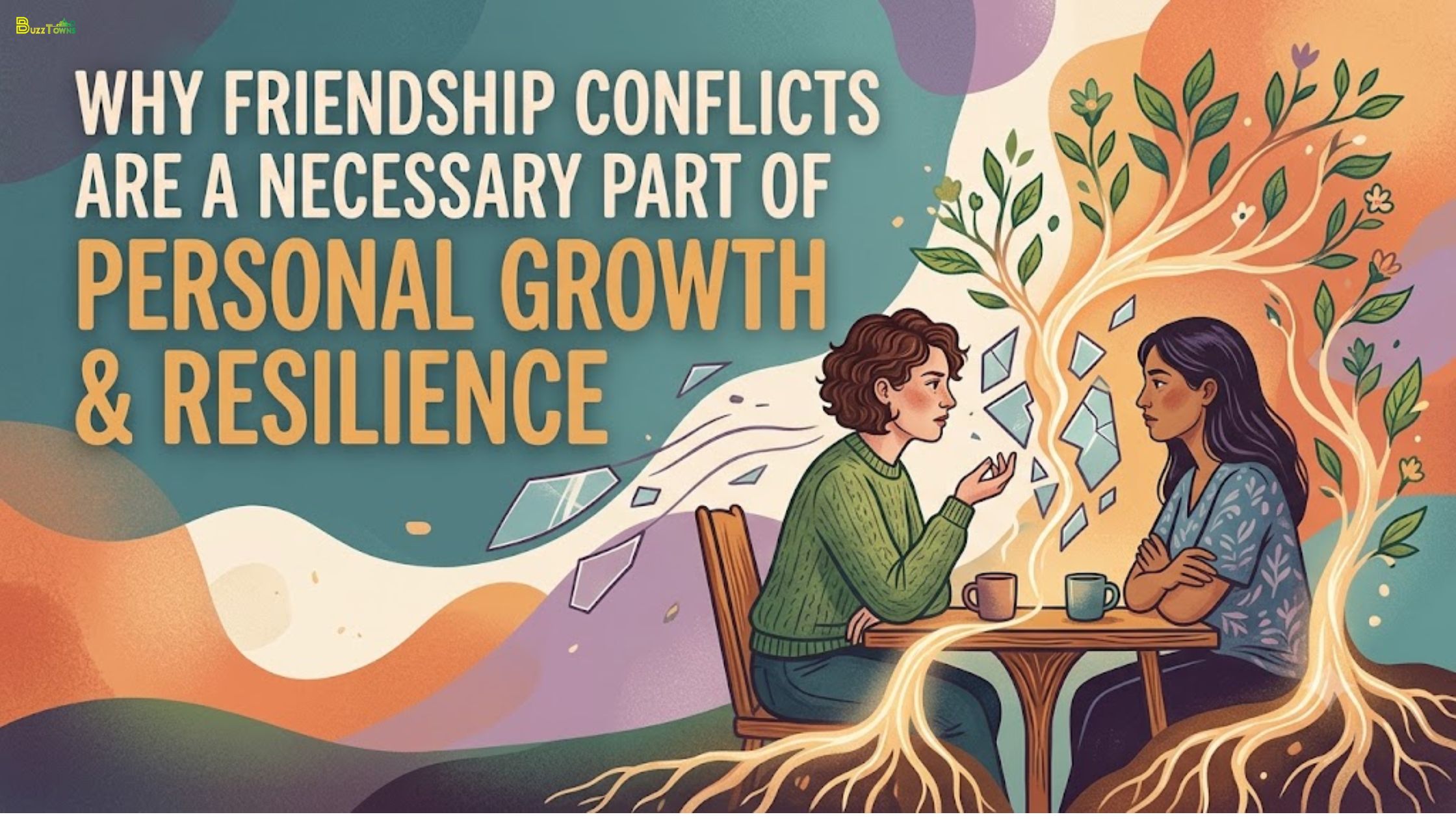
We tend to hold friendships to an unspoken standard of perpetual harmony. Unlike romantic relationships, where couples counseling and late-night negotiations are normalized, or family dynamics, where tension is practically written into the script, friendships are supposed to be easy. They are the safe haven, the effortless hangout, the sanctuary away from daily friction. Because of this idyllic ideal, the moment a rift occurs, panic sets in. A miscommunicated boundary, an ignored message, or an offhand comment that stings can feel like an existential threat to the bond. Many people instinctively withdraw, ghost, or perform aggressive politeness just to avoid rocking the boat. Yet viewing disagreement as the death knell of a connection misses a vital psychological truth: friendship conflicts are not evidence of failure. Handled with maturity and self-awareness, they are the very crucible through which personal resilience, self-discovery, and authentic intimacy are forged.
The Illusion of the Frictionless Bond
It is easy to stay close when circumstances are convenient, values align effortlessly, and life stages mirror each other. But effortless peace often hides a subtle fragility.
Psychologists often refer to “pseudo-harmony”—a dynamic where superficial agreeableness replaces genuine vulnerability. In relationships defined by pseudo-harmony, both parties walk on eggshells to preserve comfort, trading honesty for peace. Resentments are swept under the rug, minor irritations compound in secret, and communication gradually narrows to safe, trivial topics.
When friendship conflicts finally surface, they shatter this artificial calm. They demand that you acknowledge a fundamental reality: your friend is an autonomous individual with their own wounds, priorities, neuroses, and emotional bandwidth. The collision of two distinct worldviews is never pleasant, but it is the only way to replace shallow assumptions with real understanding.
1. Mirroring Blind Spots and Cultivating Self-Awareness
Romantic partners have their own baggage, and coworkers operate within professional boundaries. Friends, however, see us in unstructured, unguarded moments. When tension arises with someone who knows you intimately, it holds up an extraordinarily clear mirror to your relational habits.
Consider the common flashpoints:
- The “Flaky” Accusation: Are you genuinely overwhelmed, or are you passively deprioritizing relationships without accountability?
- The Boundary Flare-up: Did your friend overstep, or did you fail to communicate your limits until you suddenly snapped?
- The Emotional Asymmetry: Does one person constantly play therapist while the other acts as an emotional sinkhole?
Navigating these friction points forces you to examine your attachment style and defensive reflexes. Do you stonewall when criticized? Do you weaponize passive aggression? A rift requires you to untangle where your unresolved issues end and your friend’s behavior begins, fostering an uncompromising level of self-honesty that solitary self-reflection rarely yields.
2. Refining the Muscle of Emotional Regulation
When a stranger cuts you off in traffic, your anger is superficial and quick to dissipate. But when a trusted confidant hurts your feelings or misunderstands your intentions, the sting lands deep in the emotional core.
Working through friendship conflicts demands high-level emotional regulation:
- Slowing Down the Amygdala Hijack: Learning not to type a paragraph of fire on text messaging apps within 30 seconds of feeling insulted.
- Separating Intent from Impact: Acknowledging that while their actions caused pain, their goal may not have been malicious.
- Tolerating Relational Distress: Sitting with the discomfort of unresolved tension without rushing into people-pleasing apologies just to stop the internal anxiety.
Resilience is not the absence of stress; it is your capacity to remain anchored in your values while weathering emotional weather. Each difficult conversation you navigate without shutting down or lashing out expands your nervous system’s capacity to handle interpersonal adversity across all spheres of life.
3. Developing Clear, Compassionate Boundaries
Many friendships fracture not because people lack love for one another, but because boundaries remain implicit until they are violently violated.
| Passive Avoidance | Reactive Aggression | Resilient Conflict Resolution |
| Ignoring calls and hoping the friend “takes the hint.” | Exploding in anger after letting small grievances pile up for months. | Addressing the specific behavior early using direct, non-accusatory language. |
| Silently tolerating one-sided venting to avoid awkwardness. | Ending the friendship abruptly without explaining what went wrong. | Setting clear parameters: “I love supporting you, but I don’t have the mental space for heavy venting tonight.” |
| Pretending everything is fine while feeling bitter inside. | Gossip or venting to mutual friends instead of addressing the source. | Inviting collaborative repair: “I felt dismissed when that happened. Can we talk through it?” |
A healthy conflict is often the birthplace of an explicit boundary. It teaches you how to advocate for your needs without diminishing the other person’s reality. Learning to say, “I care about you deeply, but I cannot give you what you are asking for right now,” is one of the most powerful relational skills an adult can master.
4. Building Unshakeable Interpersonal Trust
Trust is not built on smooth days; it is built on repair.
Developmental psychologist Ed Tronick’s work on relationship dynamics emphasizes the “rupture and repair” cycle. In childhood development as well as adult attachments, security does not come from zero conflict. It comes from the predictable, reliable experience of resolving disharmony.
When two friends experience a painful misunderstanding, confront it directly, listen with curiosity, and genuinely repair the damage, something remarkable happens. The fear of vulnerability evaporates. You realize:
- Our connection is strong enough to survive hard truths.
- I don’t have to be performatively perfect to be loved here.
- We can hold different viewpoints and still respect each other.
A bond tested by resolved conflict is infinitely sturdier than one that has only existed in calm waters. It shifts the relationship from fragile convenience to weathered, unconditional durability.
When Conflict Signals Growth vs. When It Signals an Exit
Not every conflict leads to deeper intimacy. Disagreements contribute to growth only when both parties are willing to engage in honest reflection and collaborative repair.
- Productive Conflict: Focuses on specific behaviors, invites mutual curiosity, honors emotional safety, and aims for reconciliation.
- Destructive Conflict: Relies on character assassination, gaslighting, contempt, or unilateral demands that you abandon your own reality to keep the peace.
Part of building personal resilience is learning to discern the difference. Sometimes, the growth lies in working through the mess to emerge closer than before. Other times, the growth lies in recognizing that the conflict reveals an insurmountable divergence in fundamental values, and choosing to walk away with grace and gratitude for what the season offered.
Embracing the Discomfort
The next time friction sparks between you and a close friend, resist the urge to panic, detach, or minimize your experience. Lean into the awkwardness.
Frame friendship conflicts not as the unraveling of companionship, but as an invitation to practice courage, sharpen your boundaries, and show up with radical honesty. The friendships that endure over decades are not the ones that escaped turbulence—they are the ones where two people had the courage to stay at the table, clear the air, and rebuild something truer on the other side.