
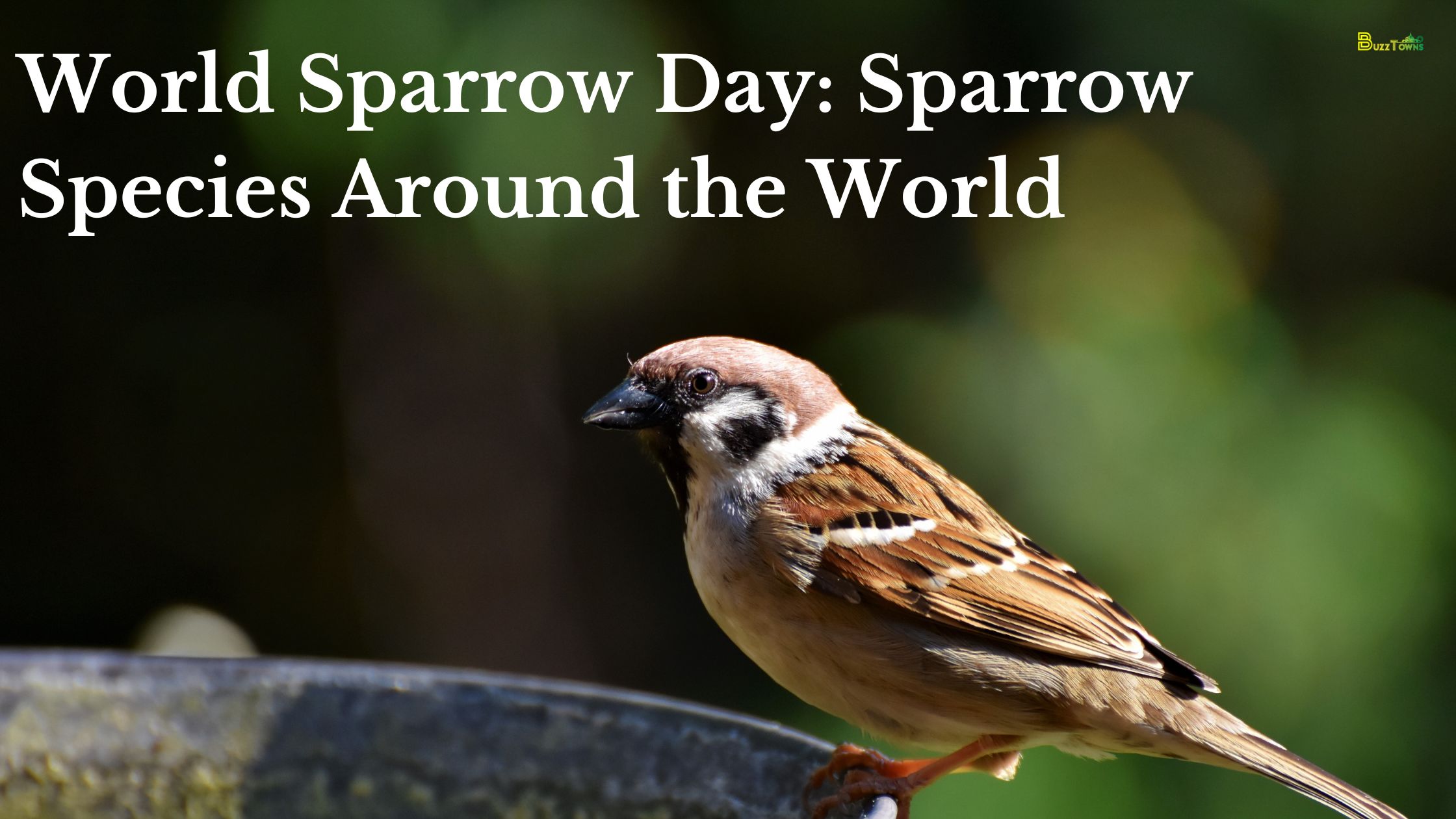
Every year, World Sparrow Day is observed to bring attention to the sparrow population decline and emphasize the value of sparrow conservation. The Nature Forever Society of India and the Eco-Sys Action Foundation of France collaborated to launch it initially. World Sparrow Day was established in 2010 and is celebrated on March 20 of each year. It has garnered international prominence since then.
The Decline of Sparrow Species
A number of issues have been posing a threat to sparrow populations, which have been declining in recent years. The reduction of sparrow species is caused by a number of factors, including:
- Urbanization: The number of natural habitats that are ideal for sparrows decreases as cities grow and urban areas increase. The loss of open areas where sparrows nest and forage for food is a consequence of the construction of buildings, roads, and other infrastructure. The human disruptions seen in metropolitan surroundings, such as noise pollution and vehicle crashes, also represent a threat to sparrows’ survival.
- Loss of Habitat: In addition to urbanization, deforestation, intensified agriculture, and land conversion for industrial uses all contribute to the loss of sparrow habitat. As a result of losing their primary sources of food, shelter, and nesting places due to habitat destruction, sparrow populations are forced to drop.
- Pollution: Sparrows are susceptible to the negative consequences of pollution, which encompass contamination of the air, water, and soil. Their habitats are deteriorated and their health is threatened by pollutants from industrial processes, automobile pollution, and agricultural runoff. Sparrow populations are dropping as a result of reduced food availability and illnesses linked to pollution.
- Climate Change: For sparrows, the effects of climate change—such as increased temperatures, changed precipitation patterns, and extreme weather events—present serious difficulties. Breeding cycles, migration patterns, and overall survival of sparrows are disrupted by changes in habitat suitability and food availability. Furthermore, pollution and habitat loss are made worse by climate change, which puts further strain on sparrow populations.
Importance of Sparrows
Sparrows are essential to preserving ecological harmony and fostering thriving habitats. Despite their diminutive size, they are significant because they support a variety of ecological processes and offer essential ecosystem services. These are some salient features emphasizing the value of sparrows:
Ecological Role of Sparrows:
Sparrows inhabit a variety of habitats, from urban areas to rural landscapes, and are essential parts of terrestrial ecosystems. By devouring seeds and encouraging seed dissemination, sparrows, being seed-eating birds, contribute to the regulation of plant populations. Their presence affects the structure and composition of plant communities, enhancing the resilience and dynamism of ecosystems.
Seed Dispersal:
Sparrows are essential for seed distribution because they make it easier for seeds to travel across terrain. Through their feeding habits and subsequent feces, sparrows contribute to seed distribution by consuming seeds from a range of plant species. By encouraging plant colonization, genetic variety, and ecosystem regeneration, this dispersal process improves biodiversity and ecological functioning.
Insect Control:
Sparrows are proficient bug hunters, consuming a diverse array of invertebrates such as spiders, insects, and larvae. In agricultural contexts, sparrows reduce crop damage and assist control insect populations by feeding on insect pests. Because of their insectivorous diet, which suppresses pest outbreaks and preserves the ecological equilibrium between predators and prey, natural ecosystems also benefit.
Biodiversity Indicator:
Sparrows are important markers of biodiversity and the health of the environment. Changes in habitat quality, ecosystem integrity, and human impacts on the environment are reflected in their existence, abundance, and distribution. By revealing important ecological trends, sparrow population monitoring aids in the identification of conservation priorities and the development of management plans that safeguard biodiversity.
Global Distribution of Sparrow Species
Sparrows can be found on every continent in the world, living in a variety of environments from metropolitan areas to rural areas. This is a summary of some of the prominent species of sparrows:
Eurasian Tree Sparrow (Passer montanus):
Found in both Europe and Asia, including nations like China, Japan, and Russia, is the Eurasian Tree Sparrow. It favors rural and urban settings with access to trees and bushes for nesting and feeding, as well as wooded regions.
House Sparrow (Passer domesticus):
The House Sparrow is one of the most common species of sparrows, found throughout Europe, Asia, Africa, and the Americas. It lives well in suburban and urban settings, using human constructions as food sources and nesting sites.
Spanish Sparrow (Passer hispaniolensis):
Southern Europe, North Africa, and some regions of the Middle East are the main habitats of the Spanish Sparrow. It lives in a variety of environments, such as semi-arid areas, open forests, and agricultural plains.
American Tree Sparrow (Spizelloides arborea):
The American Tree Sparrow breeds in North America’s Arctic tundra and migrates southward in the winter to live in the southern part of Canada and the United States. It favors open areas with trees and plants, like pastures, marshes, and the borders of forests.
Cape Sparrow (Passer melanurus):
The Cape Sparrow, which is native to southern Africa, can be found in nations including Namibia, Botswana, and South Africa. It lives in savannas, scrublands, and agricultural areas, as well as dry and semi-arid environments.
Italian Sparrow (Passer italiae):
The Italian Sparrow is indigenous to Italy and its surrounding southern European nations, where it lives in a variety of settings such as cities, farms, and vineyards.
Desert Sparrow (Passer simplex):
The Desert Sparrow, which can withstand dry conditions, is found in the Middle East and North Africa, which includes Egypt, Israel, and Saudi Arabia. It lives in settings in the desert that include sand dunes, rocky outcrops, and little vegetation.
Eurasian Tree Sparrow (Passer montanus)
The Tree of Eurasian Origin A little passerine bird, the sparrow is a member of the Passeridae family of sparrows. This is a summary of its behavior, range, habitat, and breeding:
Description and Characteristics:
Though they have different plumage patterns, the Eurasian Tree Sparrow and the House Sparrow share a similar appearance. Its cheeks are patchy black, its white cheeks have a black mark, and its crown is chestnut. Its underparts are pale grayish-brown, while its back is brown with darker streaks. Males usually have slightly brighter plumage during the breeding season, but otherwise, the sexes look similar.
Habitat and Range:
The Eurasian Tree Sparrow is a common bird in Europe and Asia, living in forests, farms, cities, and parks, among other environments. They frequently inhabit areas close to populated areas, using trees, shrubs, and buildings as roosting and breeding sites. Even though they favor semi-open environments with foliage, they can also survive in suburban gardens and agricultural landscapes.
Behavior and Breeding:
Eurasian Tree Sparrows are gregarious birds that frequently gather in flocks outside of the breeding season to share roosting and food-gathering activities. Although they mostly eat seeds, they also eat grains, fruits, and insects. In tree cavities, cracks, and man-made structures, Eurasian Tree Sparrows construct cup-shaped nests during the breeding season, which usually lasts from spring to summer. The female lays a clutch of eggs, typically three to six, and spends twelve to fourteen days incubating them. The chicks are raised by both parents until they fledge, which typically happens two to three weeks after hatching.
House Sparrow (Passer domesticus)
The English Sparrow, sometimes called the House Sparrow, is a little passerine bird that does well in cities. This is a summary of its behavior, range, habitat, and breeding:
Description and Characteristics:
With a conical bill, short legs, and a robust body, the House Sparrow is a little and sturdy bird. Its general plumage is brownish-gray, with darker streaks on its wings and back. During the breeding season, adult males usually have a black bib or throat patch; females and juveniles do not have this trait. The chirping vocalization of house sparrows is frequently heard in metropolitan environments and in close proximity to human settlements.
Habitat and Range:
Across much of the world, including Europe, Asia, Africa, and the Americas, house sparrows are a common bird. They are frequently found in urban and suburban regions, where they live in buildings, parks, gardens, and farms. They have a strong link with human populations. Because of their adaptability, house sparrows can be found thriving in a variety of environments, from rural villages to heavily populated metropolises.
Behavior and Breeding:
Large flocks of house sparrows are formed by these gregarious birds, especially when the mating season is over. As opportunistic feeders, they eat a variety of foods, such as seeds, grains, insects, and leftover human food. The assertive and aggressive behavior of house sparrows is well-known, as they frequently engage in competition with other bird species for breeding locations and supplies. Nest boxes, trees, and cracks in buildings are among the places where House Sparrows construct their nests during the breeding season, which lasts from spring to summer. Typically, the female lays three to seven eggs in a clutch, which she then incubates for ten to fourteen days. It takes two parents to raise and tend to the chicks until they fledge, which happens 14–16 days after hatching.
Spanish Sparrow (Passer hispaniolensis)
A little passerine bird with unique traits and habits, the Spanish Sparrow is closely related to the House Sparrow. This is a summary of its behavior, range, habitat, and breeding:
Description and Characteristics:
The Spanish Sparrow differs from the House Sparrow in plumage and patterns, yet both birds are similar in size and form. Its general plumage is brownish-gray, with darker streaks on its wings and back. The male Spanish Sparrow does not have a black throat patch or bib during the breeding season, in contrast to the House Sparrow. Rather, it has a unique appearance because of its pale supercilium and chestnut crown. Juveniles and females are similar to males, but their colors are usually duller.
Habitat and Range:
Southern Europe, North Africa, and some regions of the Middle East are the main habitats of the Spanish Sparrow. It lives in a variety of environments, such as open forests, scrublands, agricultural lands, and urban areas. Spanish Sparrows can tolerate severe weather and scarce water supplies, which is why they are frequently seen in semi-arid areas.
Behavior and Breeding:
Outside of the breeding season, Spanish Sparrows are gregarious birds that frequently congregate in flocks to forage for food and share roosts. They eat a variety of foods, such as fruits, cereals, seeds, and insects. Because they can easily adapt to their surroundings, Spanish Sparrows are well-known for making their nests in walls, buildings, and other man-made structures. Spanish Sparrows use grasses, twigs, and other plant materials to construct cup-shaped nests during the breeding season, which usually lasts from spring to summer. The female deposits a clutch of eggs, typically three to five, and spends eleven to fourteen days incubating them. It takes two parents to raise and tend to the chicks until they fledge, which happens 14–16 days after hatching.
American Tree Sparrow (Spizelloides arborea)
Native to North America, the American Tree Sparrow is a small passerine bird distinguished by its unique behavior and markings. This is a summary of its behavior, range, habitat, and breeding:
Description and Characteristics:
The grayish-brown head and back of the American Tree Sparrow are contrasted with a red cap and eye line. It has a whitish belly and a pale gray breast with a dark patch in the middle. Males may have brighter plumage and more noticeable patterns than females and juveniles during the breeding season. The conical head, short tail, and compact body of the American Tree Sparrow make it an excellent choice for seed and insect foraging.
Habitat and Range:
In North America’s Arctic tundra, which includes areas of Alaska and Canada, American Tree Sparrows breed. They move southward in the winter to southern Canada and the United States, where they live in open environments with grasslands, shrubs, and trees. Fields, marshes, brushy regions, and residential gardens are frequent locations for American Tree Sparrows to forage for food and seek cover.
Behavior and Breeding:
Social birds, American Tree Sparrows often gather in small flocks during the non-breeding season to forage for seeds and insects. They are ground feeders, jumping and scraping through grassy areas and leaf litter to find food. American Tree Sparrows construct cup-shaped nests on the ground or low in shrubs during the breeding season, which usually lasts from late spring to early summer. The female lays a clutch of eggs, typically three to six, and spends ten to fourteen days incubating them. For eight to ten days following hatching, the chicks are raised by both parents, who also assist with feeding and caring for them.
Cape Sparrow (Passer melanurus)
Distinguished by its distinct appearance and behavior, the Cape Sparrow is a tiny passerine bird indigenous to southern Africa. An outline of its range, habitat, behavior, and breeding is provided below.
Description and Characteristics:
The gray head, chestnut back, and black bib that reach from the throat to the top breast give the Cape Sparrow a unique appearance. Its pale grayish underparts are complemented by a short, robust bill that’s perfect for shattering seeds. Males and females have identical plumage, though during the breeding season, the males may have significantly brighter colors. Although they have duller coloring overall, juveniles resemble adults.
Habitat and Range:
The southern African countries of South Africa, Namibia, Botswana, and Zimbabwe are home to the endemic Cape Sparrow. It lives in a variety of dry and semi-arid environments, such as grasslands, savannas, scrublands, and agricultural areas. Cape Sparrows are frequently found near human settlements, where they make use of the food sources and nesting locations found in suburban and urban areas.
Behavior and Breeding:
The gregarious Cape Sparrows congregate in small groups, especially during the non-breeding season, to forage on seeds, grains, and insects. Due to their capacity to adapt to settings altered by humans, they are well-known for making their nests in a variety of structures, such as trees, shrubs, buildings, and nest boxes. Grass, twigs, and other plant materials are used by Cape Sparrows to construct cup-shaped nests during the breeding season, which usually lasts from spring to summer. The female lays a clutch of eggs, typically between two and five, and spends twelve to fourteen days incubating them. It takes two parents to raise and tend to the chicks until they fledge, which happens 14–16 days after hatching.
Italian Sparrow (Passer italiae)
Native to Italy and its surrounding areas, the Italian Sparrow is a rare passerine bird distinguished by its peculiar plumage and behavior. This is a summary of its behavior, range, habitat, and breeding:
Description and Characteristics:
The characteristics of the House Sparrow and Spanish Sparrow are combined in the Italian Sparrow. Its general plumage is brownish-gray, with darker streaks on its wings and back. During the breeding season, males may sport a black throat patch or bib, resembling the House Sparrow in appearance but with less prominent black patterns. Furthermore, Italian Sparrows can be distinguished from other sparrow species within their habitat by their conspicuous supercilium or eyebrow stripe.
Habitat and Range:
The main habitats of Italian Sparrows are southern Europe, including areas of France, Switzerland, and Croatia, as well as Italy itself. They live in a variety of settings, such as suburban gardens, vineyards, rural locations, and metropolitan places. Because they can easily adapt to their changing surroundings, Italian Sparrows frequently build their nests in walls, buildings, and other man-made structures.
Behavior and Breeding:
Italian Sparrows are gregarious birds that congregate in flocks to forage on seeds, grains, and insects, especially when the breeding season is over. They are renowned for their opportunistic eating habits, making use of a variety of food sources found in their surroundings. Italian Sparrows use grasses, twigs, and other plant materials to construct cup-shaped nests during the breeding season, which usually lasts from spring to summer. The female deposits a clutch of eggs, typically three to five, and spends ten to fourteen days incubating them. It takes two parents to raise and tend to the chicks until they fledge, which happens 14–16 days after hatching.
Desert Sparrow (Passer simplex)
The Desert Sparrow, a diminutive passerine bird distinguished by its distinct characteristics and habits, is specially adapted to desert conditions. This is a summary of its behavior, range, habitat, and breeding:
Description and Characteristics:
The distinctive sandy brown plumage of the Desert Sparrow enhances its ability to blend in with its desert surroundings. Its wings and back are streaked with deeper colors, while its belly and throat are whitish. The legs of desert sparrows are made for walking on sand, and their strong bill is useful for shattering seeds. The plumage of males and females is similar, with minor variations in color intensity and patterning.
Habitat and Range:
Native to dry regions in North Africa and the Middle East, desert sparrows live in sandy deserts, rocky outcrops, and arid wadis. They are frequently found in Yemen, Saudi Arabia, Egypt, and Israel. Because desert environments are characterized by severe temperatures, limited water supply, and scarce flora, desert sparrows have evolved unique adaptations to survive.
Behavior and Breeding:
The habits of desert sparrows, which enhance their chances of survival in hostile conditions, reflect their high degree of adaptation to desert living. Their sharp eyesight and agility allow them to identify food sources, and they are frequently seen foraging on the ground for seeds, insects, and small invertebrates.
Twigs, grasses, and other plant materials are used by Desert Sparrows to construct dome-shaped nests during the breeding season, which usually lasts from spring to summer. The female deposits a clutch of eggs, typically three to five, and spends ten to fourteen days incubating them. The chicks are raised by both parents for 12 to 14 days following hatching, during which time they are fed and cared for.
Conservation Efforts for Sparrow Species
Many factors, like as habitat loss, pollution, climate change, and human activities, pose a threat to the survival of sparrows. Many organizations and communities throughout the world have launched numerous attempts to solve these issues and conserve the sparrow species. Here is a summary of the organizations and community roles involved in sparrow conservation, as well as the current state of sparrow conservation efforts:
Initiatives Taken to Conserve Sparrows:
- Habitat Preservation: Grasslands, forests, marshes, and urban green spaces are among the natural habitats that sparrows can occupy. These areas are being preserved and restored. To maintain sparrow habitats, conservation organizations strive to create wildlife corridors, protect regions, and support sustainable land management techniques.
- Nest Box Programs: Programs called “nest boxes” are used to give sparrows artificial places to nest when there aren’t many natural cavities available. Nest boxes are installed as part of these projects to provide sparrows and other cavity-nesting birds with more nesting chances in urban parks, gardens, and rural environments.
- Community Engagement: Conservation groups work in conjunction with volunteers, schools, and the local community to promote citizen science programs and increase public understanding of the value of sparrows. To improve sparrow conservation efforts, community-led projects track sparrow numbers, study their habitat, and take part in habitat restoration projects.
- Research and Monitoring: Understanding the ecology, behavior, and population trends of sparrows depends heavily on scientific research. Research initiatives on sparrows, such as those on habitat utilization, breeding biology, migration patterns, and responses to environmental change, are supported by conservation organizations. To measure sparrow numbers, evaluate the state of conservation, and pinpoint priority locations for conservation action, monitoring programs are put in place.
Role of Organizations and Communities in Sparrow Conservation:
- Conservation Organizations: Leading the charge on local, regional, and international sparrow conservation projects are non-governmental organizations (NGOs), governmental organizations, and conservation associations. These groups carry out studies, carry out conservation initiatives, and promote laws that save sparrows and their environments.
- Community Groups: Local nature societies, birdwatching groups, and community-based organizations organize educational programs, habitat restoration events, and bird surveys as ways to actively contribute to sparrow conservation efforts. Community organizations work in tandem with companies, landowners, and local government agencies to establish wildlife-friendly habitats and encourage bird-friendly behaviors in both urban and rural locations.
- Government Agencies: To save sparrows and other bird species, government organizations in charge of wildlife management and conservation pass laws, policies, and regulations. These organizations give money, technical assistance, and knowledge to carry out conservation efforts, police wildlife regulations, and keep an eye on sparrow numbers.
Challenges in Sparrow Conservation
Numerous issues threaten sparrow numbers and habitats, despite continuous conservation efforts. Coordination and creative thinking are needed to address these issues. The following are some major obstacles to sparrow conservation:
Addressing Urbanization and Habitat Loss:
Sparrows are seriously threatened by urbanization and habitat degradation, especially those species that are suited to natural and semi-natural settings. Sparrows lose vital nesting grounds, foraging locations, and shelter when cities grow and urban areas develop. Natural habitats are being transformed into urban settings, which disperses populations, isolates people, and lowers the standard of the habitat as a whole. To lessen the effects of urbanization on sparrows, conservation efforts must concentrate on maintaining green spaces, establishing wildlife corridors, and incorporating bird-friendly elements into urban design and construction projects.
Mitigating Pollution and Climate Change Effects:
The environment and health of sparrows are negatively impacted by pollution from a variety of sources, such as soil, water, and air pollution. Stressors associated with pollution, such as pesticides, heavy metals, and chemical pollutants, can lower the availability of food for sparrows, weaken their immune systems, and hinder their capacity to reproduce. Furthermore, by changing weather patterns, upsetting ecosystems, and changing the distribution of animals, climate change intensifies already-existing problems.
Extreme weather events, altered precipitation patterns, and rising temperatures all provide problems for sparrows, influencing their ability to reproduce, when to migrate, and whether their habitat is suitable. To lessen the effects of pollution and climate change on sparrows and their habitats, conservation initiatives must place a high priority on lowering pollution levels, encouraging sustainable land use practices, and putting climate-resilient methods into reality.
Engaging Communities in Conservation Efforts:
Involving communities in conservation efforts to protect sparrows brings opportunities as well as difficulties. Meaningful community engagement necessitates good communication, collaboration, and participation. Local communities may play a significant role in monitoring populations, restoring habitats, and raising awareness about sparrow conservation. Communities’ participation in conservation efforts may be influenced by conflicting interests, economic conditions, and cultural attitudes.
In order to overcome these obstacles, organizations dedicated to conservation must embrace inclusive strategies that incorporate partners from the local community, involve stakeholders at all levels, and customize conservation efforts to meet the needs and goals of the community. Programs for capacity-building, outreach, and education can enable communities to take charge of sparrow conservation and spur group action to save sparrows and their habitats for coming generations.
Future Prospects for Sparrow Species
Prospective paths for sparrow conservation exist that may contribute to ensuring the survival of these cherished bird species in the future. The following are some approaches to sparrow conservation and potential study areas:
Potential Strategies for Sparrow Conservation:
- Habitat Protection and Restoration: putting policies into place to protect and restore natural areas—such as grasslands, wetlands, forests, and urban green spaces—that are vital to sparrow populations.
- Urban Planning and Green Infrastructure: Green roofs, wildlife corridors, and native plantings are examples of bird-friendly elements that can be incorporated into urban construction projects to improve habitat connectivity and resilience in urban settings.
- Community Engagement and Education: using outreach programs, citizen science projects, and participatory conservation activities to involve local communities, schools, and stakeholders in sparrow conservation efforts.
- Policy Advocacy and Legislation: arguing in favor of laws, rules, and incentives that encourage sparrow-friendly behavior, lessen environmental risks such as pollution and habitat loss, and assist sustainable land management.
- Research and Monitoring: advancing our knowledge of sparrow ecology, behavior, population dynamics, and reactions to environmental change through scientific research to provide focused conservation initiatives and adaptive management plans.
Research Needs and Areas for Further Study:
- Population Dynamics and Trends: To evaluate the state of conservation and determine the most important regions for conservation action, researchers are looking into the demographics, distribution patterns, and population trends of sparrow species throughout their ranges.
- Habitat Use and Requirements: Research sparrows’ preferences for habitat, how they use resources, and which habitats they choose in various settings—including urban, rural, and natural habitats—in order to provide guidance for habitat management and restoration initiatives.
- Migration Ecology and Connectivity: Using contemporary monitoring tools, such as satellite telemetry, and geolocators, to monitor sparrow movements, migration paths, and wintering grounds will help us better understand migration ecology and pinpoint important stopover locations and migrating corridors.
- Genetic Diversity and Population Structure: To evaluate genetic health, connectedness, and resistance to environmental stressors, sparrow populations’ genetic diversity, population structure, and gene flow are examined.
- Climate Change Impacts: evaluating changes in phenology, distribution, and habitat suitability as a result of climate change and creating conservation plans that are climate resilient to lessen these effects on sparrow populations.
Conclusion
Sparrows are more than just little birds; they are essential to ecosystems all across the planet. We can guarantee that sparrows and humans coexist in a world where sparrows are valued and protected by acknowledging their significance and acting accordingly. Let us make the commitment to save these recognizable birds for the enjoyment of future generations on World Sparrow Day and every day.