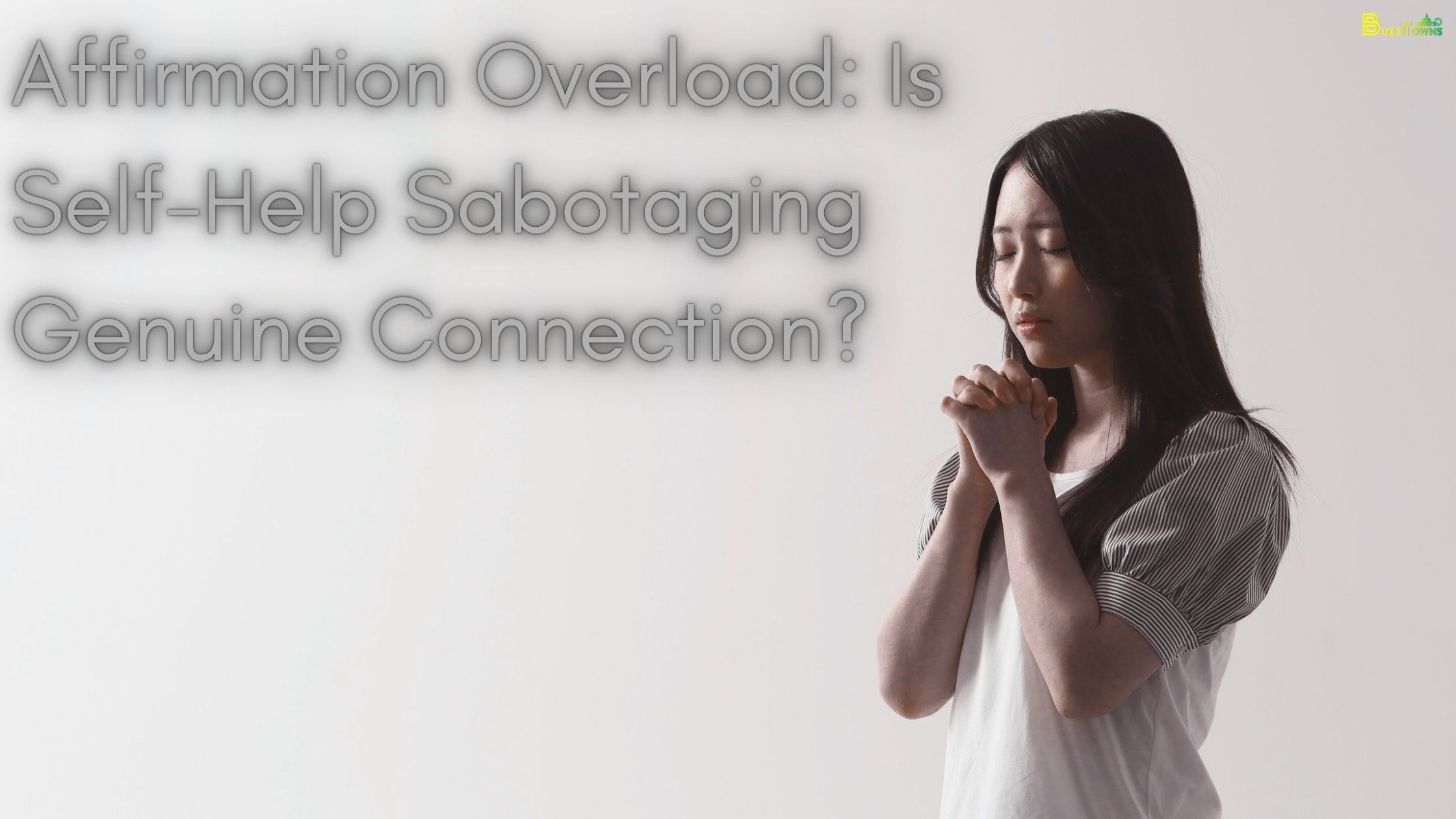
We live in the era of the “Main Character.” Scroll through any social media feed, and you’ll be bombarded with aesthetic fonts telling you that “Your boundary is your power,” “You owe no one an explanation,” and “If they wanted to, they would.” On the surface, these are tools for empowerment. They are designed to pull people out of people-pleasing patterns and toxic dynamics. But lately, psychologists and relationship experts are noticing a disturbing trend: Affirmation Overload. What started as a movement for self-love has, for many, drifted into a territory of “Hyper-Individualism.” By prioritizing the “self” above all else, we are inadvertently sabotaging the very thing humans need most to survive: a genuine, messy, inconvenient connection.
The Rise of “Therapy-Speak” in Casual Conversation
You’ve likely seen it in your DMs or heard it over coffee. Someone cancels plans at the last minute with a text that reads: “I’m currently protecting my peace and don’t have the emotional capacity to hold space for this outing.”
While using clinical language to set boundaries isn’t inherently bad, the over-use of it creates a wall. When we replace raw, human vulnerability with polished, “self-help” scripts, we strip the relationship of its intimacy.
The Sabotage: Genuine connection requires a certain level of friction. If we use affirmations and “boundaries” to avoid every uncomfortable conversation or minor inconvenience, we never develop the “relational muscle” required to weather a real storm. We aren’t building boundaries; we are building a fortress.
1. The “You Owe No One Anything” Myth
One of the most viral affirmations in the modern self-help world is the idea that you are a completely autonomous island.
- The Self-Help Script: “You don’t owe anyone your time, your energy, or an explanation.”
- The Reality of Connection: Healthy relationships are built on mutual obligation. If you want the benefits of a best friend or a partner—the support during a breakup, the ride to the airport, the listening ear at 2:00 AM—you do owe them something. You owe them reliability, communication, and sometimes, the sacrifice of your own comfort. When affirmations tell us we owe nothing, they give us a hall pass to be selfish, which eventually leaves us standing alone in our “protected peace.”
2. The “Toxic” Labeling Epidemic
The word “toxic” has lost its clinical meaning. In the world of affirmation overload, “toxic” is often used to describe anyone who challenges us, disagrees with us, or holds us accountable.
How it sabotages connection: If a friend points out that you’ve been a bit distant lately, the “Ego-Affirmation” response is: “I don’t need that negative energy in my life. I am choosing to surround myself only with those who celebrate me.” By labeling constructive criticism as “toxicity,” we stop growing. We surround ourselves with “Yes-Men” who reflect our current state rather than friends who push us toward our best state. Genuine connection requires the mirror of another person—even when that mirror shows us something we don’t like.
3. The Perfectionism of “Healing”
There is a popular sentiment that “You must love yourself fully before someone else can love you.” While well-intentioned, this affirmation can be incredibly isolating.
The Sabotage: It suggests that “healing” is a destination you must reach alone before you are worthy of companionship. In reality, much of our healing happens through connection. We learn how to trust by being in a relationship with someone trustworthy. We learn how to regulate our emotions by being co-regulated by a calm partner.
When we wait until we are “perfectly healed” to connect, we miss out on the transformative power of being loved in our brokenness.
The “Individual vs. Relational” Spectrum
To understand if you are experiencing Affirmation Overload, look at where your mindset falls on this spectrum:
| The Hyper-Individual (Overloaded) | The Relational (Connected) |
| “I put myself first, always.” | “I balance my needs with the needs of those I love.” |
| “If it’s hard, it’s not meant to be.” | “Meaningful things require effort and repair.” |
| “I don’t need anyone’s approval.” | “I value the perspective of my trusted circle.” |
| “Protecting my energy at all costs.” | “Investing my energy in my community.” |
How to Reclaim Genuine Connection
If you feel your “self-help” journey has left you feeling a bit lonely, it might be time to soften the scripts. Here are three ways to move back toward genuine connection:
1. Trade “Scripts” for Vulnerability
Instead of saying, “I don’t have the capacity,” try saying: “I’ve had a really draining day and I’m feeling a bit overwhelmed. I really want to see you, but I don’t think I’d be very good company tonight. Can we reschedule for Tuesday?”
The second version explains the human reason behind the boundary, which invites empathy rather than creating distance.
2. Embrace the “Inconvenience” of Love
Sometimes, the best thing you can do for a relationship is to be inconvenienced. Showing up for a friend’s boring work event or helping a sibling move when you’d rather be at the gym isn’t “betraying yourself“—it’s an investment in a bond.
3. Practice “Relational Accountability”
Ask your partner or close friends: “Is there anything I’ve been doing lately that makes you feel unheard or pushed away?” This invites the “mirror” back in. It shows that you value the harmony of the “Us” as much as the comfort of the “Me.”
Final Thoughts: Finding the Middle Ground
Self-help and positive affirmations are vital tools in a world that often tries to diminish us. We should have boundaries, and we should love ourselves. But these tools were meant to be a bridge to a better life—not a moat to keep the world out.
Genuine connection is messy. It involves apologizing when you’re wrong, showing up when you’re tired, and listening when you disagree. Don’t let a 1080×1080 Instagram post convince you that your “peace” is more valuable than your people. The goal of healing isn’t to become a perfect, untouchable individual; it’s to become someone who can love and be loved deeply, flaws and all.