
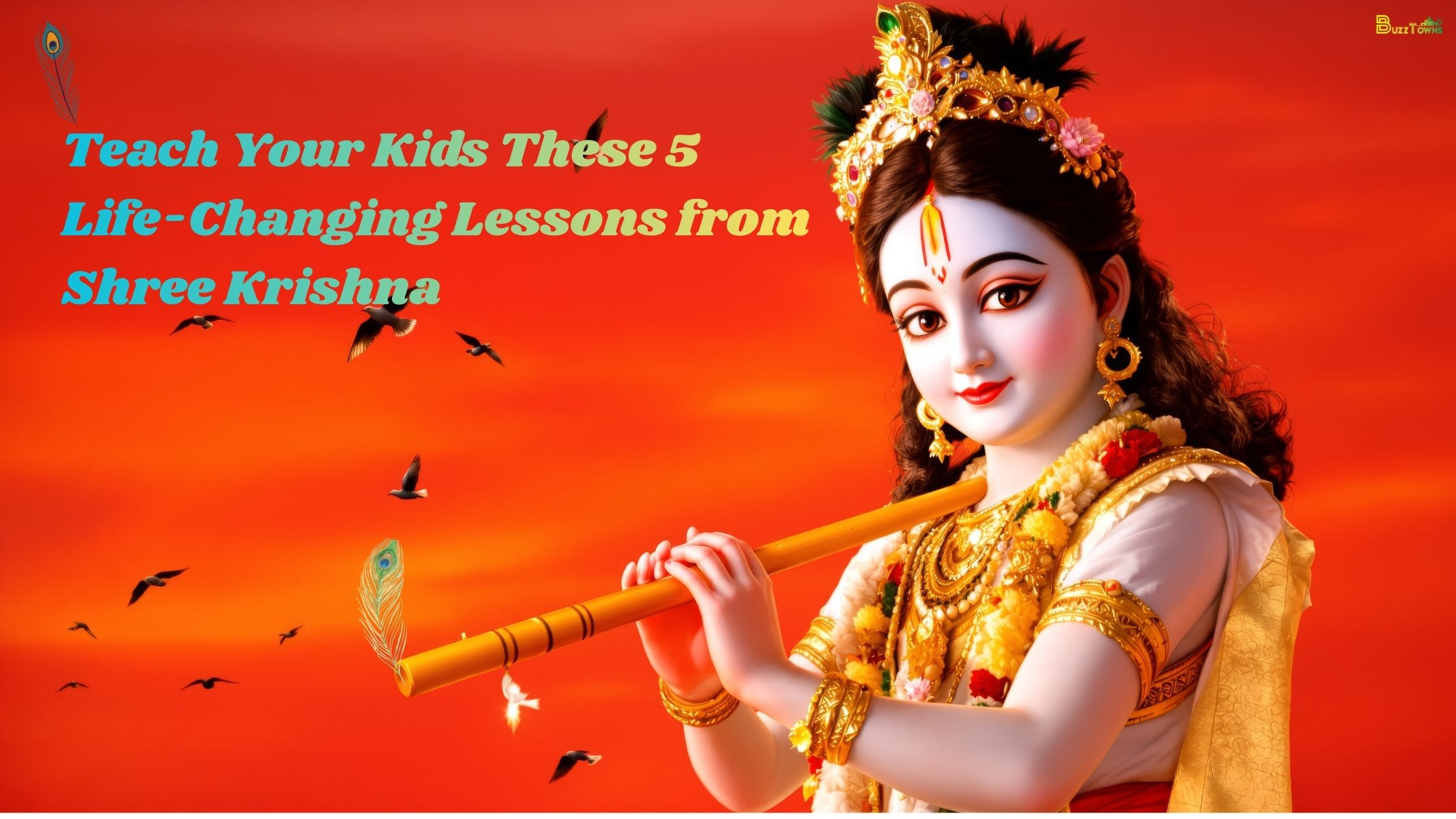
In the modern, fast-paced world of 2026, parents are often caught in the whirlwind of digital distractions, academic pressure, and a culture of instant gratification. We want our kids to succeed, but more importantly, we want them to be resilient, empathetic, and grounded. When looking for a roadmap to overcome these challenges, we need to look no further than the timeless wisdom of Shri Krishna. Shri Krishna is not just the embodiment of divinity; He is the ultimate guru, master of psychology and a friend who navigated the complexities of life with a smile. Whether through his mischievous childhood in Vrindavan or his profound discourse on the battlefield of Kurukshetra, Krishna provides practical tools that children can use to build a strong character. Here are five life-changing lessons from Shree Krishna that every parent should share with their children.
1. The Power of “Nishkama Karma”: Focus on the Effort, Not the Result
The most famous teaching of the Bhagavad Gita – Karmanye Vadhikaraste Ma Phaleshu Kadachan – is perhaps the most important lesson for a child in the competitive world. It teaches us that we have right over our actions, but not over the results of those actions.
How to teach it:
Children today often feel immense pressure to win trophies, get the highest grades, or get “likes” on social media. This “results-oriented” mindset leads to anxiety and fear of failure.
Teach your child that their “job” is to study well, practice their sport diligently, and be a good friend. The “result” (grades or wins) is a by-product. When a child learns to enjoy the process of learning instead of fearing the outcome, he or she becomes fearless.
2. Choose Your “Sangat” (Company) Wisely
Krishna’s life is a proof of the power of friendship. From his unbreakable bond with the poor Brahmin Sudama to his role as Arjuna’s guide, Krishna shows that our path is determined by who we surround ourselves with.
How to teach it:
In the age of social media, “friends” are often just numbers. Teach your children that a true friend, like Krishna was to Sudama, does not care about your condition or what you have; They care about your heart.
On the contrary, show them how Krishna stood firm against the negative influence of people like Duryodhana. Encourage your children to choose friends who inspire them to be better, kinder versions of themselves. Let us tell you that just as a drop of water on hot iron disappears, but a drop of water on a lotus leaf shines like a pearl, our “accompaniment” determines our shine.
3. Mindfulness and Emotional Balance (Sthitaprajna)
Krishna often talked about being “sthithaprajna” – one who remains steadfast in both joy and sorrow, victory and defeat. For a child, this is the foundation of emotional intelligence.
How to teach it:
Life is a rollercoaster. There will be days when your child wins the race and there will be days when he loses a favorite toy. Teach them that it’s okay to feel sad or happy, but they shouldn’t let these emotions control them.
Krishna faced demons in childhood and wars in adulthood, yet he is almost always depicted with a serene smile. Tell your children that their “inner smile” is their superpower. Practice simple mindfulness with them – take deep breaths when they are angry – so they can find “Krishna-like” peace amid the storm on the playground.
4. Adaptability: The Art of Being a “Chameleon” for Good
One of the most attractive qualities of Krishna is his flexibility. He was a shepherd, a musician, a diplomat, a warrior and a charioteer. He never stuck to a rigid identity; In order to maintain Dharma (righteousness) he became what he should have been as per the circumstances.
How to teach it:
The future belongs to the adaptable. Teach your kids that it’s okay to have many interests. They may be math lovers and dancers; They may be shy in some situations and take the lead in others.
Explain that being “flexible” doesn’t mean changing your values; It means changing your approach to solving a problem. Just as Krishna used his flute to bring peace and his Sudarshan Chakra to ensure justice, children should learn to use different “tools” from their personality to deal with different life situations.
5. Duty Over Ego: Doing the Right Thing When It’s Hard
In the Gita, Arjuna was paralyzed by doubt because his ego and attachments were clouded. Krishna reminded him that his duty (Dharma) as a warrior for justice was higher than his personal feelings.
How to teach it:
This is a lesson in “honesty”. Teach your children that doing the right thing is not always the popular thing. If they see a classmate being bullied, their “righteousness” is to stand up or tell the teacher, even if they are scared.
Help them understand that our “ego” – the part of us that wants to look good or fit in – is often the biggest obstacle to doing the right thing. By following Krishna’s lead, they learn that true strength is not in muscles, but in the courage to follow their conscience.
A Summary Table for Parents
| Lesson | Core Concept | Modern Application |
| Nishkama Karma | Action without attachment | Focus on studying, not just the A+ grade. |
| Sangat | Righteous Company | Choosing friends who value kindness over popularity. |
| Sthitaprajna | Emotional Balance | Staying calm during a loss in a video game or sports. |
| Adaptability | Versatility | Being open to new hobbies and changing environments. |
| Dharma | Duty over Ego | Choosing to be honest even when it’s “uncool.” |
Conclusion: Bringing the Flute and the Chakra Home
Teaching children about Shri Krishna is not about memorizing ancient texts; It is about giving them mental direction. Krishna’s flute represents the harmony, love and happiness that we must keep in our hearts, while his Sudarshan Chakra represents the sharp, decisive mind needed to overcome life’s obstacles.
When we teach our children these five lessons, we are not just telling them old stories – we are equipping them with a 5,000-year-old “operating system” for a successful, peaceful, and meaningful life.