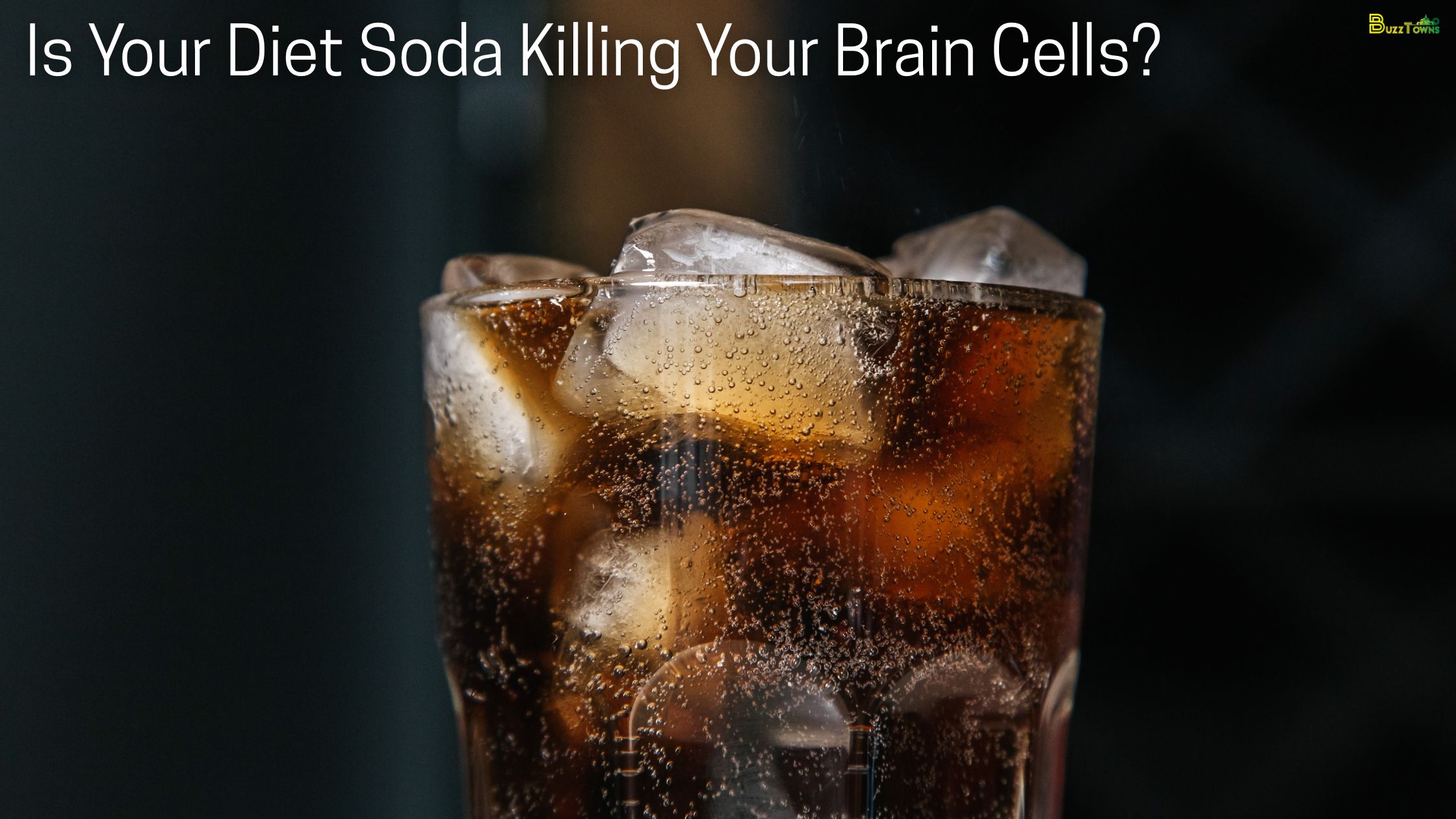
This is the ultimate “guilt-free” hack: all the fizz and sweetness of soda with zero calories and zero sugar. But for years, a dark cloud has been hanging over the diet soda aisle. You’ve probably seen headlines or heard rumors that these colorful cans are actually “brain-killers.”
So, is your Diet Coke habit really shredding your gray matter, or is it just another case of nutritional concern? Let’s unpack the science and see what’s really inside.
The Usual Suspect: Aspartame
When people talk about diet soda and brain health, they are almost always talking about aspartame.
Aspartame is composed of two amino acids: phenylalanine and aspartic acid. When your body breaks them down, it also produces small amounts of methanol. Critics argue that these components can cross the blood-brain barrier and cause “excitotoxicity” – essentially stimulating brain cells until they die.
What the Science Says:
- The problem of dosage: Most of the studies suggesting brain damage were conducted on rodents using huge doses that a human could never realistically consume.
- Food Comparison: Fun Fact: A glass of tomato juice actually contains significantly more methanol than a can of diet soda.
- Consensus: Major health organizations (such as the FDA and EFSA) agree that aspartame is safe for the general population at current consumption levels.
The Real Red Flags: Stroke and Dementia
While “killing brain cells” may be an exaggeration, recent observational studies have raised some more specific, credible eyebrows.
A remarkable study published in the journal Stroke monitored thousands of people for several years. They found that people who drank at least one diet soda a day were three times more likely to develop ischemic stroke and Alzheimer’s disease than those who did not.
But (and this is a big but):
These studies show correlation, not causation. People who drink diet soda often do so because they are already managing health problems like obesity or diabetes, which are independent risk factors for stroke and dementia. It’s the “chicken or the egg” dilemma of nutrition.
Indirect Brain Impact: The Gut-Brain Axis
We’re learning more every day about the gut-brain axis – the idea that the health of your gut directly determines your mental clarity and mood.
- Microbiome disruption: Some research suggests that artificial sweeteners may alter your gut bacteria.
- Sweetness Paradox: Artificial sweeteners are hundreds of times sweeter than sugar. This can “re-wire” your brain’s reward system, causing the taste of naturally sweet foods (like fruit) to fade and potentially leading to cravings for higher-calorie snacks.
- Insulin confusion: Some studies suggest that the “sweet” taste of tongue without the arrival of calories may confuse your metabolic response, potentially leading to insulin resistance over time – which is definitely not good for brain health.
The Verdict: Should You Pour It Out?
Is diet soda “killing” your brain cells? maybe no. There is no definitive evidence that moderate amounts of diet soda directly cause neuronal death in humans.
However, “not kill you” is not the same as “healthy.”
Peer-to-peer advice: If you’re choosing between sugar-laden regular soda and the diet version, the diet version is generally the “lesser of two evils” for your blood sugar. But if you’re choosing between diet soda and water? Water wins every time.
How to Moderate:
The “one-day” rule: If you like the ritual, try limiting it to one can per day.
- Swap for sparkling: Try unsweetened sparkling water with a squeeze of lemon to fix carbonation without the chemistry experiment.
- Check your mood: Notice if you feel “foggy” or get a headache after drinking diet soda. Everyone’s neurochemistry is different.